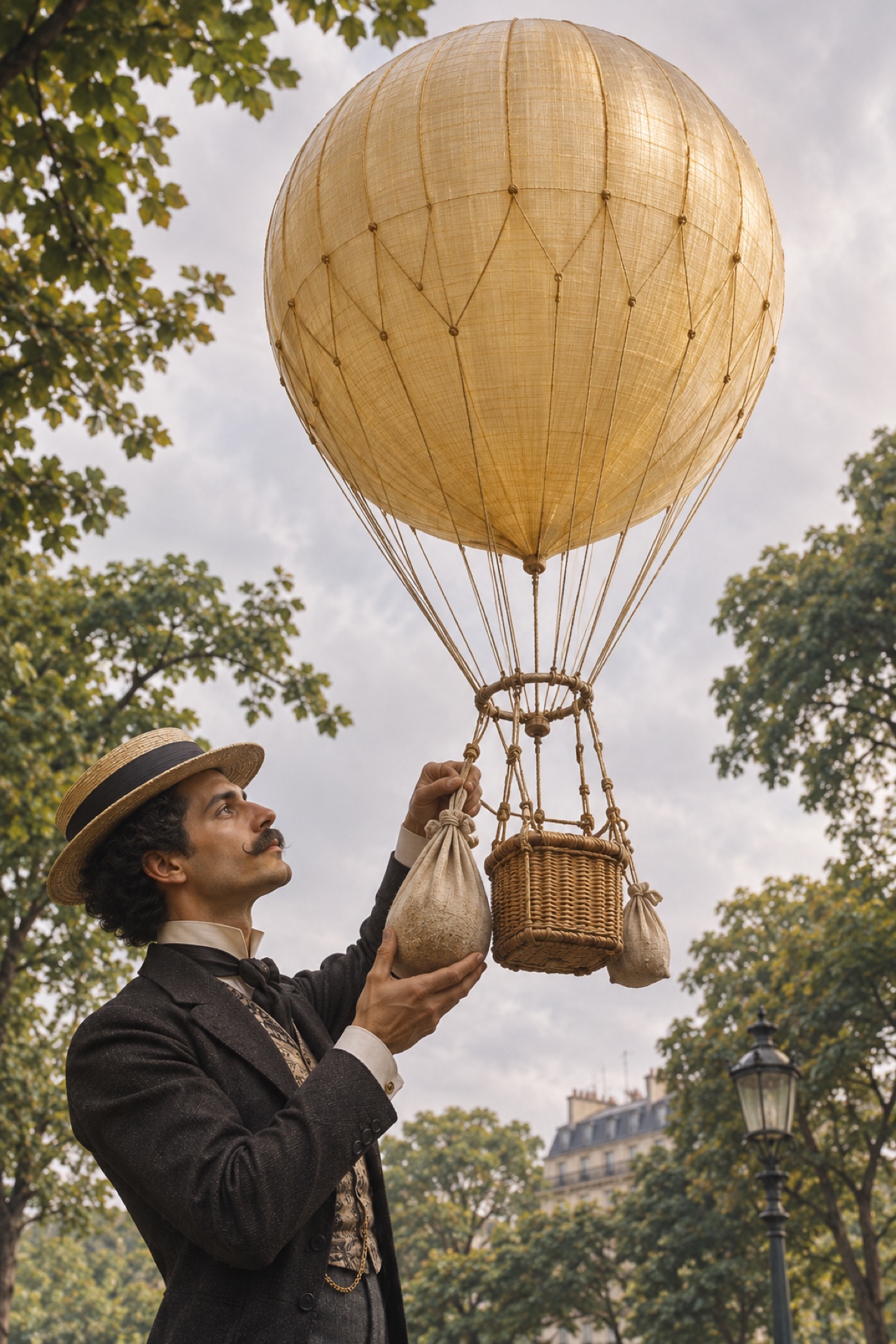
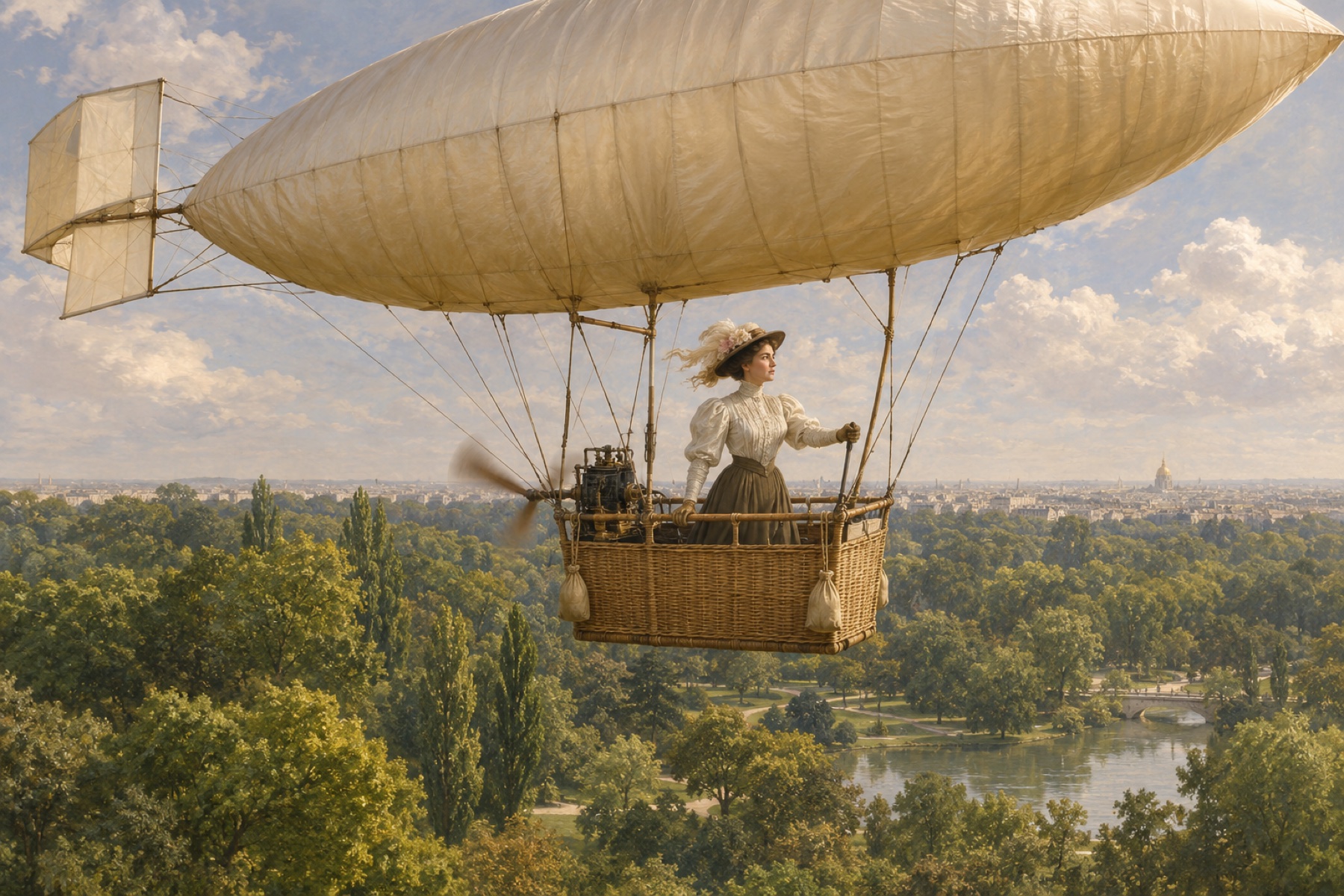
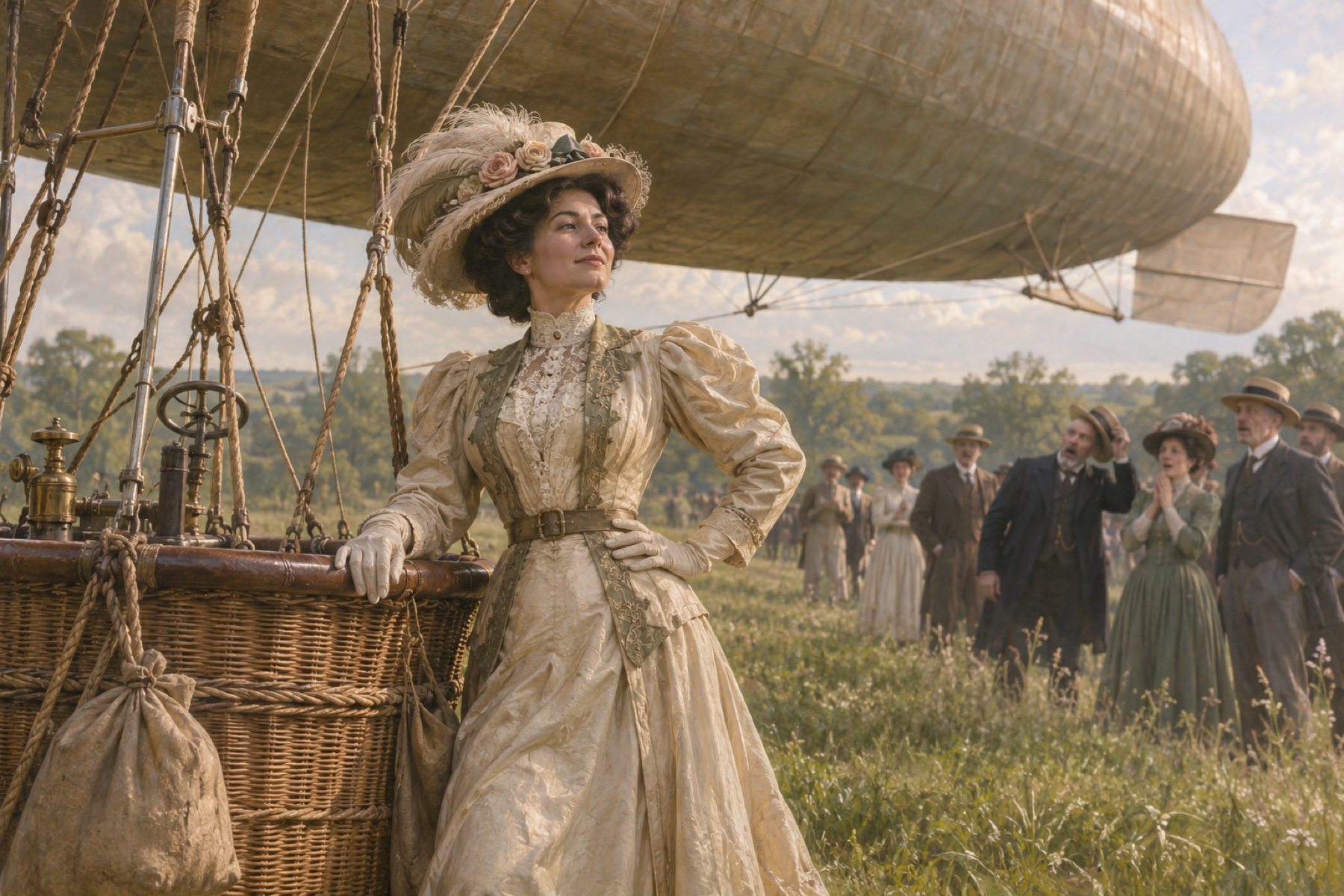
BRAZILIAN BY BIRTH. A PIONEER WITHOUT BORDERS.PARIS, 1901 · AI INTERPRETATION
THE MAN WHO LOOKED UP
A real airplane. A real takeoff. History in plain sight.
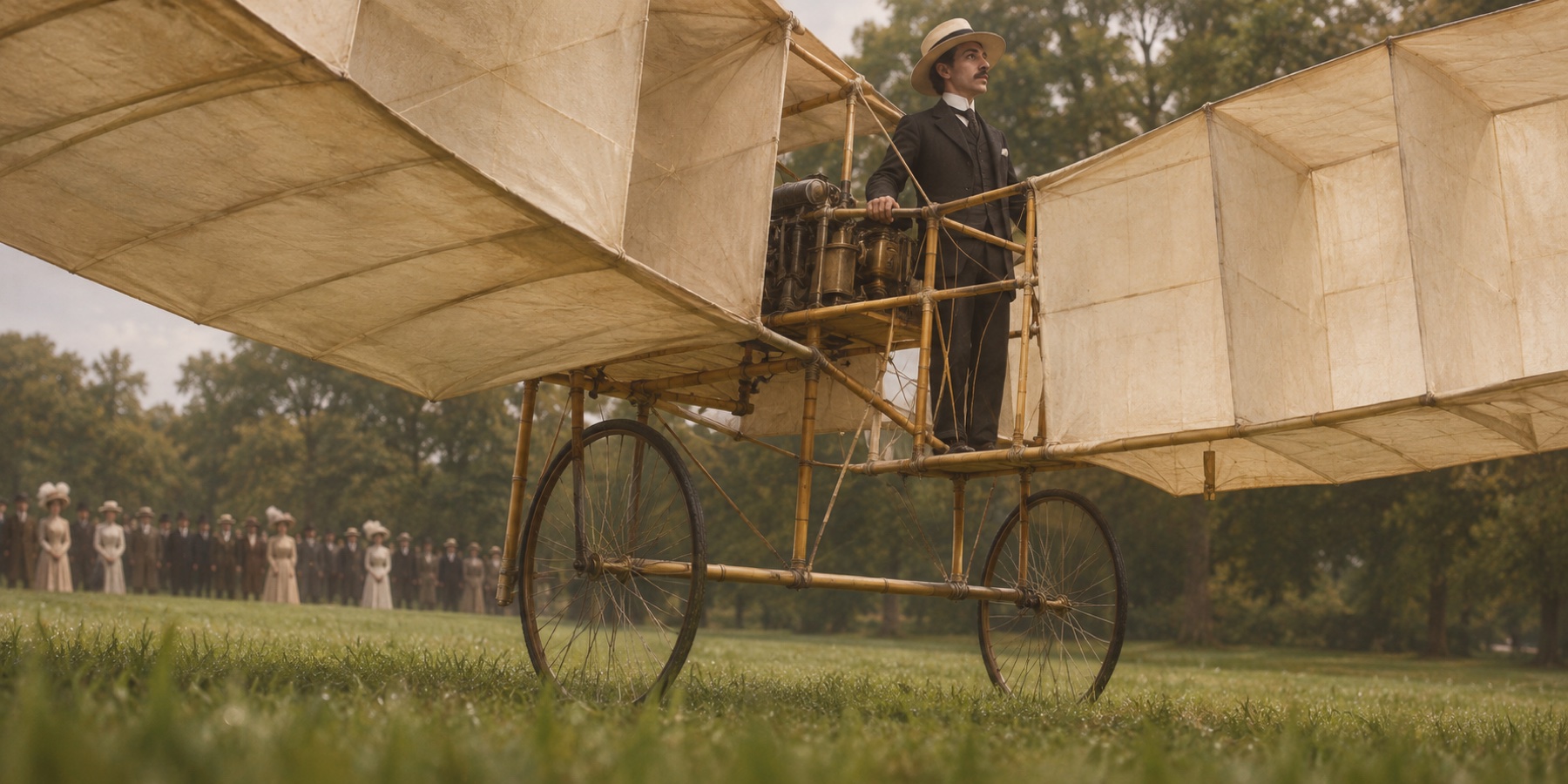
Paris, 1906. The 14-bis accelerated across the grass and rose into the air—on its own wheels, under its own power, before the public. Santos Dumont built the airplane. He took the controls. He left the ground.
Before Bagatelle, there was Alberto: a curious boy among the coffee trees, learning the language of machines. Walk through his workshops, look over the rooftops of Paris, and discover the life of the Father of Aviation[38].
All scenes are AI-generated historical interpretations. No archival photographs are used. Faces, light, viewpoints, and incidental details are imagined.
THE HISTORY BENEATH THE STORY
Wonder, with its feet on the ground.
A tribute built from memoirs, museum collections, institutional histories, and aeronautical research.
How to read this tribute +
Alberto Santos Dumont — the Father of Aviation[38]. The narrative follows his inventions, public demonstrations, and the 14-bis’s real takeoffs under its own power, with sources for the documented events.
The invitation to imagine being there is narrative atmosphere, not a claim to know his unrecorded thoughts. No dialogue or quotations have been invented. The illustrations are artistic interpretations, not exact technical reconstructions. Chapter references let you explore the evidence.
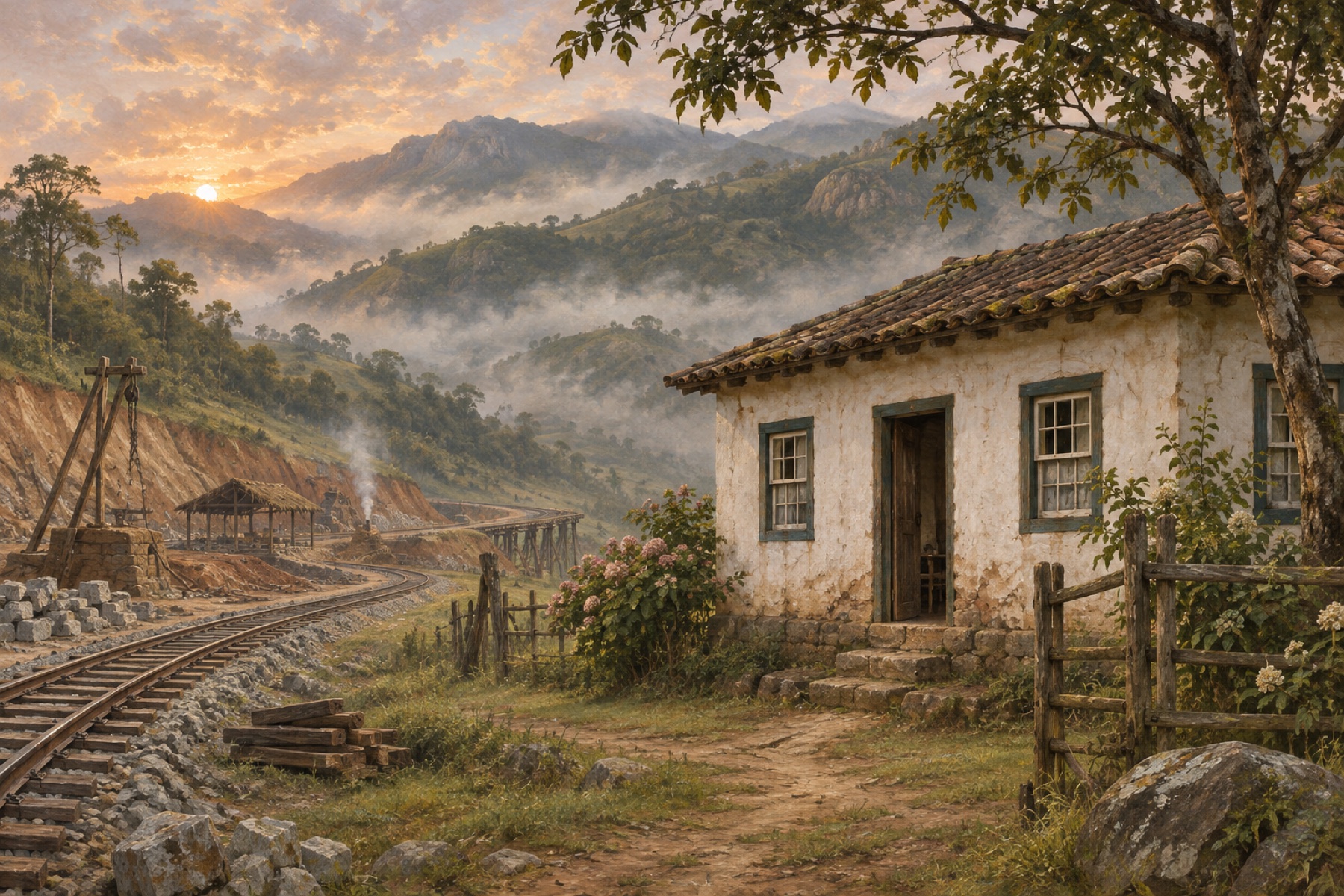
Begin in the mountains. Before the boulevards of Paris, before a propeller turns above the Seine, there is a modest house at Cabangu in Minas Gerais. The railway is extending into the interior, and Henrique Dumont is there because the route needs an engineer. On 20 July 1873, his wife, Francisca de Paula Santos, gives birth to Alberto. He is the sixth of eight children. His first connection to the history of transport is a family connection: the work that has brought his parents here.
Imagine the morning at the scale of the house rather than the monument it will become: a doorway, the hills beyond, a world whose distances are measured by difficult journeys. The mist and light in our illustration are imagined. The place, the date, and the family are the beginning of the documented story. The house survives as the Museu de Cabangu, where a birthplace can still be encountered as a building rather than an abstraction.
Cabangu must not be confused with the enormous coffee estate of his later childhood. The two settings are connected by Henrique's career, but they belong to different stages. Alberto is born beside a railway project. He grows up among the machinery of an agricultural enterprise. Following that movement lets us see a family changing its circumstances, rather than a famous inventor appearing fully formed in a picturesque landscape.
↗Cabangu in an imagined mountain dawn: the beginning beside the railway, before the coffee estate.AI-GENERATED HISTORICAL INTERPRETATION02
Francisca, Henrique, and a crowded family
His mother's name comes first in the name he will make famous: Santos. Francisca de Paula Santos and Henrique Dumont married in 1856. By the time Alberto arrives, they have already spent years raising a family through changes of place and work. His brothers and sisters are part of that household; he is neither an only child nor a solitary prodigy growing up without company.
Henrique was born in Brazil to a family of French origin and trained as an engineer in Paris. France therefore belongs to Alberto's family geography long before he crosses the Atlantic himself. His father's education makes engineering a recognizable occupation within the home. It is something a person can study and practise, with bridges, routes, machinery, and an income attached to it.
Francisca is less visible in the surviving technical reminiscences. We know her place in the family, but we do not possess a transcript of her ordinary conversations with Alberto. Our imagined family scene gives her a presence without putting invented advice in her mouth. The young man who eventually signs both surnames carries a history made by both parents, even when the documents give one of them much more space.
↗Francisca and Henrique with their family, imagined. No surviving conversation is being reenacted.AI-GENERATED HISTORICAL INTERPRETATION03
From the railway to the coffee country
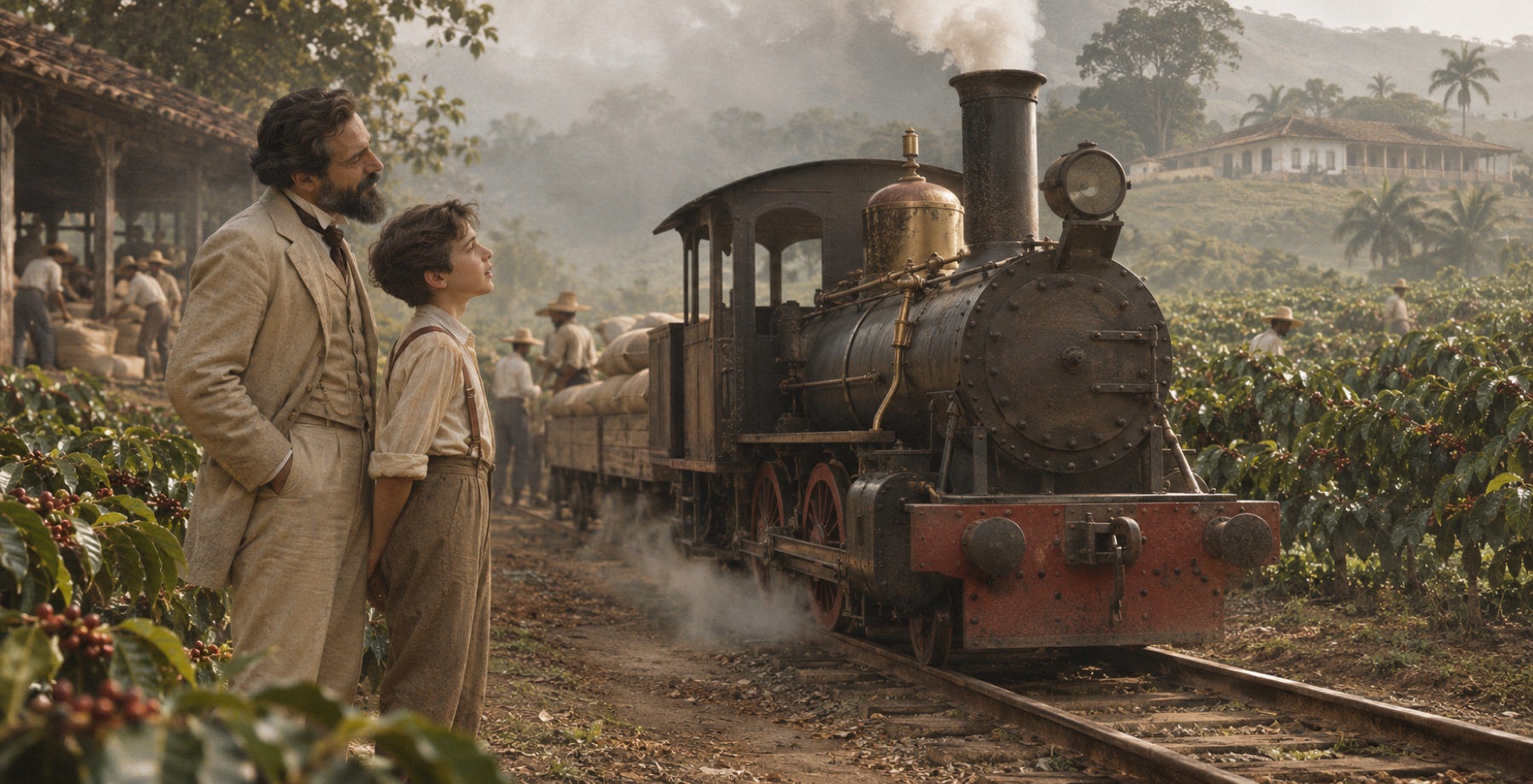
The family's route leads through the region of Valença in Rio de Janeiro and then, in 1879, to the country around Ribeirão Preto in São Paulo. Alberto is still a small boy when Henrique becomes established at the estate associated with the name Arindeúva. Here coffee offers the possibility of wealth on a formidable scale. It also presents a problem well suited to an engineer: how to move and process an enormous crop reliably.
Walk through that setting in the order the crop travels. There are trees and harvesting, then transport toward the works, then successive stages that turn harvested fruit into a product ready for sale. Roads, rails, water, power, storage, and labour connect the stages. The estate is a landscape organized around movement. A locomotive matters because the next operation is waiting for what it carries.
The distance between a coffee tree and a sack prepared for export is an education in systems. Alberto can encounter machinery doing necessary work every day, with consequences when it stops. He does not have to wait for a spectacular exhibition to see power made useful. The demonstration is already going on around him, and it has a sound, a pace, and people responsible for keeping it moving.
↗The railway within coffee country. The scene evokes a working estate rather than a specific surviving photograph.AI-GENERATED HISTORICAL INTERPRETATION04
At the height of a steam engine
In his 1904 memoir, Alberto places himself beside steam machinery extraordinarily early. He remembers being permitted to drive the estate's steam traction engines at seven and finding a place in locomotive cabs at twelve. Those are his recollected ages, written after his airship successes. They tell us how strongly he associated his formation with practical contact with engines.
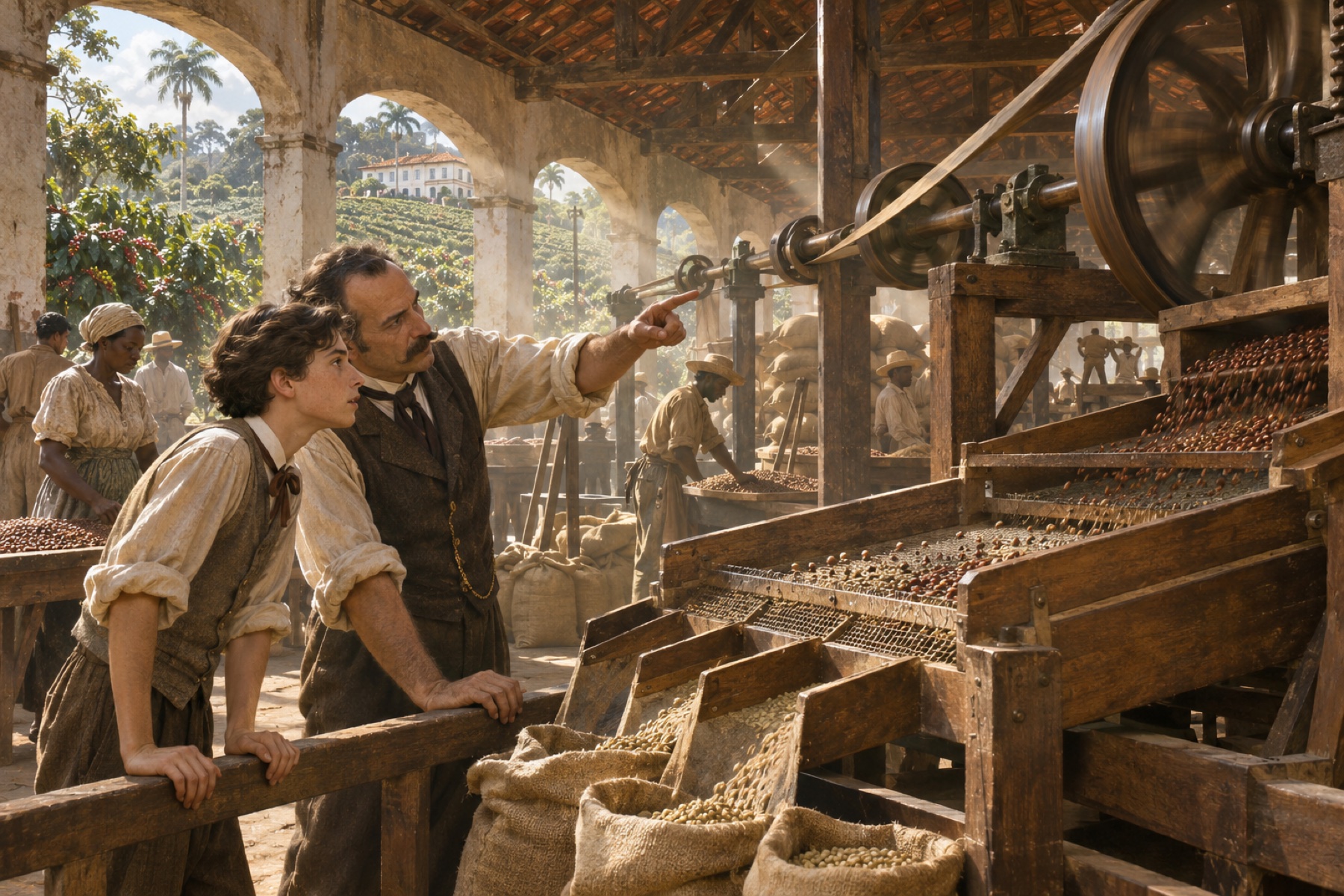
The scale matters. A flywheel is enormous when you are small. Motion passes from one part to another; a belt makes the connection visible. A machine can continue doing the same task with an endurance that a child cannot imitate. Yet it also depends on adjustments, fuel, maintenance, and human attention. Its apparent strength is full of conditions.
Henrique's willingness to allow that proximity gave curiosity somewhere to go. The memoir contrasts Alberto's attraction to the works with the riding trips enjoyed by his father and brothers. He gravitated toward the place where power could be watched in operation. Years later, when he would carry an engine into the air, mechanical noise would already be familiar rather than mysterious. The new question would be how much useful work a machine could do for the weight he had to lift.
↗A boy and his engineer father beside the coffee machinery: an imagined encounter with visible mechanical power.AI-GENERATED HISTORICAL INTERPRETATION05
Inside the works: following a coffee bean
The machinery that interested him did more than haul wagons. His memoir follows coffee through washing, separation, removal of the fruit's outer material, drying, and sorting. He remembered the procession in enough detail to explain it to readers far away from Brazil. Looking back, he wanted them to understand that this childhood landscape contained sophisticated equipment and organized processes.
Stay with a single piece of fruit moving through the works. At one stage, water separates materials that behave differently. At another, a machine removes what must not remain around the bean. Later, size and condition affect sorting. Each operation answers a different question. A mechanism that works beautifully for one task may be unsuitable for the next. A processing line teaches discrimination as much as it teaches admiration for power.
This is one way to approach his later originality. He became unusually attentive to the arrangement of things: what should turn, what should remain still, where a load should hang, and which part was unnecessarily heavy. The farm did not supply a hidden blueprint for the airplane. It offered a long apprenticeship in noticing relationships. Beneath the glamorous aerial photographs lies that ordinary discipline of looking until a mechanism starts to make sense.
Machinery was one part of his education, alongside schooling and reading. Institutional biographies record study in different Brazilian settings rather than a single uninterrupted technical course. The familiar image of a boy among engines should not make the rest of his childhood disappear. Learning required words, numbers, explanation, and the ability to ask a question somebody else could answer.
There was also much he could not learn by watching a coffee works. The behaviour of a gas envelope, the weight of silk, the handling of a balloon near the ground, and the response of an aircraft in flight would require other teachers. His later career repeatedly brings him into contact with people whose craft he does not yet command. Childhood mechanical confidence helps explain why he approached them; it does not eliminate their contribution.
As he grows older, the useful habit is the willingness to move between observation and experiment. A page can name a principle. A working mechanism shows how that principle meets friction, imperfect materials, and mistakes. Alberto's education would keep crossing that boundary. Paris would eventually offer more specialized instruction, but the impulse to understand through things already had a home.
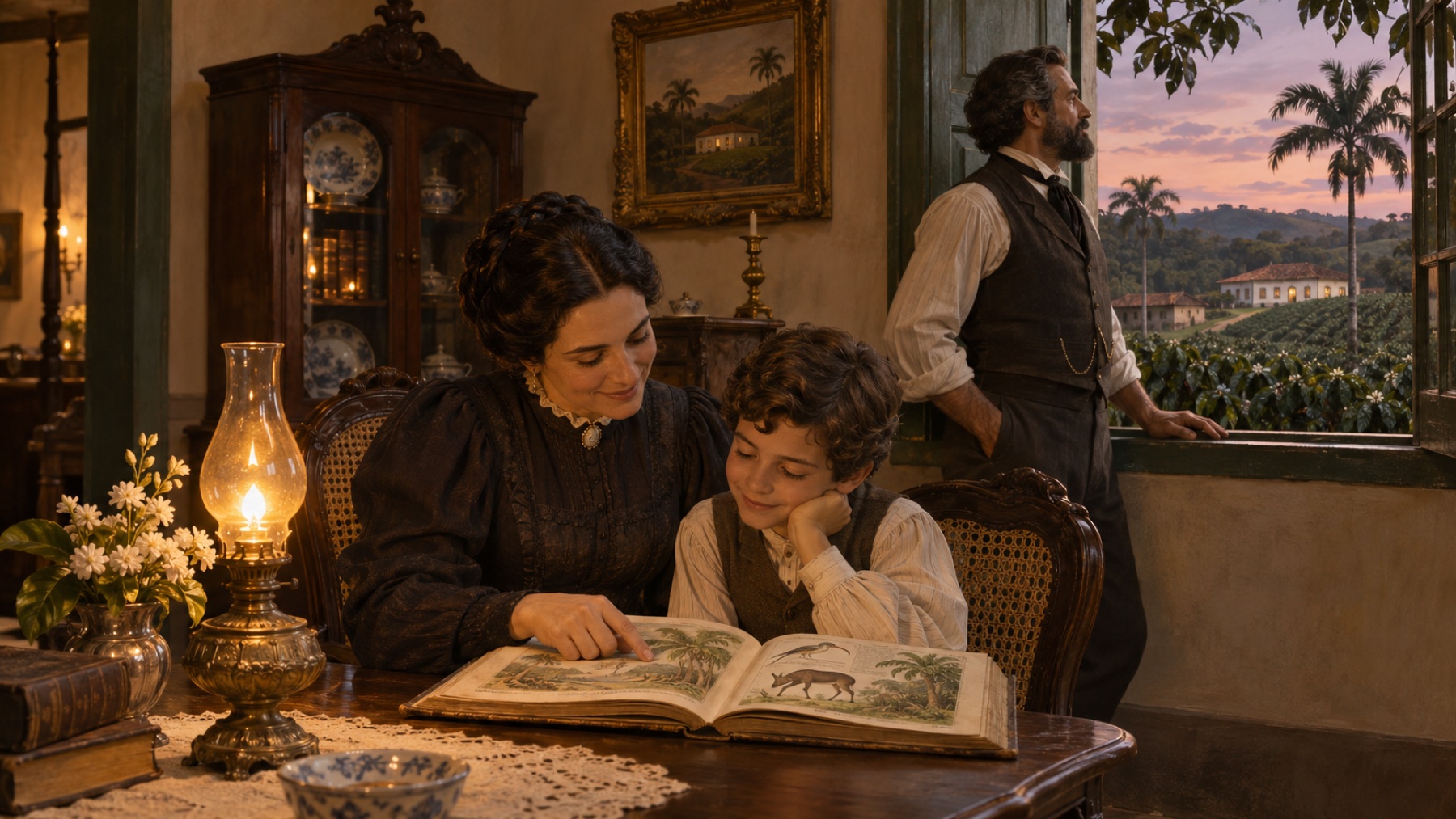
Books let the boy travel farther than the estate railway. He remembered reading Jules Verne with particular intensity. These were adventures in which strange journeys depended on knowledge, machines, preparation, and the nerve to attempt what ordinary experience did not yet allow. An imagined expedition could make an unfamiliar technical question feel urgent.
Picture the change of scale between a lamp-lit page and the distance it describes. One moment the room has walls; the next the reader is following a voyage through air or across an ocean. We cannot recover the precise light on Alberto's childhood desk. We can recognize the importance he later gave these books, and the connection he drew between reading about movement and wanting to attempt it.
The attraction was not a set of construction instructions. Verne made engineering part of adventure. Problems had to be worked through before a journey could continue. That structure would find a real counterpart in Alberto's life: another material to test, another mechanism to repair, another reason to return to the workshop before setting out again. The delight was in the journey, including the work that allowed it to happen.
↗A reading evening, imagined. Verne enlarged the possible; he did not supply a finished aircraft design.AI-GENERATED HISTORICAL INTERPRETATION08
Small paper balloons against a large sky
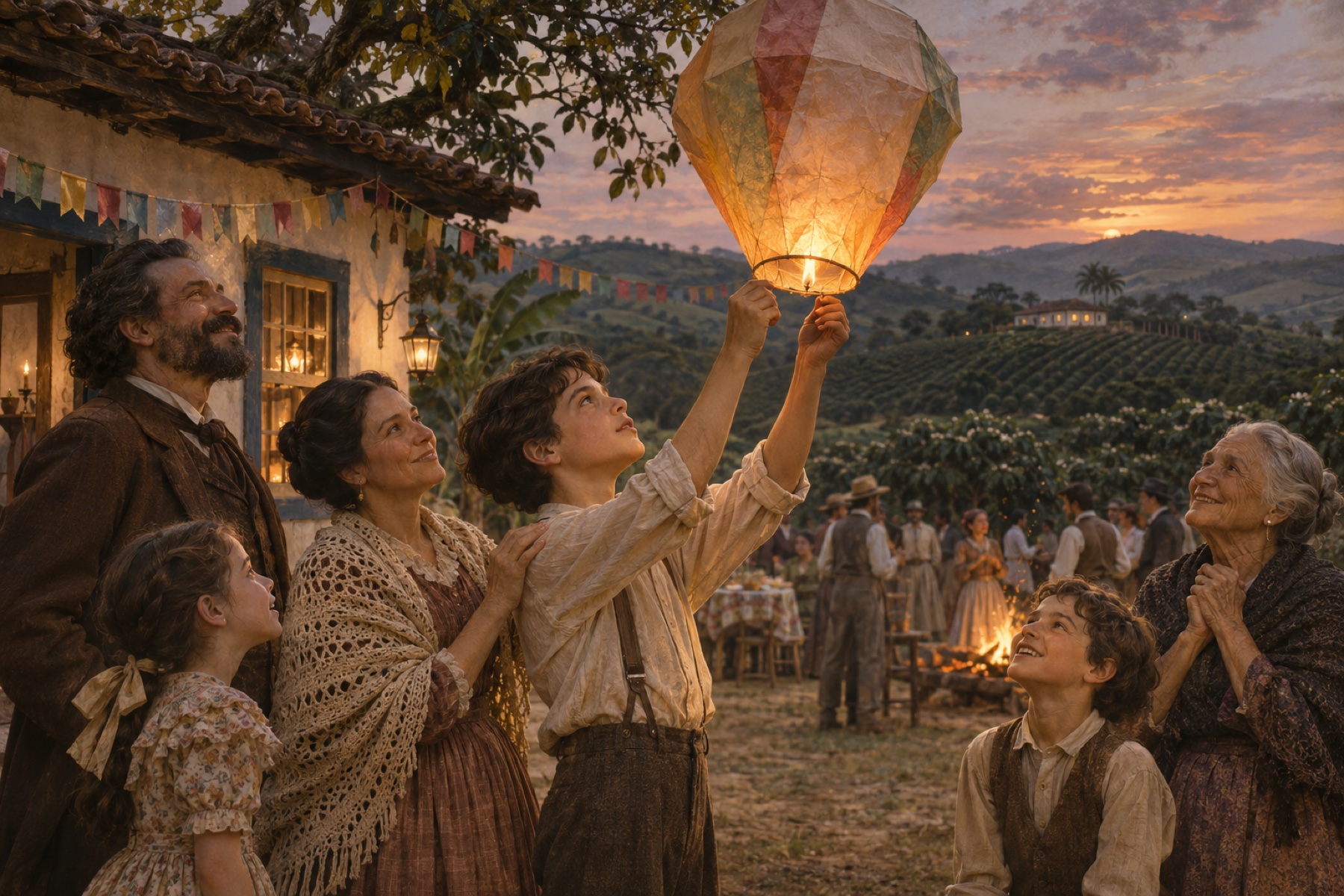
His recollections also place flight among the amusements of childhood: kites, small paper balloons, and games. The paper balloons associated with the June festivities offered a particularly immediate spectacle. Something light, assembled by human hands, could rise into the evening while the people who made it remained below.
For a moment, follow it with the children. Its apparent size diminishes. The direction of its movement belongs to the air rather than the path someone drew on the ground. It is visible and then increasingly difficult to distinguish. This is an imagined viewpoint, but it belongs to the kind of experience he chose to remember when explaining his fascination with flight.
The famous childhood game in his memoir gives that fascination a playful form: children raised a finger when a named creature could fly. Alberto remembered insisting on including a human being. The adult storyteller already knew how the ending of his own story had begun to unfold. Even read with that perspective in mind, the anecdote has charm. Flight was a question he enjoyed refusing to close.
↗A June evening with paper balloons, interpreted by AI. The people and arrangement are imagined.AI-GENERATED HISTORICAL INTERPRETATION09
A model small enough to hold
Paper balloons were not his only miniature aircraft. In his memoir, Alberto also remembered making light model aeroplanes from straw, with small propellers driven by twisted rubber. These were objects at the scale of a child's hands. Their power source had to be wound, their structure kept light, and their movement watched before the next attempt.
The attraction is easy to recognize without pretending that a toy is a complete engineering education. A model lets a child change something and see a result. An elegant idea may still refuse to fly. A small alteration can matter more than the amount of effort put into the launch. The sky gives an answer that does not depend on how confidently the maker explains the design.
Hold that scale beside the estate's engines. One world supplies enormous mechanical power; another asks how little material can be persuaded to rise. His later work would join those concerns in machines capable of carrying him. The model in the boy's hands is not a prophecy. It is an early experiment, and an early reason to look closely at what happens after letting go.
At about fifteen, Alberto saw a full-size balloon ascent in São Paulo. His memoir places it at a public celebration in 1888, followed by the aeronaut descending with a parachute. The flight was no longer a small paper object vanishing above a bonfire. A person had entered the sky and come back from it.
The event brought together ideas he already knew from reading and a spectacle he could see with his own eyes. Ballooning had a history: envelopes, gases, ascents, and the names of people who had taken the first risks. The demonstration made that history present. Someone on the field could prepare equipment and perform an act that had once seemed impossible.
He would not make his own first ascent immediately. Years, journeys, and disappointing inquiries in Paris lay between watching and participating. That interval is part of his upbringing too. Interest could persist without an instant opportunity to satisfy it. By the time he stepped into Machuron's basket, the desire had already survived a long wait.
The estate's prosperity becomes essential to what follows. Experiments in balloons and engines cost money. Specialist labour costs money. So do materials that fail, equipment that must be replaced, and the time between a promising idea and a useful result. Alberto would be able to make decisions that most curious young people could not afford.
Keep the people working the estate within the landscape. Coffee production rested on labour as well as on the engineer's arrangements, and the Brazil of his childhood was marked by slavery, abolition, and profound inequalities of opportunity. Those circumstances should not be flattened into an idyllic backdrop. The family had choices that were not equally available to everyone around them.
Recognizing this gives his later experiments a more concrete setting. Independence allowed him to employ experienced builders, change his mind, and begin again after costly damage. It did not tell him what to invent or make a dangerous machine reliable. It gave him room in which to do that work. The boy's curiosity and the circumstances that sustained it belong in the same biography.
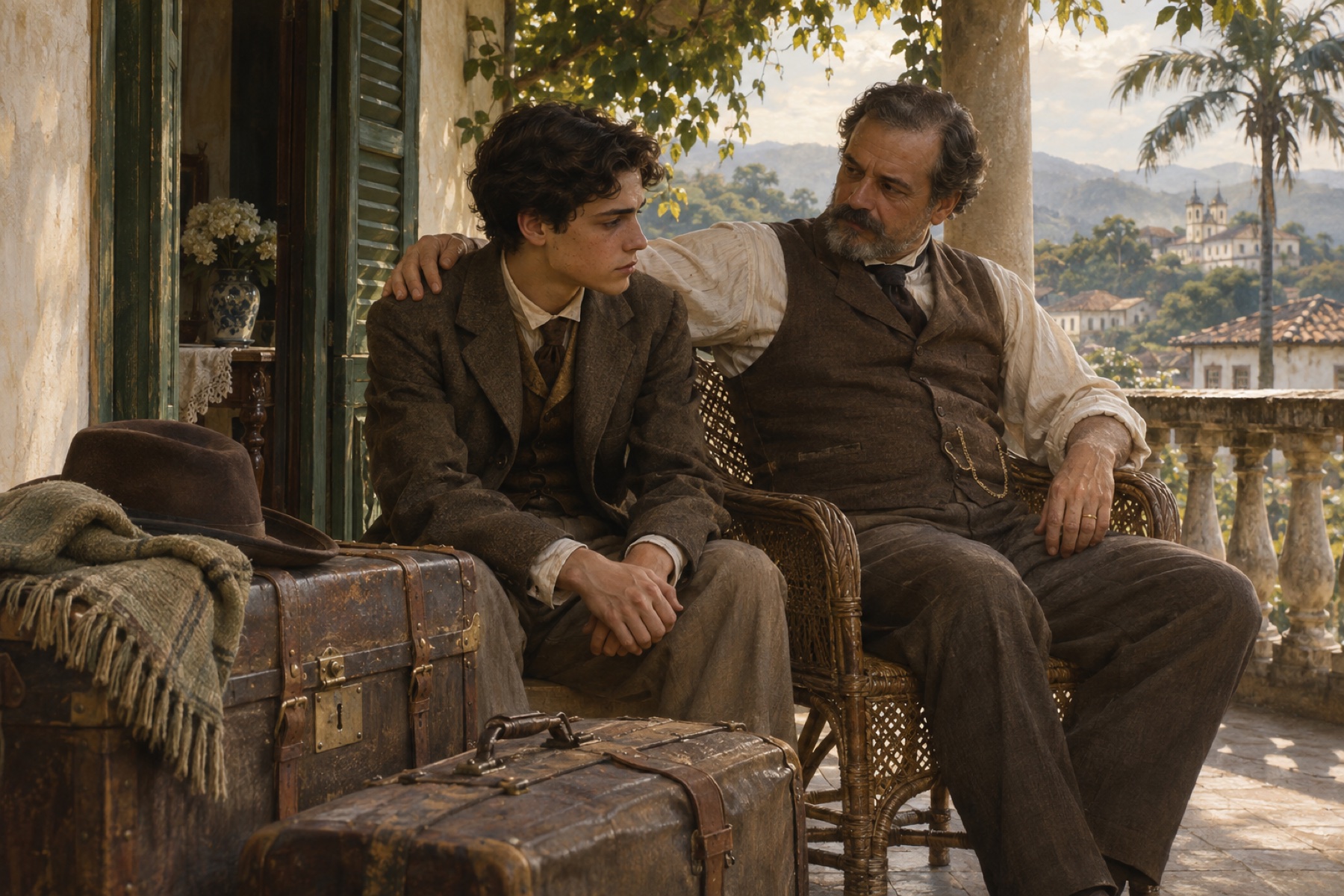
The journey toward France is shaped by Henrique's health after a serious accident. In 1891, the family travels to Europe in search of treatment. Alberto is seventeen for much of that year. What later looks like the natural departure of an aspiring inventor was also a family's response to illness.
The father who had organized routes and machinery now needed care. The son was approaching adulthood, encountering a much wider world while his family's circumstances were changing. We do not have to invent a farewell conversation to understand the weight of that conjunction. Travel, medical hope, and a young person's expanding possibilities could occupy the same trunks.
The Atlantic crossing belongs to the story because it took time. Europe did not appear a few hours after departure. A steamship journey separated familiar places from a destination already present in Henrique's education and family history. Alberto would arrive with memories of machines that moved harvests and trains that crossed the estate. In Paris, machines would offer a different set of possibilities.
↗Before the crossing: an imagined family pause, without attributing private words or feelings to either man.AI-GENERATED HISTORICAL INTERPRETATION13
Henrique’s death, and the freedom to continue
Henrique died in 1892. The financial independence made available to Alberto in these years therefore sits beside a bereavement. The familiar story of a young man free to experiment has another side: the father whose example helped make engineering familiar would not see the airship around the Eiffel Tower or the 14-bis above Bagatelle.
Alberto's subsequent path was not a straight line from a childhood dream to an airplane. There were returns across the Atlantic, study, automobiles, delayed plans for a balloon ascent, and encounters with practitioners who could teach him. He had room to choose a direction, but he still had to discover which problems he was capable of solving.
Follow him out of this chapter without placing the completed machine in his hands too early. He knows what it is to stand beside an engine. He has read extraordinary journeys. He has seen his family change its place in the world. Ahead are the motor workshops of Paris, and eventually the small basket in which the earth will appear to slip away beneath him.
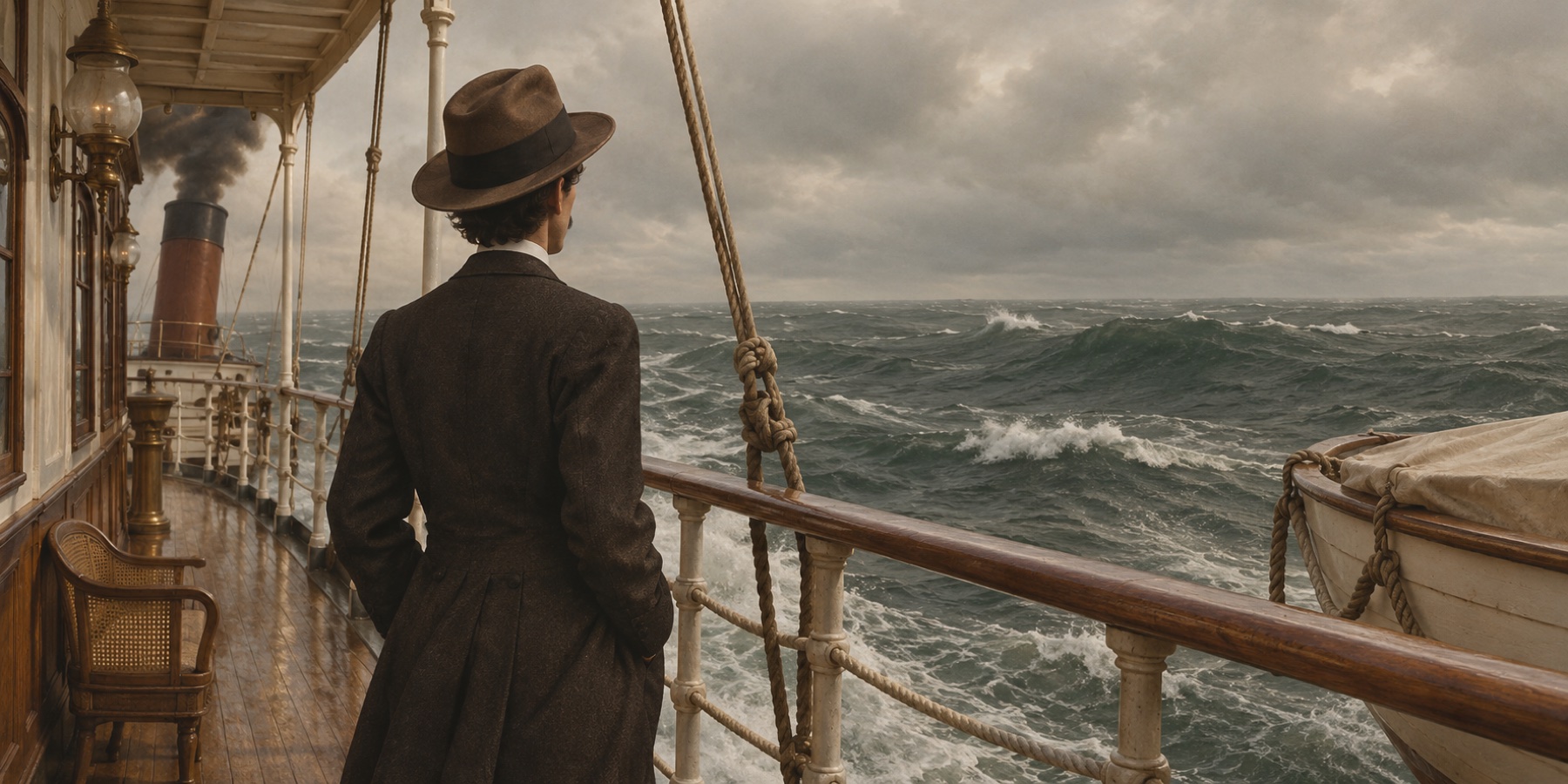
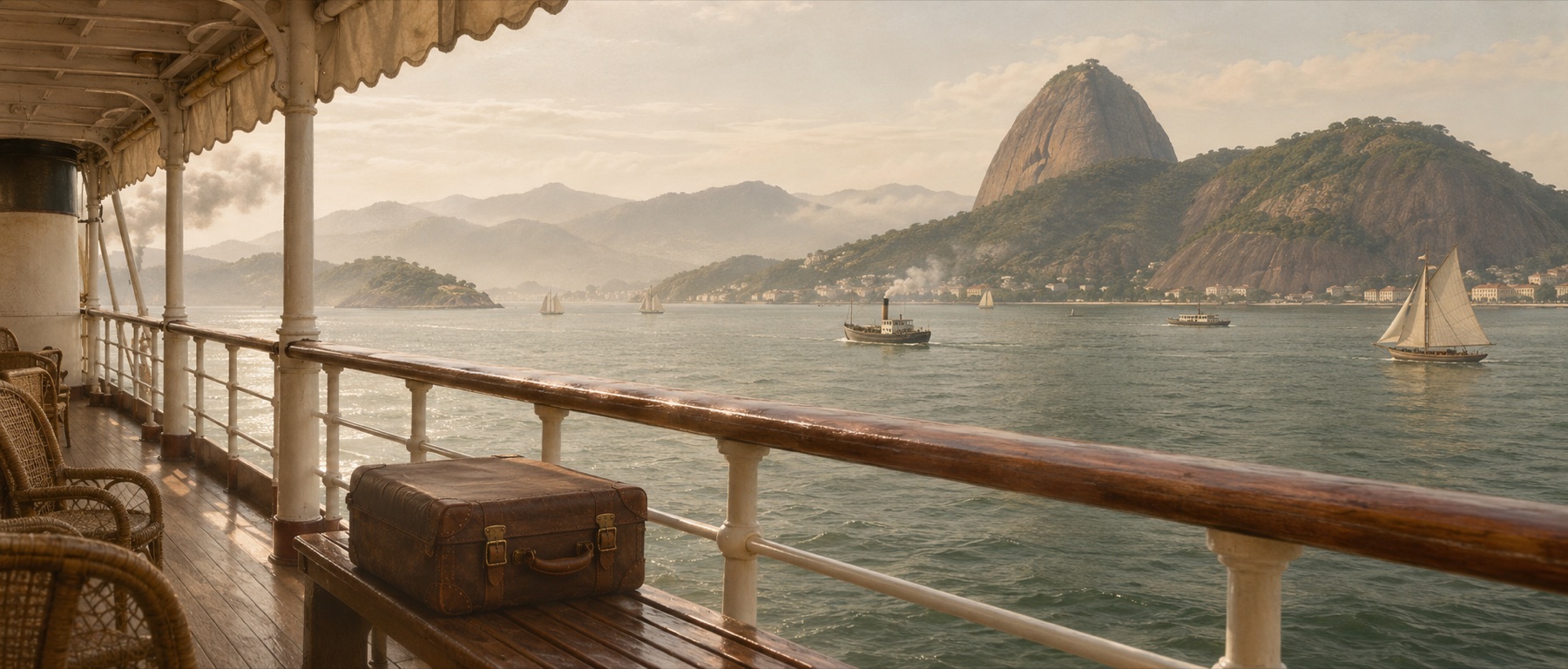
To go from Brazil to France in the 1890s meant living through the distance. Steamship passage, ports, luggage, changing weather, and onward travel by rail belonged to the experience. There was time to feel a familiar coast disappear and an unfamiliar one approach. Our deck scene is an invitation into that scale of travel, not a claim to have recovered a particular moment on a named ship.
The family visited Europe in 1891 as Henrique sought treatment. Further journeys followed. Remembering those repeated crossings matters: Alberto’s relationship with France developed through movement between countries, rather than one tidy scene in which a Brazilian childhood ended and a Parisian life began. Routes connected his two worlds long before his inventions connected the ground to the air.
↗An Atlantic passage, imagined. The ship and viewpoint do not identify a verified sailing.AI-GENERATED HISTORICAL INTERPRETATION02
The city as an immense working demonstration
Paris offered more than an impressive skyline. It offered places where new technologies were displayed, discussed, sold, raced, repaired, and judged. A young man interested in machinery could move between an exhibition, a workshop, a sporting event, and a conversation with somebody who knew a supplier. The city made specialized knowledge unusually accessible.
The Eiffel Tower was a particularly forceful presence in this landscape. It was an engineering work that had also become a public spectacle. Later, Alberto would make it a turning point in an aerial course. For now, it stood within a city where people could gather around a technological achievement and argue about what it meant. He was learning the setting in which an invention could become an event.
The money made available to Alberto gave him an unusual degree of independence. Henrique died in 1892. The son’s later freedom to experiment therefore belongs beside a bereavement, not merely beside the glamour of travel and fashionable society. The public record supplies dates and circumstances; it does not let us narrate his grief from inside his head.
Independence changed what a mistake could mean. He could pay to discover that a proposed arrangement did not work. He could return to a specialist with a different design. An experiment could remain an experiment instead of becoming an immediate commercial obligation. That financial breathing space is a concrete part of how an inventive career becomes possible.
The developing world of motor vehicles was directly relevant to the problem above the rooftops. A machine intended to leave the ground must carry its source of power. An engine that works beautifully on a heavy industrial foundation can be useless when the foundation has to fly with it.
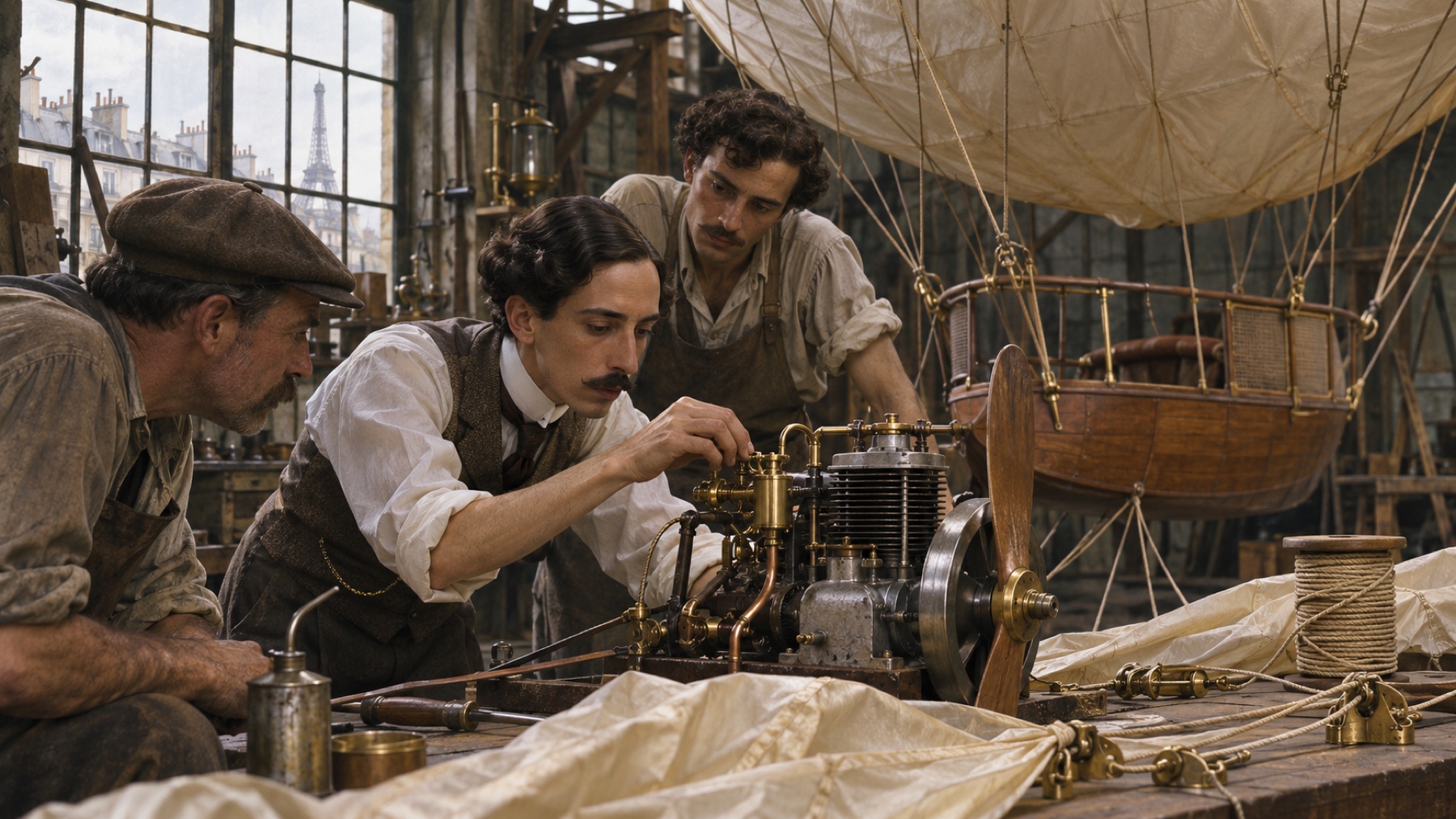
Small petrol engines opened a different possibility. Their attraction was not power alone, but useful power in relation to weight. Even then, the engine was only part of a system: fuel, cooling, transmission, a propeller, controls, and a structure capable of carrying them. The detail of an oily fitting or a small flywheel belongs to the great aerial story because the dream must eventually fit onto a bench.
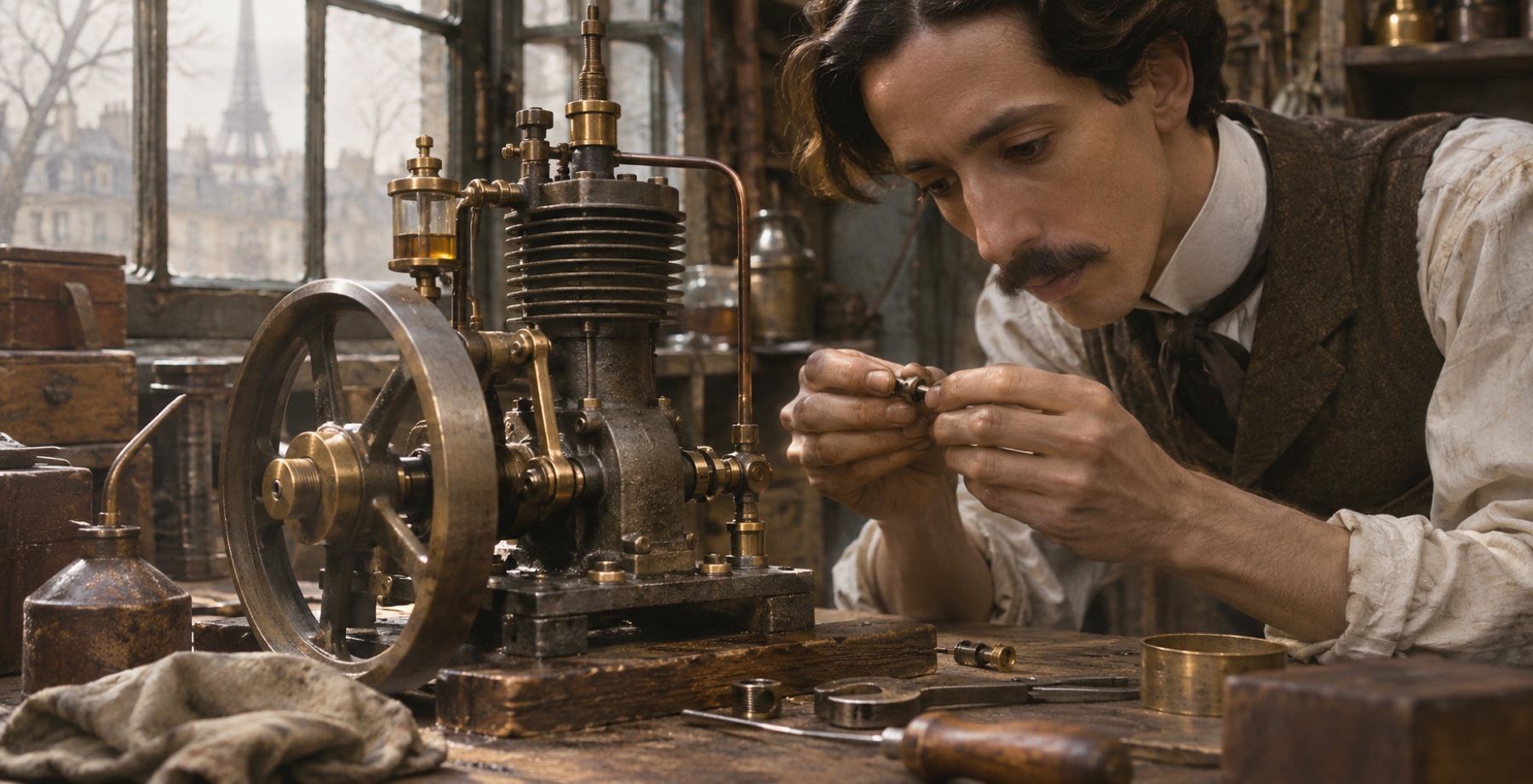
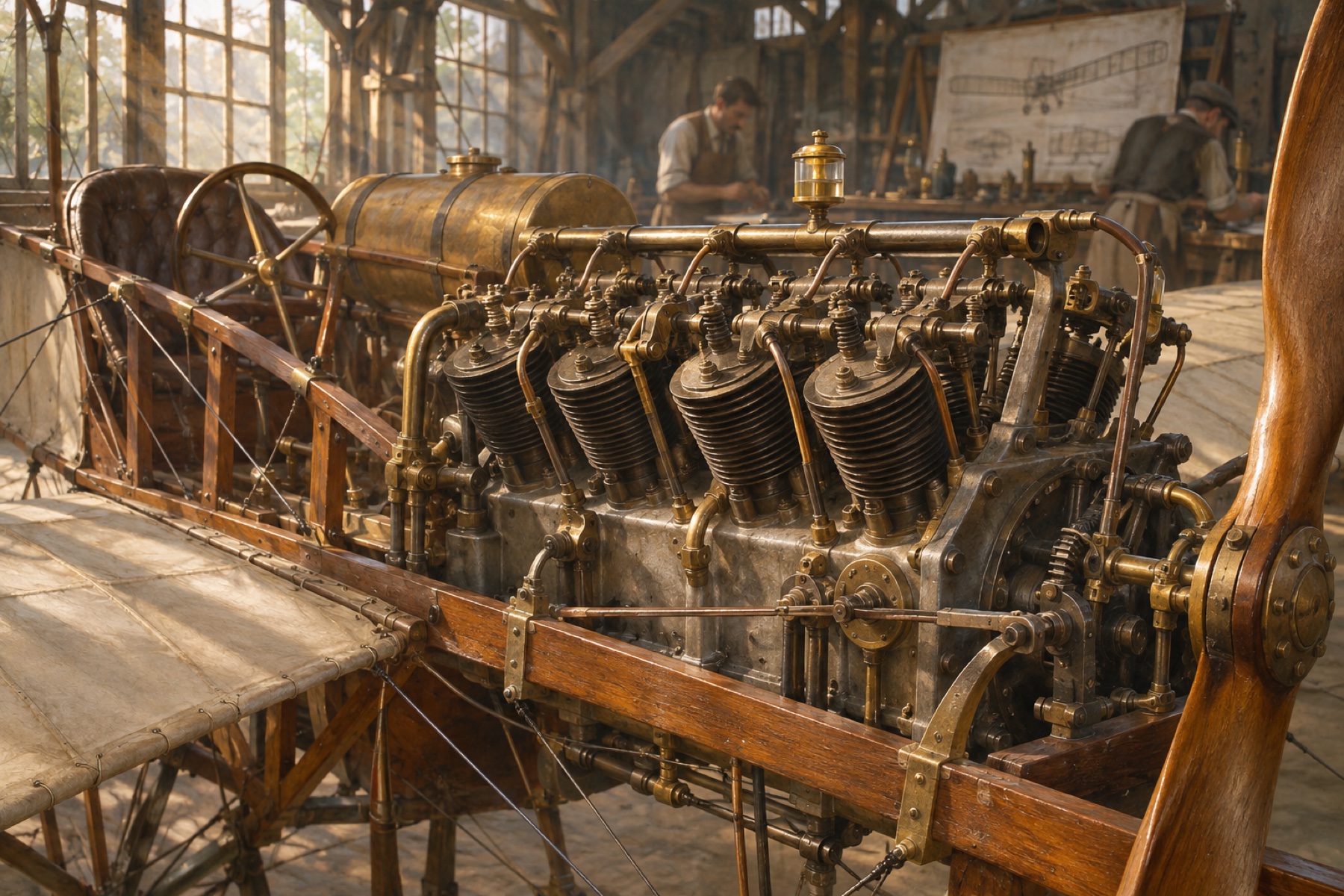
↗A period-inspired engine bench. This is a material study, not a reconstruction of one catalogued motor.AI-GENERATED HISTORICAL INTERPRETATION05
Learning whom to ask
Henri Lachambre and Alexis Machuron become important names when Alberto turns seriously toward ballooning. These were experienced practitioners and builders, people with knowledge that could not be acquired simply by admiring an ascent. They understood envelopes, baskets, inflation, landing, and the compromises that a customer might not yet know to ask about.
The relationship is worth lingering over. Alberto did not need to pretend that he already possessed every skill. His initiative lay partly in bringing a question to people capable of helping him test it. The resulting work crossed the boundary between the person who proposed an experiment and the people whose craft made its materials behave. Invention often happens at precisely that boundary.
He spoke French and entered the city’s sporting and social circles, carrying wealth, an interest in machines, and a distinctive public presence. The fashionable clothes and carefully kept appearance were not incidental to how Paris encountered him. The man who might emerge from a workshop was also somebody society recognized.
That visibility would become useful. Experiments need places, collaborators, attention, and sometimes judges. Celebrity could help assemble an audience; it could also compress a complicated technical life into an attractive image. The Panama hat and the little aeronaut would become memorable, while many hands behind the aircraft remained much less visible. Our task is to keep both the striking figure and the working network in the frame.
Paris could offer an engine, a balloon builder, a field, or an audience. It could not substitute for the first bodily experience of leaving the ground. Alberto still had to stand inside a basket and discover the difference between imagining an ascent and being carried through one.
The next step was modest in its form: go up with somebody who already knew how. It was enormous in consequence. From the street, a balloon is an object in the sky. From the basket, the sky becomes the place you occupy, and the ground becomes a changing surface far below. The problem would soon stop being whether he wanted to fly. It would become where he wanted to go.
Before departure, the balloon is cloth on the ground
A balloon begins with an almost unpromising sight: fabric, ropes, a basket, and preparations that keep people close to the earth. Inflation changes the arrangement. The envelope acquires volume; the suspension begins to make sense; the basket is no longer merely a container resting on grass. Something that had been folded becomes capable of carrying a person.
Alberto’s first ascent with Machuron gave him direct experience of that transformation. The balloon was not yet the small Brasil, and it was not a steerable airship. He was learning an existing practice from an experienced aeronaut. This distinction matters because his later originality grew out of practical acquaintance with what ballooning could already do—and what it could not.
A gas balloon displaces a volume of surrounding air. If the weight of that displaced air is greater than the total weight of the balloon system, an upward buoyant force remains available. The calculation must include everything being lifted: envelope, ropes, basket, instruments, ballast, gas, and the people inside. There is no exemption for the part an inventor happens to find beautiful.
Santos Dumont’s balloons used hydrogen. That belongs to their historical technology; it is not the same as the helium-filled scientific systems described by NASA today. The underlying lesson is shared: a payload cannot be considered separately from the vehicle carrying it. A small saving in one place may be what makes the whole arrangement possible.
The Brasil of 1898 made lightness a visible ambition. Its small silk envelope challenged the assumption that a useful balloon had to be large. But “smaller” is not a complete instruction. An envelope still needs strength, gas retention, sound seams, and a suspension that distributes loads without concentrating destructive stress.
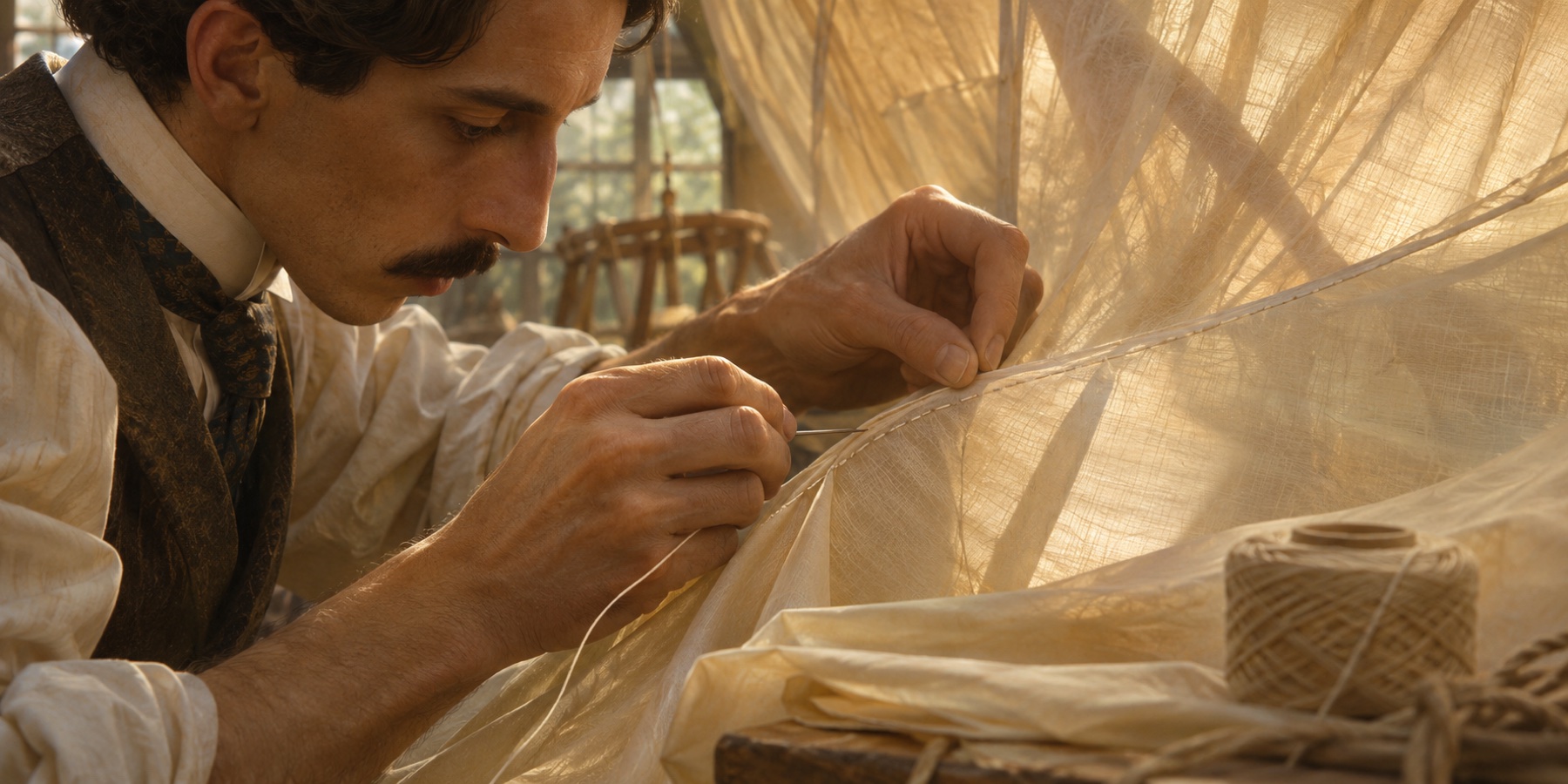
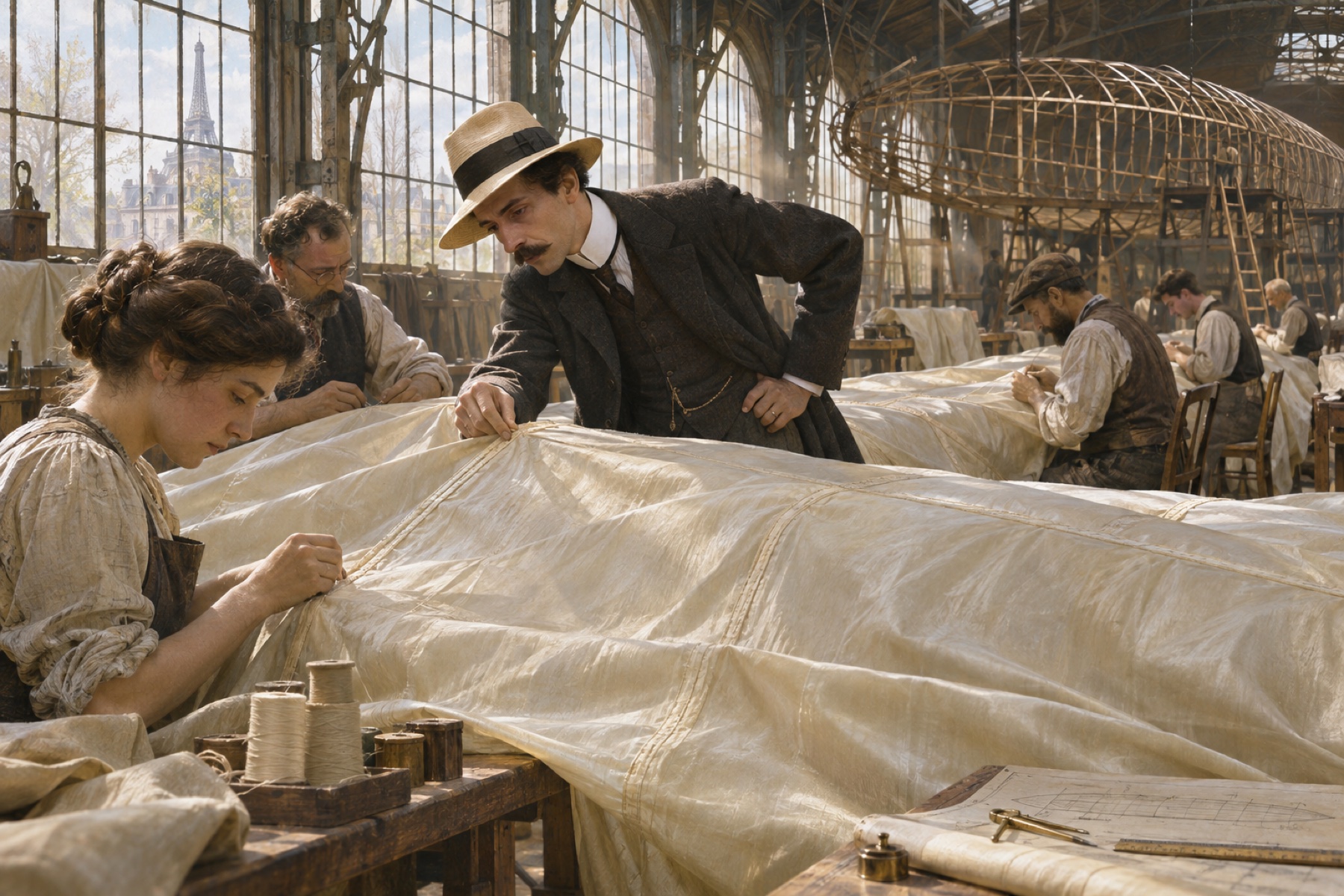
Look closely at the cloth rather than only at the silhouette. A seam joins surfaces while adding weight. A fitting solves one problem while introducing another load. The craft of construction belongs inside the invention, not at its edges. In this sense the needle and the motor are relatives: each has to deliver its function without asking the aircraft to carry more than it can afford.
↗Hands sewing a balloon envelope, imagined. Lightness depended on skilled material work, not only on a designer’s outline.AI-GENERATED HISTORICAL INTERPRETATION04
The unusual quiet of travelling with the wind
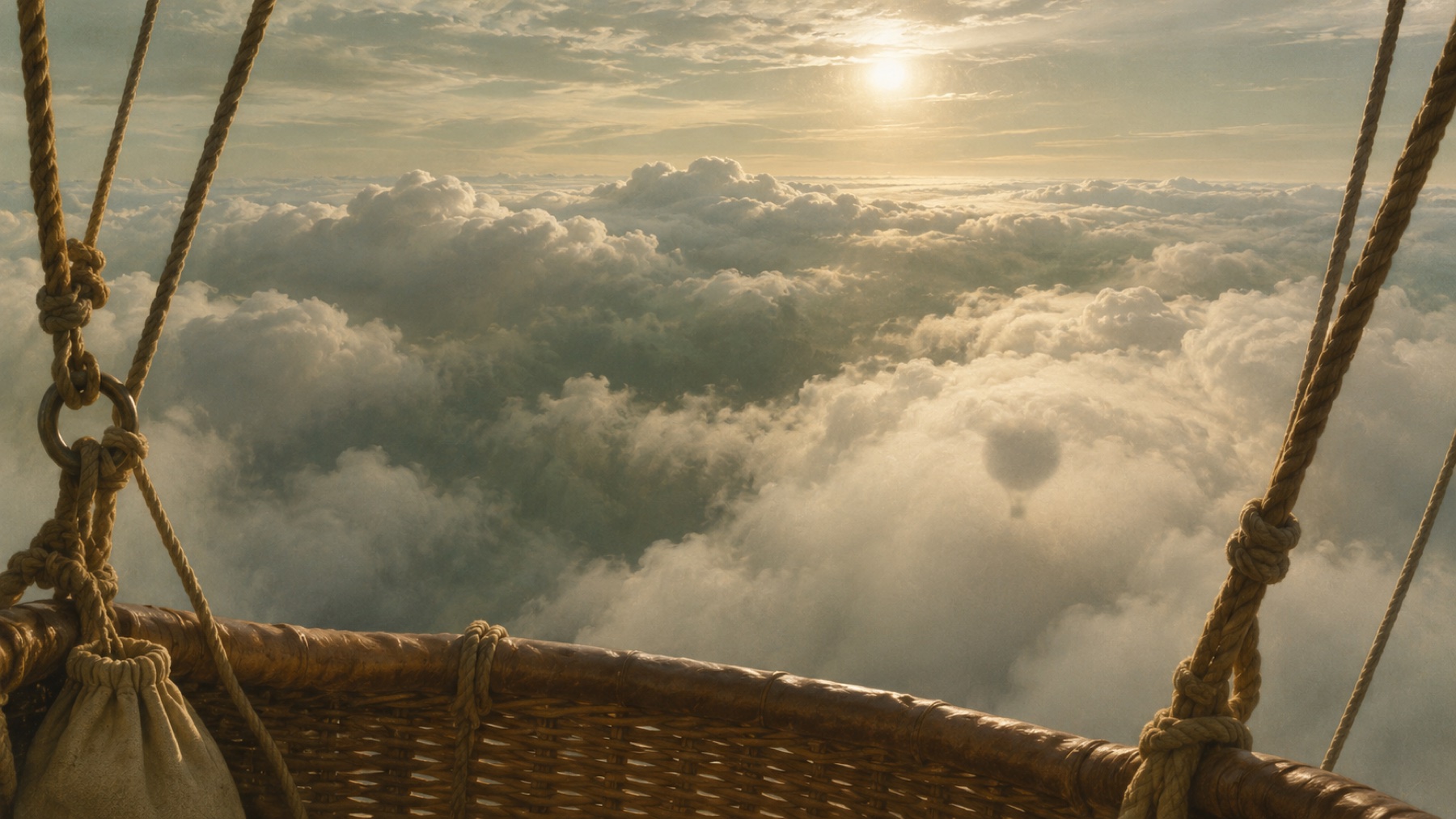
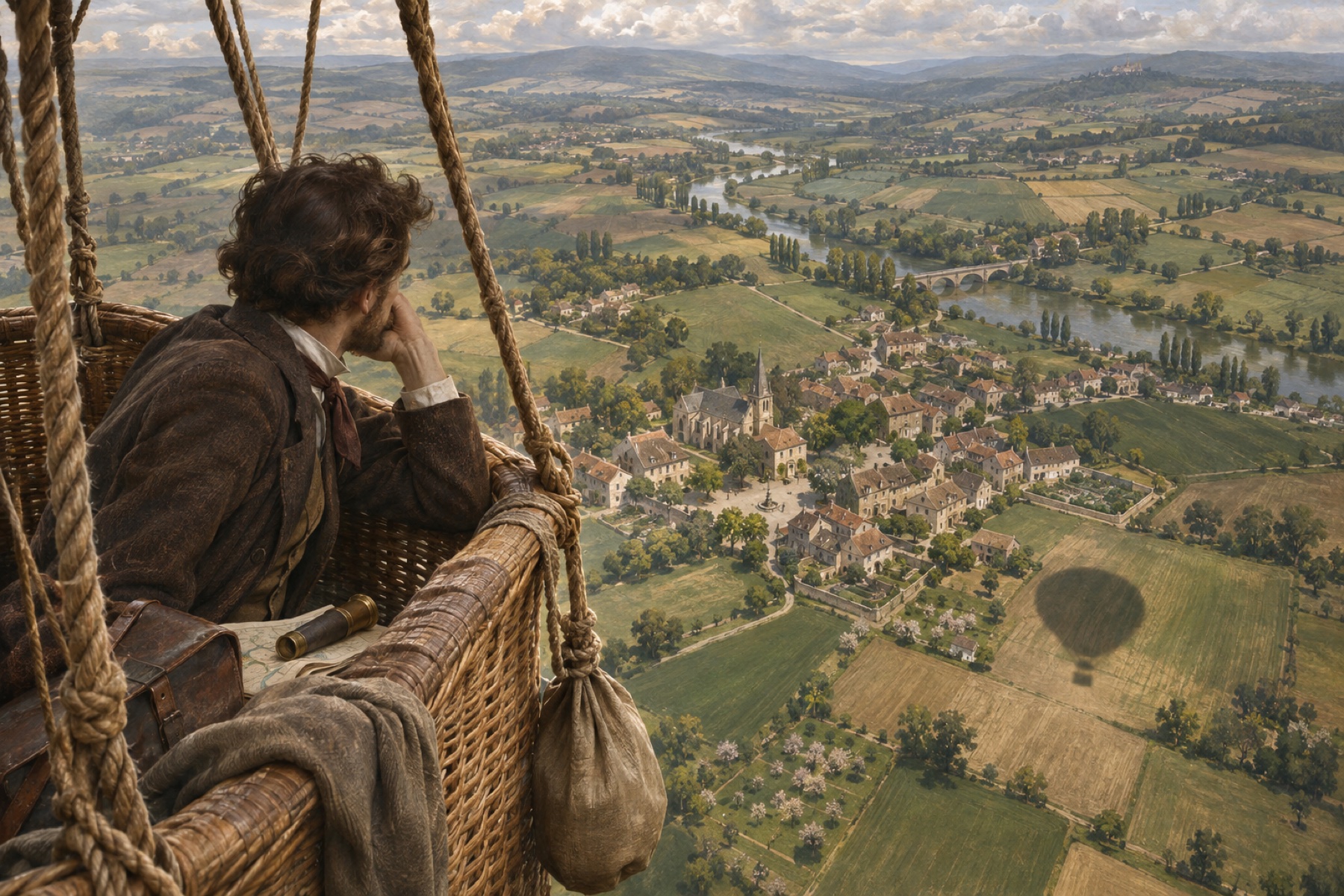
A balloon carried along by an air current can feel unexpectedly calm to its occupants. They are travelling with the surrounding air, rather than standing still while that air rushes past them. Alberto’s account remembers this apparent stillness and the impression that the earth was retreating below.
This is an invitation to change viewpoint. Roads that organize daily life become lines. The size of a building begins to depend on altitude. An ordinary boundary can disappear into a broader pattern of fields and settlements. We cannot reproduce his exact sensation, but we can follow the observation he left: flight changed not only his location, but the arrangement through which he understood the world.
Altitude does not become a permanent possession when a balloon reaches it. Temperature, pressure, gas volume, and the total load continue to matter. Releasing ballast reduces the weight being carried; releasing lifting gas reduces the available buoyancy. Each action changes what will be possible later in the journey.
The important human detail is that a seemingly gentle flight requires attention. A bag of sand is not scenery. Nor are clouds simply decoration. Weather can change the behaviour of the system and the visibility of the ground on which the aeronaut depends for orientation. The beautiful view and the practical problem occupy the same basket.
↗The small Brasil, imagined. Its portable scale brought the questions of weight and construction into focus.AI-GENERATED HISTORICAL INTERPRETATION06
The freedom to go up was not the freedom to choose a destination
An ordinary free balloon could alter its altitude and sometimes encounter a differently moving layer of air. It could not simply turn toward a chosen address as a driver turns a vehicle. The distinction between drifting and navigating was the opening through which Alberto’s next experiments emerged.
He wanted a return journey, not merely a departure. That ambition changes the design question. A spherical envelope offers buoyancy but considerable resistance when pushed sideways through the air. An elongated form, a motor, a propeller, and a steering surface suggest another kind of machine. None alone is a solution. Together, they create a system that has to be balanced, tested, and made to work in real weather.
What the little balloon taught the future airplane builder
A balloon and an airplane obtain their support in different ways. Yet the habits of work can travel between them: weigh the parts, question an assumption, pay attention to the atmosphere, and learn from the response of a real machine. The Brasil matters because it belongs to that developing education.
The sequence is more interesting than a sudden flash of genius. Alberto first learns how to ascend, then presses against the limits of drifting. The sky that looked like open space reveals itself as a demanding physical environment. To belong to it, he will need more than the courage to let go of a rope. He will need a way to come back.
The difference begins with the return journey. A spherical balloon can carry a person over a wonderful landscape, but the wind chooses where the journey leads. To leave a place, travel toward a destination, and return to the starting point requires another kind of machine. Alberto wanted that freedom. A propeller and rudder promised a way to pursue it, provided their weight could be carried into the air.
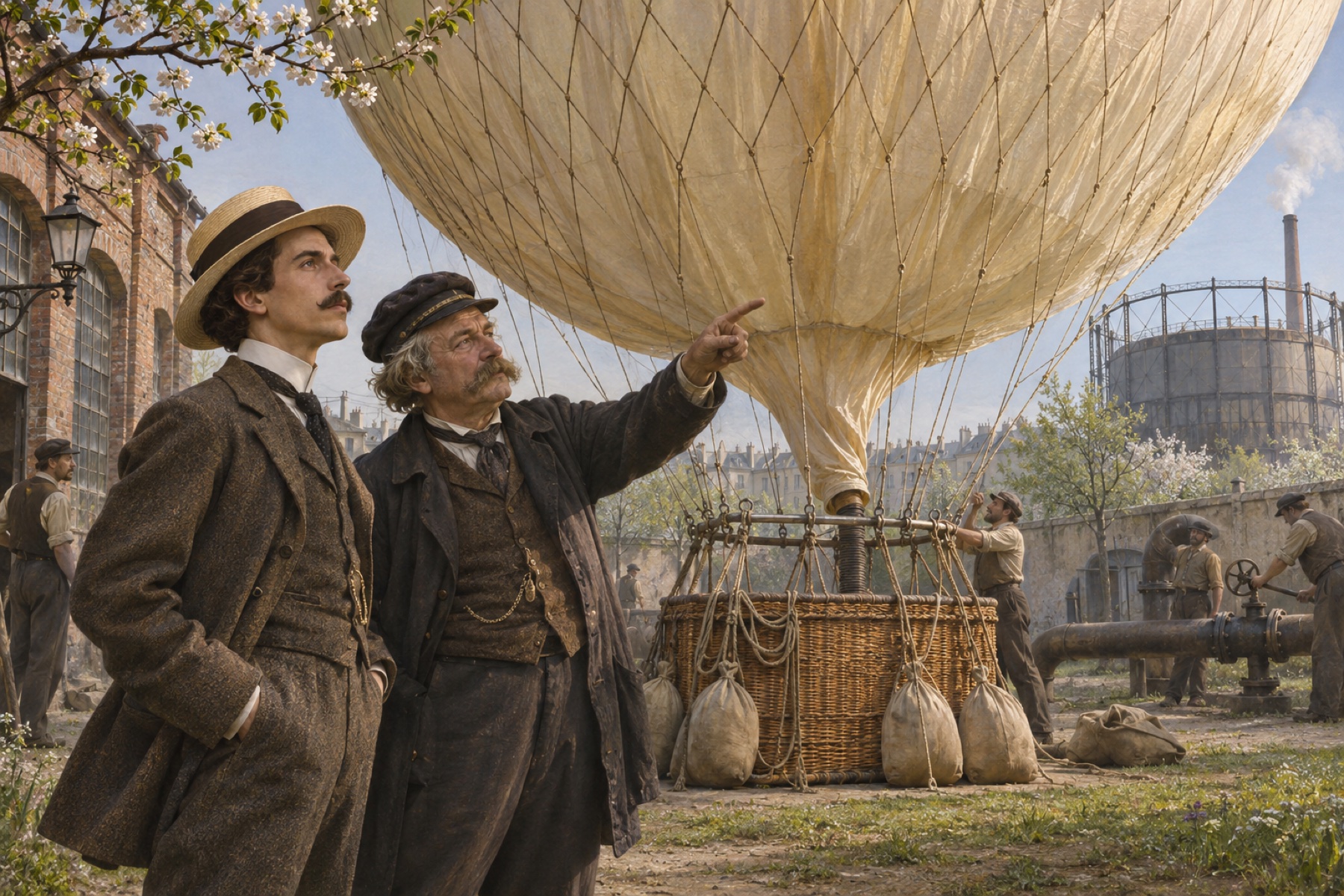
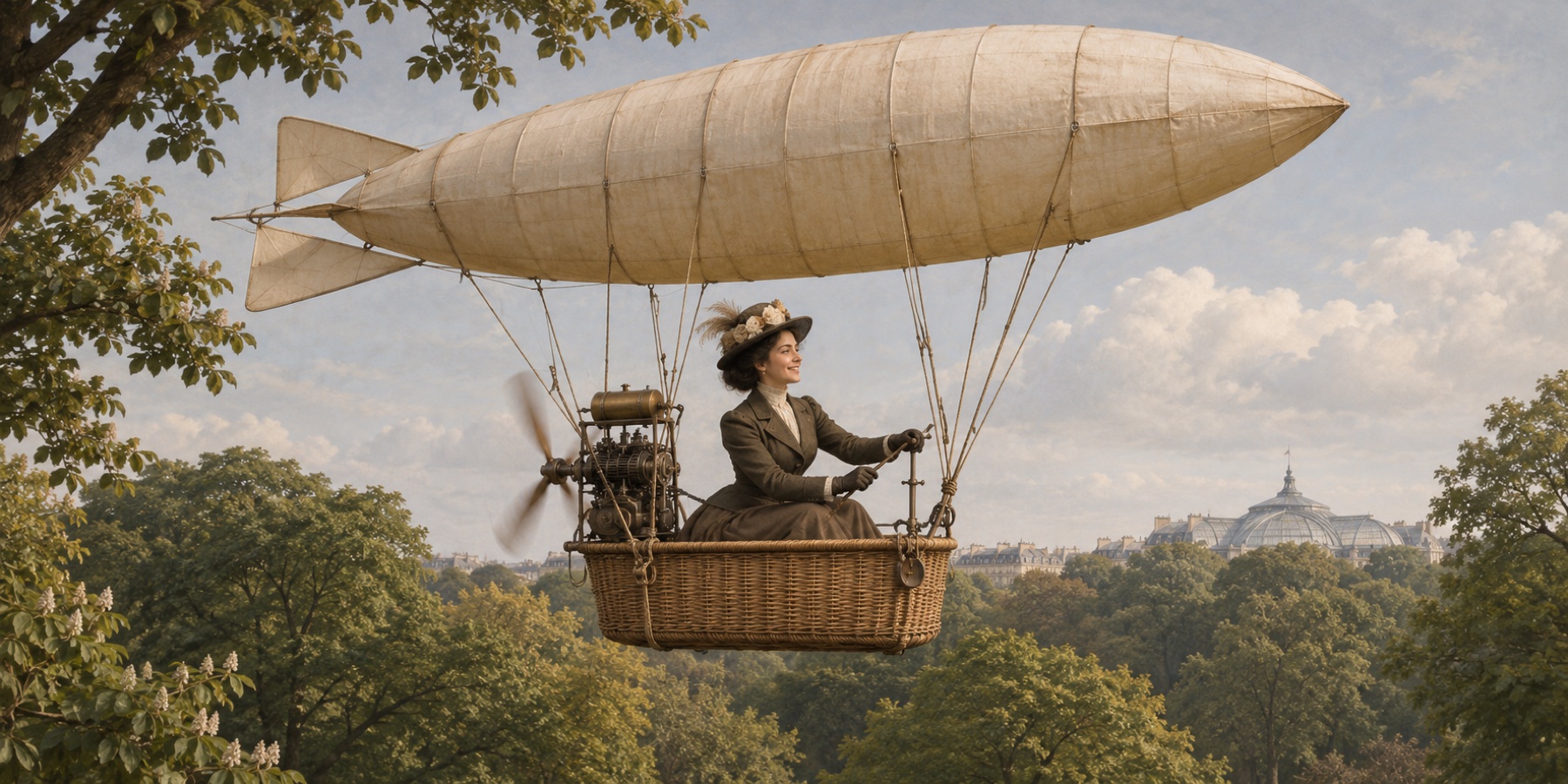
In 1898, after gaining experience in free balloons, he began building powered dirigibles. The envelope became elongated, giving the machine a recognizable direction. Below it hung an engine, a propeller, and the place from which the pilot would control the whole assembly. It was an aircraft made of relationships: the lifting gas above, the suspended weight below, and thrust acting through a structure light enough to rise.
Go back into the workshop before looking at the skyline. The engine must be mounted. Fuel has to reach it. Cables must carry loads without reaching the turning propeller. The gas envelope must retain a usable shape. Every attractive line in a photograph conceals a decision about one of those problems. To steer through Paris, he first had to make these different materials work together.
↗The work beneath the spectacle: an imagined Paris workshop, with craft and collaboration at the centre.AI-GENERATED HISTORICAL INTERPRETATION02
No. 1: the shape begins to fail
The first numbered airship was exceptionally slender. Its small petrol engine made powered movement possible, but propulsion was only one difficulty. When the pressure and shape of the envelope changed, the long balloon could bend. The suspension system then had to carry its loads in a geometry for which it was no longer properly arranged.
During the 1898 trials, Alberto encountered this weakness directly. The airship could cease to behave like the clean, elongated shape imagined by its maker. Near the ground, a failing envelope and surrounding trees became an immediate problem of landing and rescue. Early success in making a propeller move an aircraft did not settle the question of keeping that aircraft manageable.
This was the beginning of a repeated pattern: a flight exposed a relationship that a drawing had not made sufficiently clear; repairs and another design followed. Increasing the engine's power could not substitute for maintaining the envelope's shape. Making something stronger might also make it heavier. The constraints pulled against one another, and he had to learn inside them rather than wish them away.
↗No. 1 near the trees, interpreted by AI. The scene conveys the vulnerability of an early envelope rather than an exact accident geometry.AI-GENERATED HISTORICAL INTERPRETATION03
The sky becomes a workshop
The next machines explored different proportions, volumes, and arrangements. No. 3 had a fuller envelope than its predecessors. No. 4 made the pilot's exposure particularly striking, with a bicycle-like seat in place of the comforting picture of an enclosed cabin. He was not refining one finished product. He was trying ways of making the load, the gas, and the motor cooperate.
The numbered sequence can hide this if it is read too quickly. One number is not simply one more success. It represents a configuration tested against practical experience, sometimes followed by a costly repair or another configuration. The city watching him saw repeated ascents; the inventor experienced a continuous set of decisions about weight, pressure, stability, and control.
Free-balloon experience remained useful. Ballast, valves, and the approach to a landing were already part of his knowledge. Powered flight added the ability to act on the horizontal journey, together with the consequences of carrying fuel and machinery. He became pilot and engine attendant at once. There was nobody else in the basket to take over while he concentrated on a fault.
In 1900, Henri Deutsch de la Meurthe offered a prize with a wonderfully legible course. An airship was to leave the Aéro-Club's grounds at Saint-Cloud, go around the Eiffel Tower, and return within thirty minutes. The journey was roughly eleven kilometres. The tower was both a navigational mark and an object the public could immediately recognize.
The challenge demanded something more revealing than a favourable straight run. Wind that helped on one leg could oppose the aircraft on the other. The machine needed useful speed through the air, controllability around the turning point, and sufficient reliability to keep its motor working throughout. A failure halfway home could undo an excellent outward time.
Look at the course from Alberto's position. Saint-Cloud is the place he wants to reach again. Between it and the tower lie the river, the Bois de Boulogne, rooftops, and the edges of the city. The destination is enormous and visible, but it is also a solid obstacle. The same landmark that makes the experiment understandable gives the pilot a reason to be careful. The public can watch a feat whose hardest problems remain almost invisible from the ground.
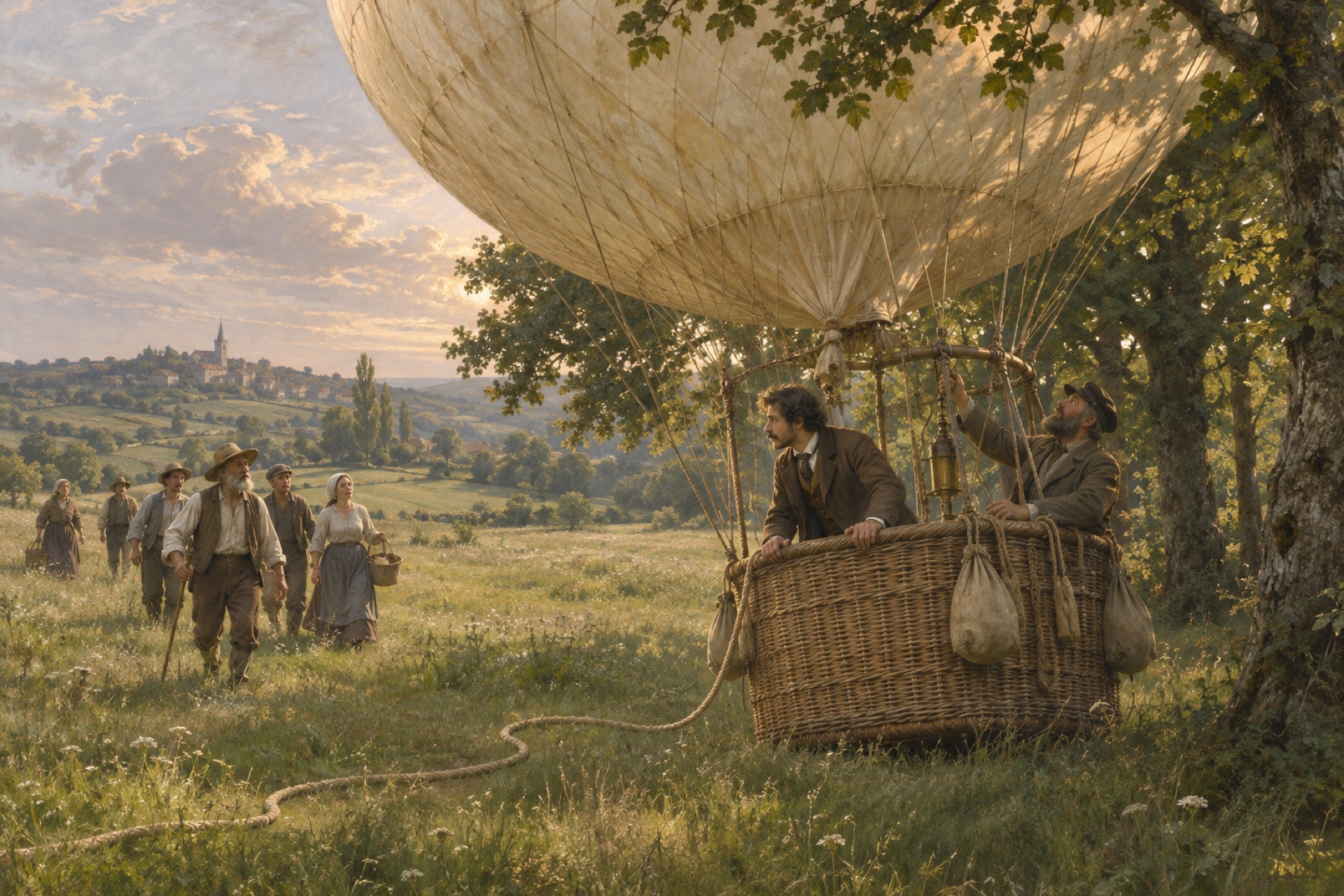
On 13 July 1901, he made a prize attempt with No. 5. The outward journey looked promising: in his account he reached the tower in about ten minutes. The return met a headwind, and he arrived back at Saint-Cloud far beyond the limit. Then the engine stopped. The airship drifted into a chestnut tree on Edmond de Rothschild's property.
The episode has a human detail that survives in his memoir. Princess Isabel, living nearby in exile, sent lunch while he dealt with the stranded machine. Later she sent a medal of Saint Benedict with a letter expressing concern for his safety. He explained that the chain seen on his wrist was associated with wearing that medal. A small object connected a conspicuously modern experiment with an older language of care and protection.
The July flight showed exactly why returning mattered. He had reached the great landmark, yet that was not the task completed. Nor did crossing back into familiar territory make a motor failure harmless. An experimental airship needed a safe relationship with the ground at every stage, including the last few minutes when the watching crowd might already assume the difficult part was over.
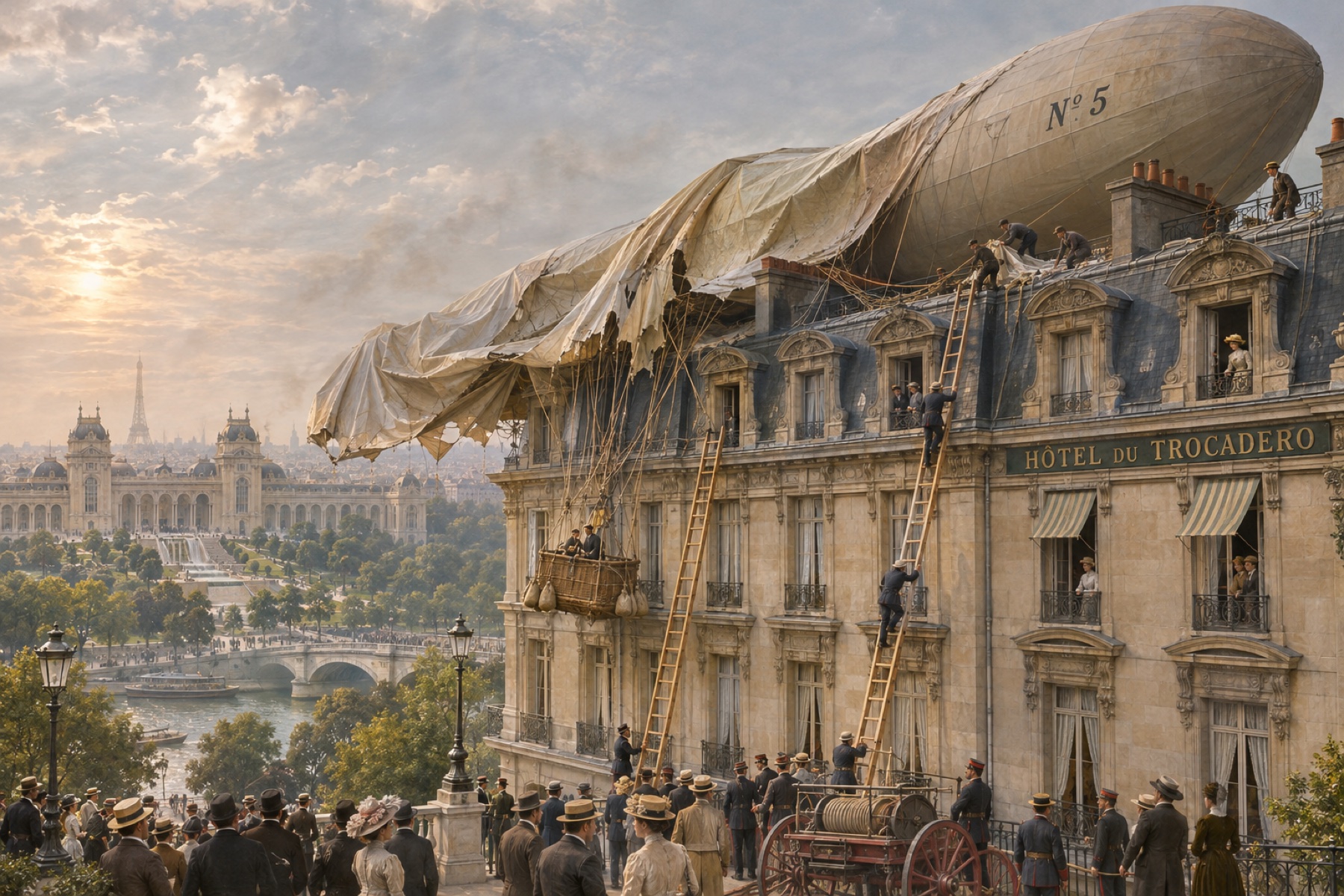
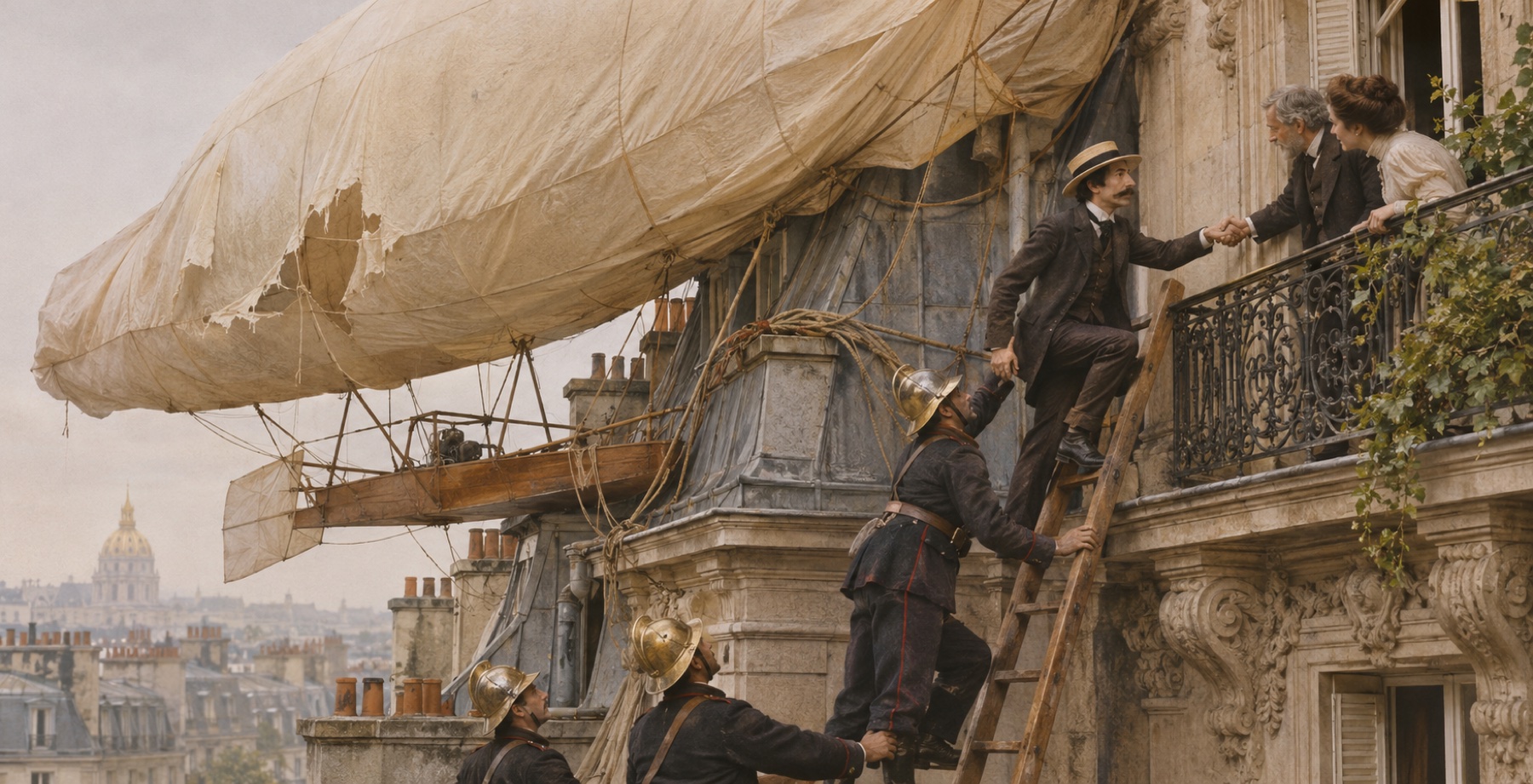
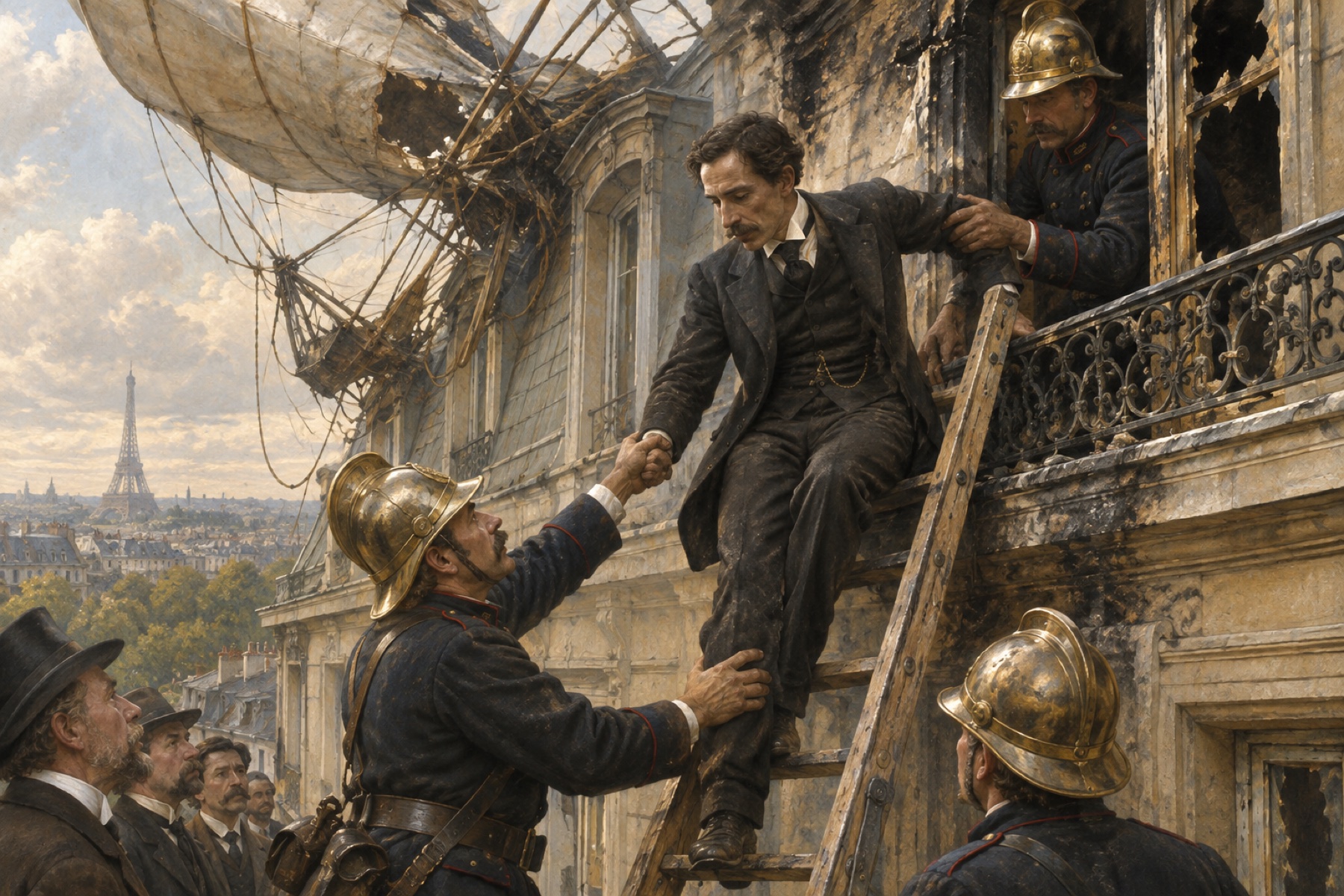
The next serious attempt brought a far more dangerous accident. On 8 August, No. 5 rounded the tower, but a valve was allowing hydrogen to escape. As the envelope lost its shape, the suspension wires sagged toward the propeller. Alberto stopped the engine to prevent it from cutting them. That decision also removed his powered means of resisting the wind.
The airship descended toward the Trocadéro hotels. Part of the envelope struck a roof and burst; the keel became braced against the buildings, leaving him suspended in his basket above a courtyard. Firemen from Passy came to his rescue. The machine had become a wreck while the man remained alive.
The full sequence deserves its own story, because it was more than a dramatic interruption between two successful dates. The failure connected a small valve, the shape of a large envelope, the path of the suspension wires, and the engine's other duties. Back on the ground, the next design would have to answer that chain of events.
The new airship was No. 6, approximately thirty-three metres long, with an envelope of about 630 cubic metres and a twelve-horsepower engine. The figures describe a machine, but the important change lies in how its parts were expected to protect one another. Alberto gave renewed attention to the arrangement that kept the envelope properly filled out as conditions changed.
Inside the outer envelope was an air compartment, or ballonet. As the lifting gas occupied less volume, air could enter this compartment and help preserve the outer shape. Valves relieved pressure in a controlled order. The system did not make hydrogen inexhaustible or eliminate risk. It addressed a specific operational need: an elongated airship must continue to hold a shape compatible with its suspended structure and propeller.
There was still practice and damage before victory. September brought further mishaps and repairs. The machine that emerged for the decisive attempt was the product of those intervening days, not simply a sketch made after a dramatic rescue. Workers sewed fabric, fitted mechanisms, checked assemblies, and returned equipment to service. The familiar name on the aircraft carried work done by many hands.
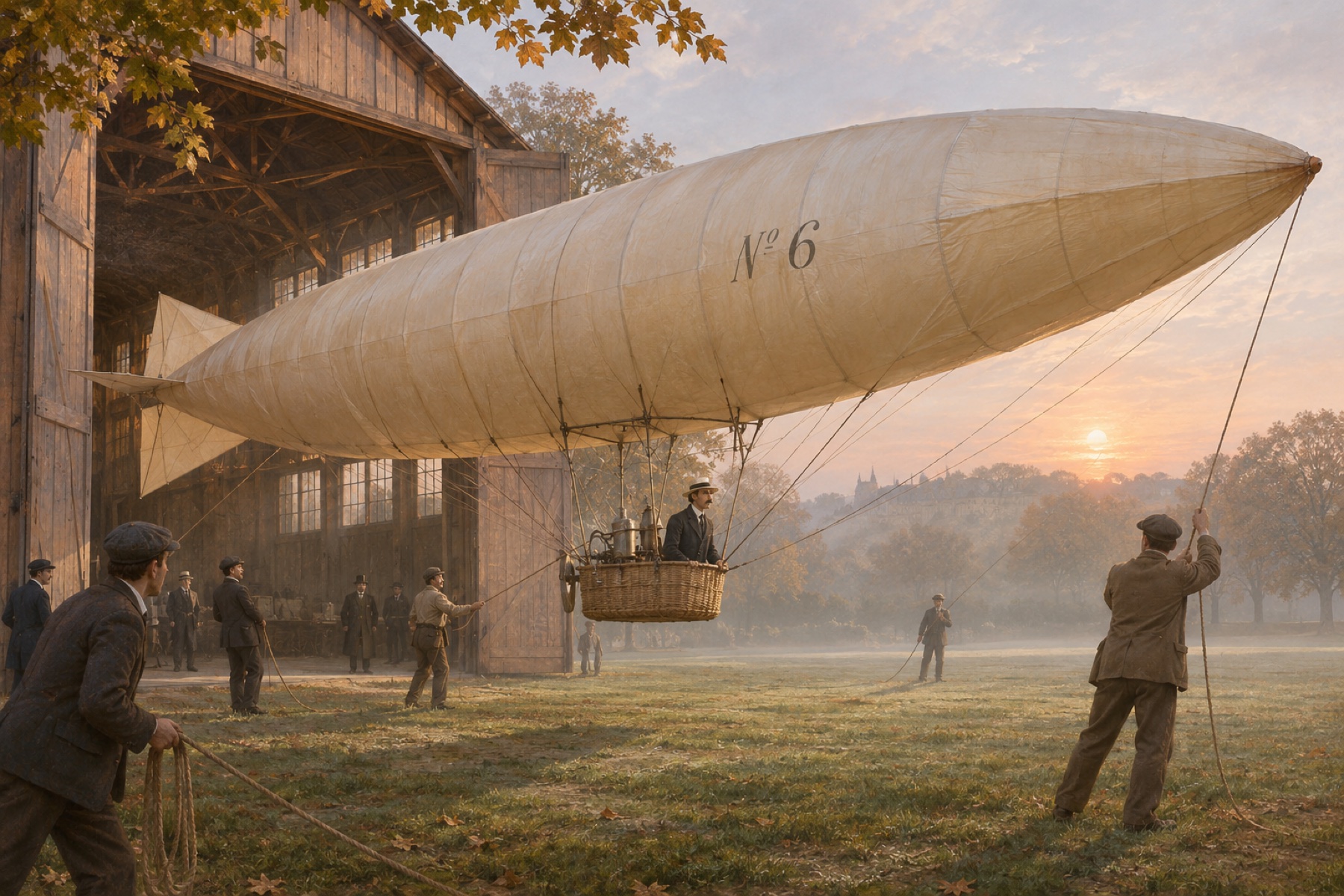
On 19 October 1901, No. 6 set out again. Picture the crew near the ground, hands attending to a machine that can be pulled sideways by the same air in which it must navigate. Above them stretches an envelope large enough to lift a person and an engine, yet made of fabric. Below it, Alberto has the controls and the responsibility for deciding when to proceed.
His published account gives a start shortly before 2:42 in the afternoon. Soon the familiar ground recedes and the outward leg becomes a succession of reference points. The time limit is running. The aircraft must make progress toward the tower while preserving enough reliability for the return, when the helpful part of the wind will no longer be helpful.
It is easy to imagine the pilot as a figure admiring the view. His description is much more concentrated. On the outward flight, he was occupied with the goal. He had to attend to direction, machinery, and altitude. The machine did not possess a separate navigator, flight engineer, or observer. All those tasks gathered around one small place beneath the silk.
↗The departure setting at Saint-Cloud, imagined in morning light. The prize-winning flight itself began in the afternoon.AI-GENERATED HISTORICAL INTERPRETATION09
The Eiffel Tower fills the view
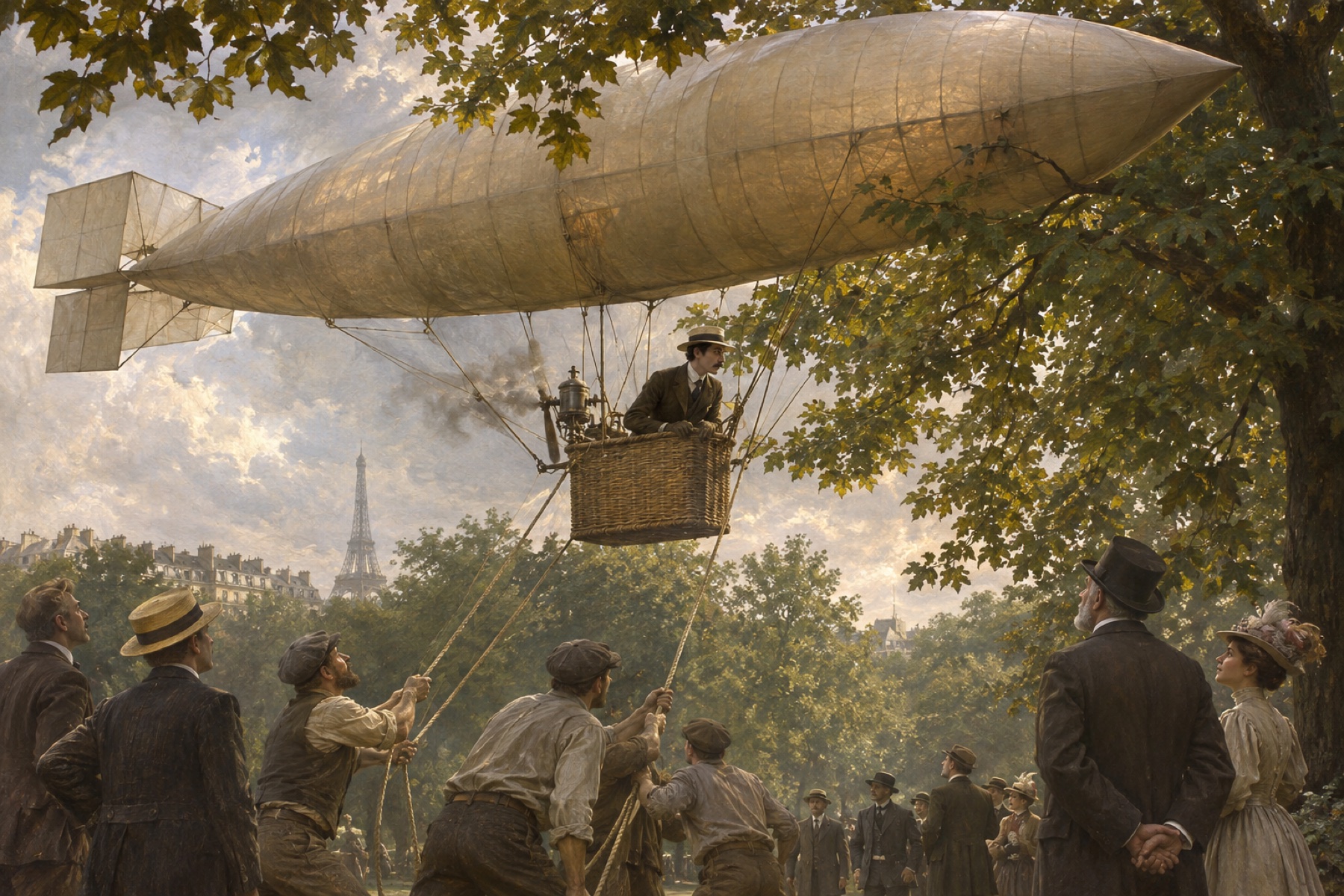
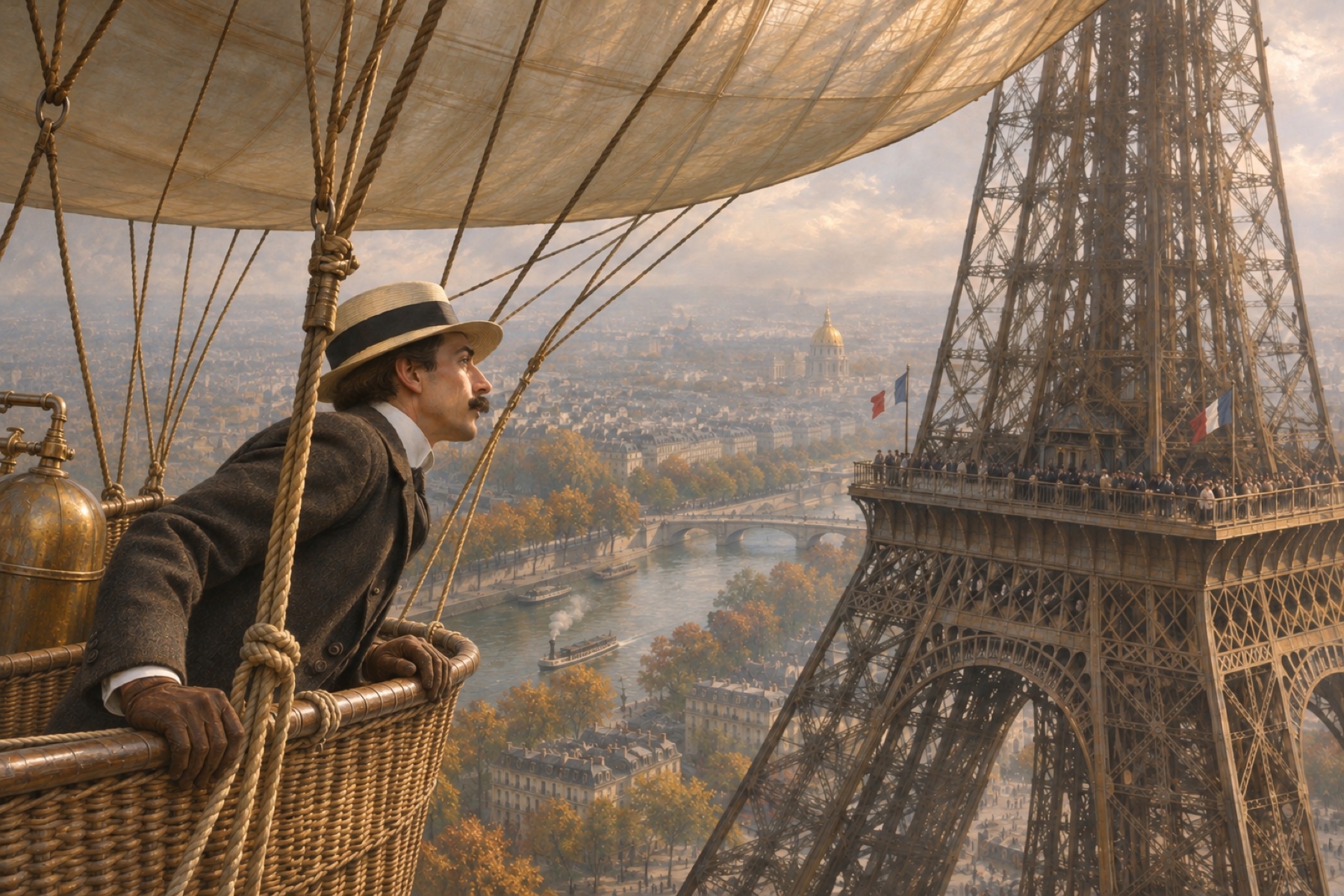
The turn came after roughly nine minutes. From the ground, the tower offered a magnificent way to see whether the airship had truly gone around its destination. From the aircraft, its size imposed a different meaning. Iron was now close to an envelope whose shape depended on gas, fabric, and valves. A change of wind or a stopped motor could narrow the pilot's options very quickly.
Alberto later described the tower as the chief danger he anticipated in these attempts. The risk was not an abstract fear of height. It was the possibility of being carried against a structure he could not move, while flying an aircraft whose engine was not completely dependable. He had to make a controlled path around it and then establish the return course.
Let the image bring the landmark near, but keep the practical work in view. The basket is not an observation terrace. There are lines, controls, and a running engine beside the pilot. Paris spreads below, yet the immediate problem is to leave the tower safely behind. When he completes the turn, the famous silhouette is no longer the destination. Saint-Cloud is.
↗At the turning point: an imagined basket-level perspective, not a reconstruction of the precise separation from the tower.AI-GENERATED HISTORICAL INTERPRETATION10
The engine falters on the way home
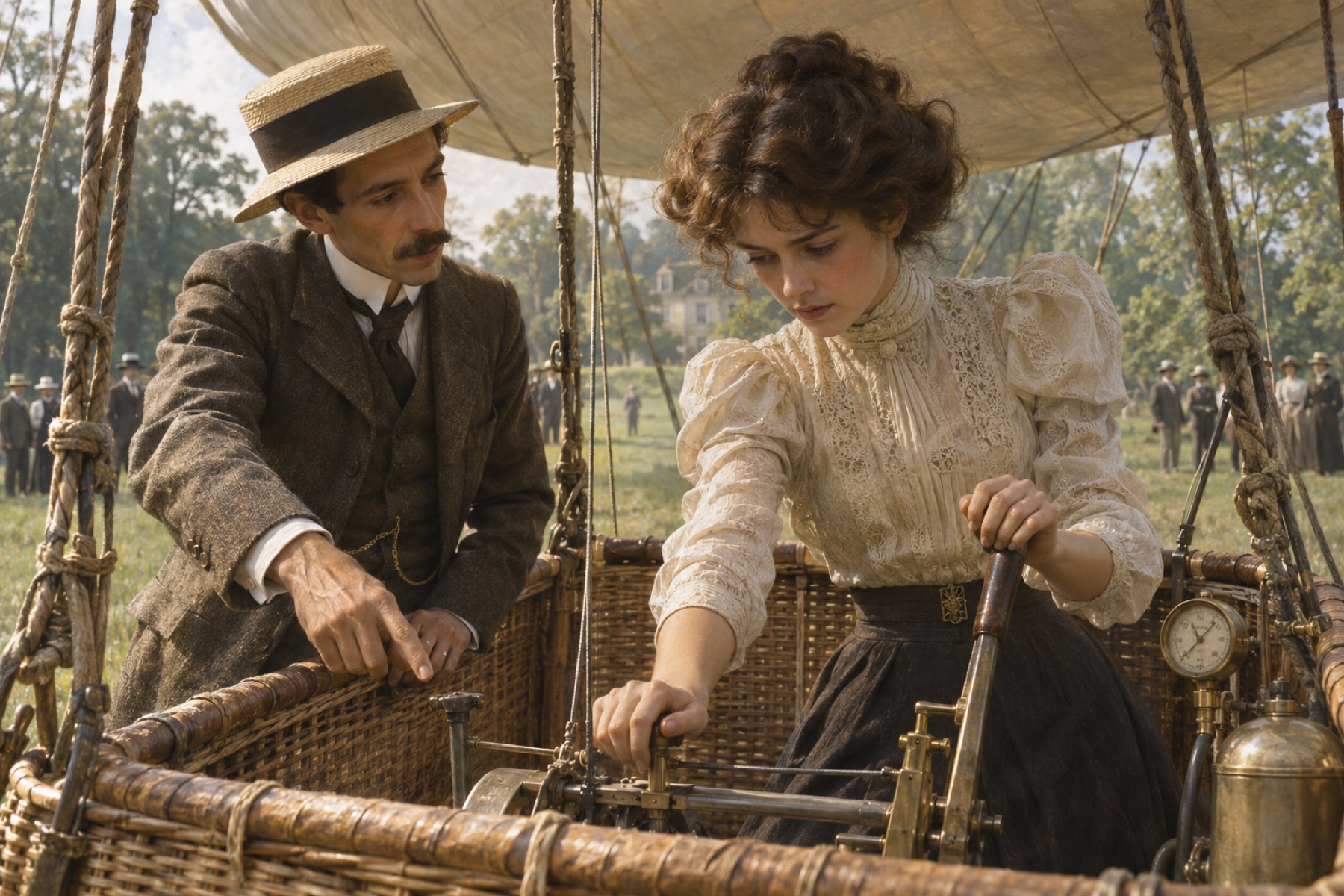
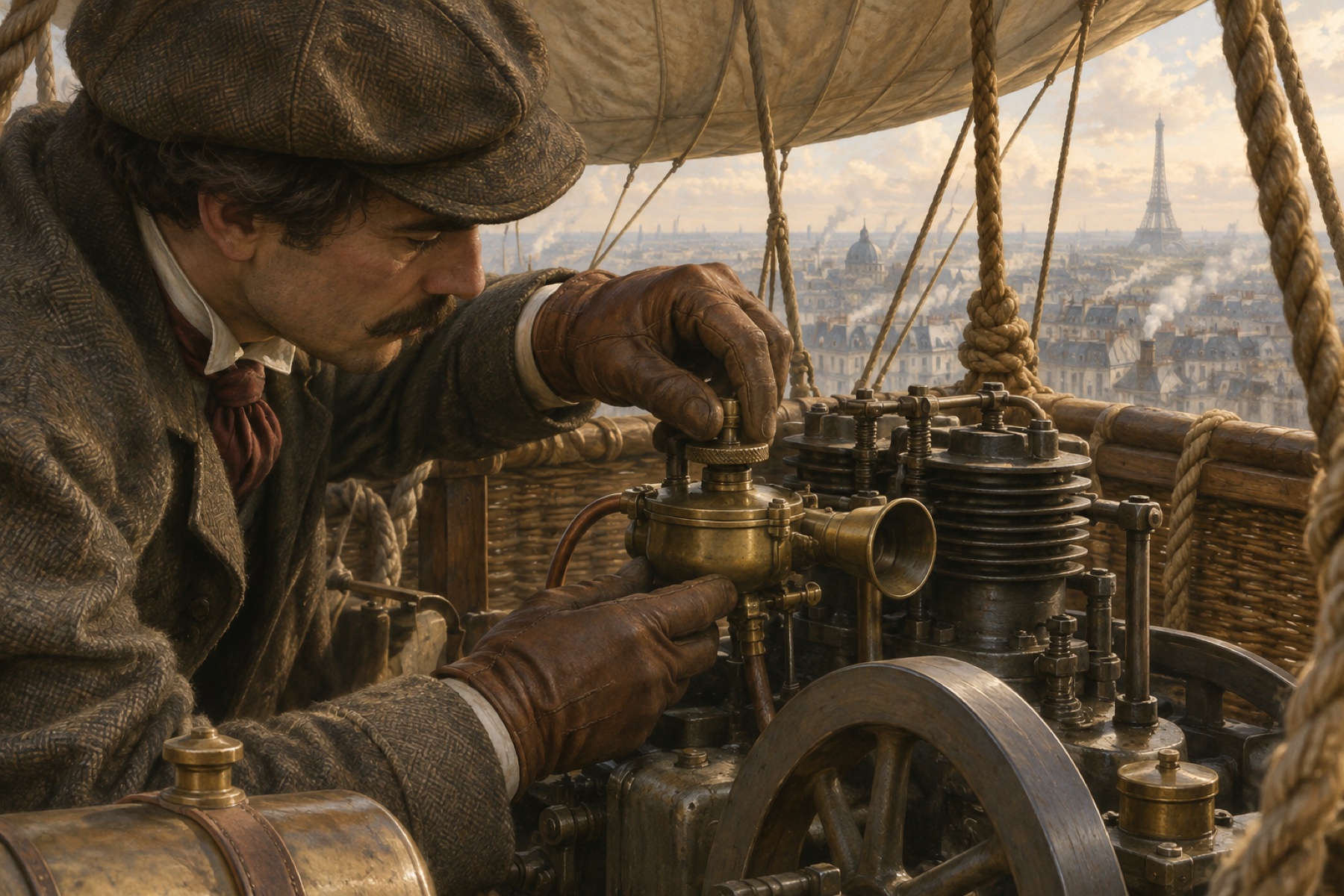
The return was not an uninterrupted triumph. Alberto reported that the motor nearly stopped soon after the turn. To attend to it, he had to divide his attention between the controls and the machinery. A carburettor adjustment belongs at the centre of the story because it could determine whether the aircraft continued making useful progress.
Over the Bois de Boulogne, altitude and trim became another complication. He moved weights and the guide rope aft to bring the airship's nose upward. When the engine recovered its full power, that upward attitude became more pronounced. The crowd below saw an alarming climb; the pilot had to move the weights forward again to restore a more suitable attitude.
This is the flight at its most physically intelligible. A shift of weight changes the direction in which thrust carries the aircraft. A mechanism recovering from a fault can create a new problem if the rest of the machine has already been adjusted around its weakness. The pilot is continually meeting the consequences of his last decision. The grass at Saint-Cloud is near, but reaching it still demands work.
↗The small mechanism beside the great view: a period-inspired engine adjustment, imagined.AI-GENERATED HISTORICAL INTERPRETATION11
Two finishing moments, one famous argument
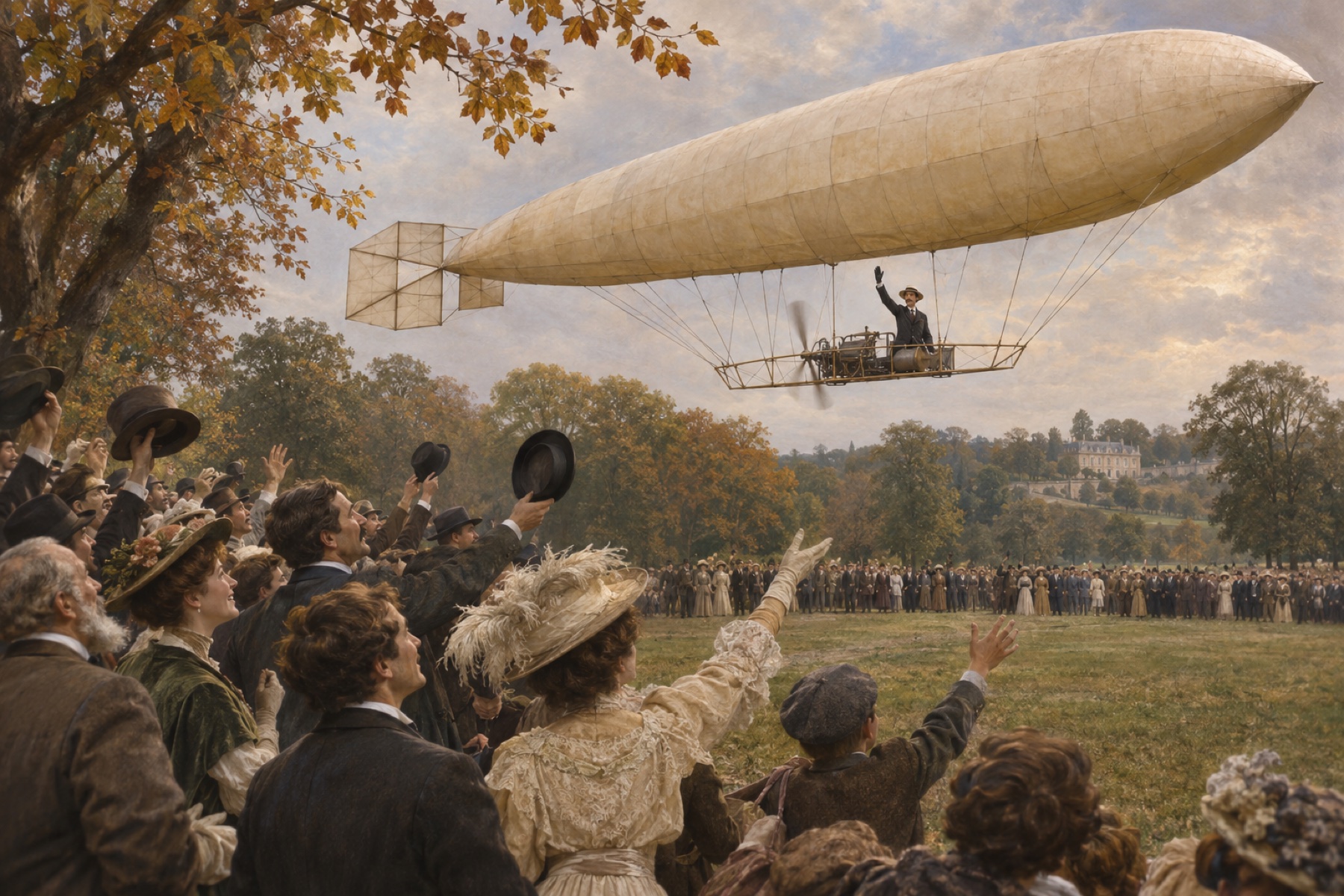
He passed above the timekeepers at Saint-Cloud after twenty-nine minutes and thirty-one seconds, according to his memoir. He then turned back to let the ground crew catch the guide rope and bring him down. That happened after the thirty-minute limit. The two moments produced an argument over what counted as completion: returning across the finishing point, or being physically brought to earth.
For a short time, the uncertainty followed him onto the ground. The spectators' excitement and the officials' interpretation were different parts of the event. He had made the circuit in less than half an hour; the award still needed to be settled. The prize was ultimately granted, and 19 October became the date attached to the achievement.
The disagreement gives the scene texture. A technological demonstration must be performed, witnessed, timed, and interpreted. Even when an aircraft has visibly done something extraordinary, the terms of a competition can matter. Santos Dumont's flight was public enough to generate both acclaim and scrutiny. That visibility helped turn an experimental journey into a story that travelled far beyond the people standing in the field.
↗The return and the people waiting below, imagined. The finish was followed by an argument over the timing rule.AI-GENERATED HISTORICAL INTERPRETATION12
The prize leaves his hands
The prize money ultimately amounted to 125,000 francs. In his account, Alberto gave 75,000 francs through the Paris prefect of police for people in need and distributed the remaining 50,000 among his employees. The allocation placed the mechanics and other workers within the celebration. Their contribution had continued through the days when there was no triumphant crowd to watch them.
Fame now moved faster than the airship. His name and appearance became recognizable, the flights entered illustrated publications, and the slender machine became a symbol of a city imagining its aerial future. That public presence brought opportunities, but it also created an image simpler than the labour behind it: the elegant man, the improbable craft, the Eiffel Tower.
The deeper story retains the things the icon leaves out. A small spring could compromise the whole machine. A motor needed attention in the air. A prize could remain disputed after the flight was over. The triumph belonged to a man capable of continuing through that untidy reality, supported by people who could turn the next set of drawings into something that might rise.
The Eiffel Tower flight did not end the experiments. Monaco offered a different setting in 1902, with Prince Albert I's support and a hangar near the water. The sea changed the problem of operating near the ground. Wind, waves, boats, and the possibilities of rescue became part of the apparatus around the aircraft. The familiar Paris skyline had been replaced by a coast.
By 1903, the small No. 9 suggested a more intimate use for powered flight. It was a runabout, an aircraft Santos Dumont used for short journeys rather than a large machine built around a prize course. Its surviving Clément engine gives that idea a material presence in the Smithsonian's collection: modest machinery connected to a very ambitious freedom of movement.
Then another person took the controls. Aída de Acosta learned to operate No. 9 and flew it alone on 29 June 1903. Her flight carries the story beyond the inventor's own performances. An aircraft he had developed could now become someone else's experience of the air. Follow her journey in the companion story, before returning to the very different challenge that awaited him at Bagatelle.
He built the airplane. He took the controls. He left the ground. The words belong to a real place and a particular machine: the 14-bis at Bagatelle in 1906. To follow him there, begin before the celebrated takeoff, when a man already famous for airships was working on a problem that his earlier success did not solve.
An airship's gas envelope supplies buoyancy. Its engine can stop while the gas continues to support the suspended load, though control and safety may quickly deteriorate. The airplane asks something different of its motion. The wings must generate enough aerodynamic lift to support the machine's weight. Propulsion, wing shape, attitude, and speed become inseparable during the run from rest into flight.
Santos Dumont brought substantial experience to this work: engines light enough to carry, structures built around severe weight limits, and the practical demands of controlling a machine while alone in it. He also brought the habits of repeated experiment. What he did not possess was a guarantee that a familiar solution would work in the new arrangement. The grass at Bagatelle would expose the difference.
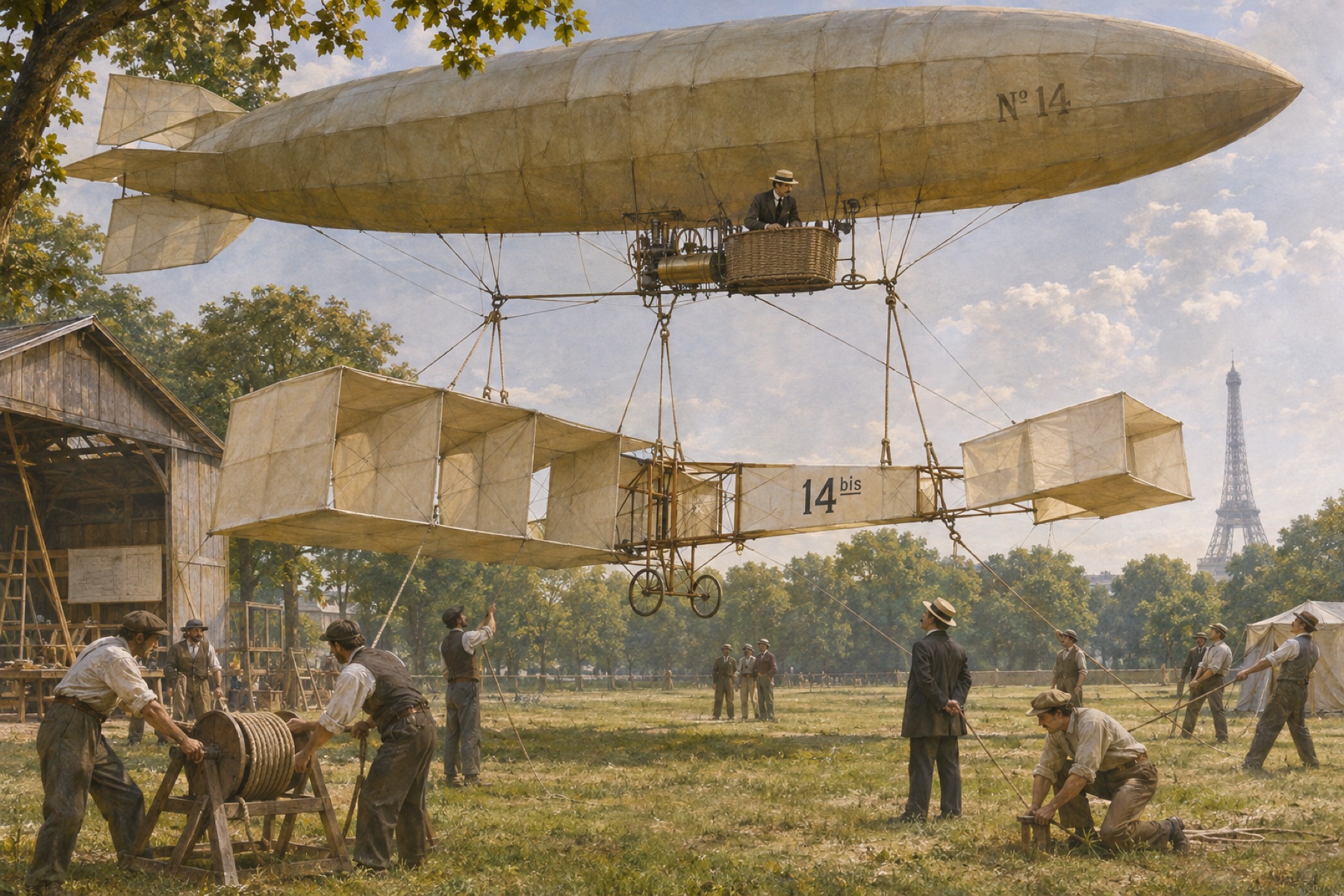
The name keeps a trace of the airship experiments. During development, he suspended the airplane beneath his No. 14 dirigible. The combined arrangement let him explore aspects of the new machine while the gas envelope provided support. The aircraft associated with No. 14 became 14-bis: a second machine connected to that number, rather than a simple claim that fourteen completed airplanes preceded it.
Seen in an illustration, the combination is wonderfully strange. A long lifting envelope belongs to one line of experiment; a broad, cellular wing structure hangs beneath it, pointing toward another. Yet the transition is practical. Suspension offers a way to investigate balance and control before relying entirely on the wings to hold the aircraft in the air.
The celebrated flights at Bagatelle would be made with the airplane free of the airship. Keeping those stages distinct lets us follow the development without confusing a test arrangement with the final takeoff. There was no enormous gas envelope above him during the October and November performances. There were wings, an engine, a pilot, and wheels running over the ground.
↗The combined experimental arrangement, interpreted by AI. The powered flights at Bagatelle took place without the gas envelope.AI-GENERATED HISTORICAL INTERPRETATION03
Walk around the machine
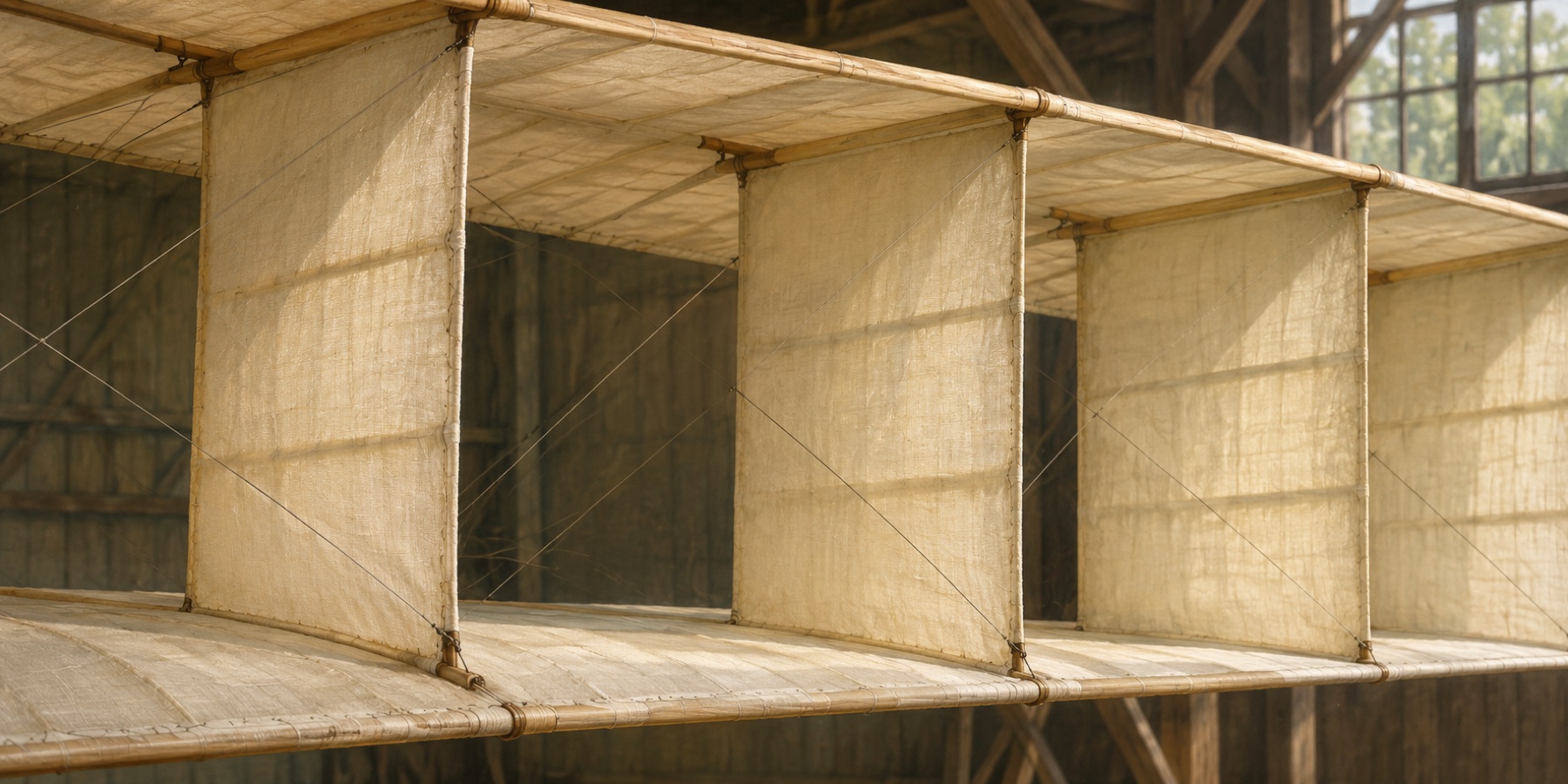
Start at the front. The smaller box-like surface sits ahead of the pilot and the main wings. This is a canard arrangement: the forward surfaces contribute to controlling the aircraft's attitude, rather than sitting behind the wings as a conventional tailplane would. From there, the frame leads back toward the large cellular biplane structure, with fabric stretched across a network of relatively light members and bracing.
The box-like divisions give the 14-bis its unmistakable appearance. Its design drew on the world of cellular kites, associated particularly with Lawrence Hargrave. Fabric, wood, and wire are doing work that later aircraft might hide inside a smooth skin. You can see the problem of carrying loads because so much of the structure is exposed.
Walk farther back and find the engine and pusher propeller. The machine moves forward while the propeller works behind the pilot. Underneath, wheels make the earth part of the test apparatus. They must carry the aircraft across an uneven surface until the wings can take the load. Everything is close together: pilot, structure, controls, machinery, and the field on which a slight loss of balance can matter.
↗A study of the 14-bis structure, imagined. For engineering geometry, consult the museum models and technical references.AI-GENERATED HISTORICAL INTERPRETATION04
Power has to travel with him
The engine was an Antoinette, part of the rapidly developing world of lightweight petrol power associated with Léon Levavasseur. Early trials did not provide the performance Santos Dumont needed. The development sequence included a more powerful installation, commonly described as fifty horsepower, before the successful autumn flights.
The important quantity was not a large horsepower figure by itself. An aircraft must lift its engine, fuel, structure, and pilot. Additional power can help overcome resistance and accelerate, but a heavier installation takes some of that advantage back. The propeller must also turn engine output into useful thrust. A motor that runs on the ground can still disappoint once installed in an aircraft.
Look closely at the exposed cylinders and fittings in our engine scene. There is no insulation between the pilot's achievement and the mechanism that makes it possible. Fuel delivery, cooling, vibration, and reliability are immediate concerns. Santos Dumont had already learned, beneath an airship, what an uncertain engine could do to a planned journey. In the airplane, dependable power would also determine how much room he had to remain aloft.
↗A period-inspired Antoinette engine study. The fittings evoke the material world of the tests rather than a certified assembly drawing.AI-GENERATED HISTORICAL INTERPRETATION05
Summer tests: learning before the crowd cheers
The summer of 1906 was a sequence of trials, alterations, and attempts. The machine was examined in supported arrangements and then tested on the ground. An August attempt failed to produce the hoped-for flight. September brought brief departures from the surface, including the short hop associated with 13 September, followed by damage on landing.
Accounts differ on the exact distance of some early hops. The uncertainty is a reason to keep the sequence visible rather than merge all the tests into the famous October flight. Before the public achievement there were short, awkward intervals in which a machine might become light on its wheels, rise briefly, and return too hard. Each interval presented another problem to understand.
Imagine standing near the field through more than one of these visits. You would see waiting as well as movement: the aircraft being positioned, people making adjustments, an engine run, a trial that ends sooner than hoped, then hands returning to the structure. Development is often photographed as a succession of machines. Lived at ground level, it is also a succession of pauses, decisions, and renewed attempts.
The field at Bagatelle lay in the Bois de Boulogne, within reach of a city already accustomed to Santos Dumont's aerial experiments. It offered open ground on which people could gather and watch. There was no modern terminal or paved runway in this scene. The aircraft's wheels met grass, and the available space had edges, spectators, and conditions that had to be judged.
Before the takeoff, attend to that contact. The wheels carry the weight. The engine and propeller must accelerate the whole assembly despite the resistance of the surface and the air. As speed increases, the lifting surfaces can do more work. The transition is physical: support shifts from the ground toward the air while the pilot tries to maintain a suitable attitude.
This is why the wheels belong in the telling. They make the departure visible and understandable. A person watching from the side can see the aircraft running, becoming airborne, and continuing beyond the point where the ground supports it. The achievement does not require a hidden transformation between one stage and the next. The machine is there in front of the public, carrying its pilot through the change.
↗The field before a flight, imagined. Grass, open space, and the people at its edges are part of the setting.AI-GENERATED HISTORICAL INTERPRETATION07
At the controls, without a cabin
The pilot's position was open. Santos Dumont stood in a small basket-like station within the structure, with no enclosed flight deck separating him from the weather or the machinery. His slight figure became part of the aircraft's familiar silhouette. The ground remained close, and the forward structure occupied a substantial part of the view.
Controlling an aircraft requires attention to more than whether it rises. Pitch changes the attitude of the nose; roll tips one wing relative to the other; yaw turns the aircraft around its vertical axis. These motions interact with speed and airflow. A machine can generate enough lift to leave the earth and still present a difficult problem of balance and direction.
During these early trials, a brief flight allowed little time to recognize an unwanted motion and correct it before reaching the ground. He was learning from an aircraft he had helped bring into existence, with his own body carried inside the experiment. The familiar elegance of his suit should not disguise the exposure of that position. There was no passenger's distance from the consequences.
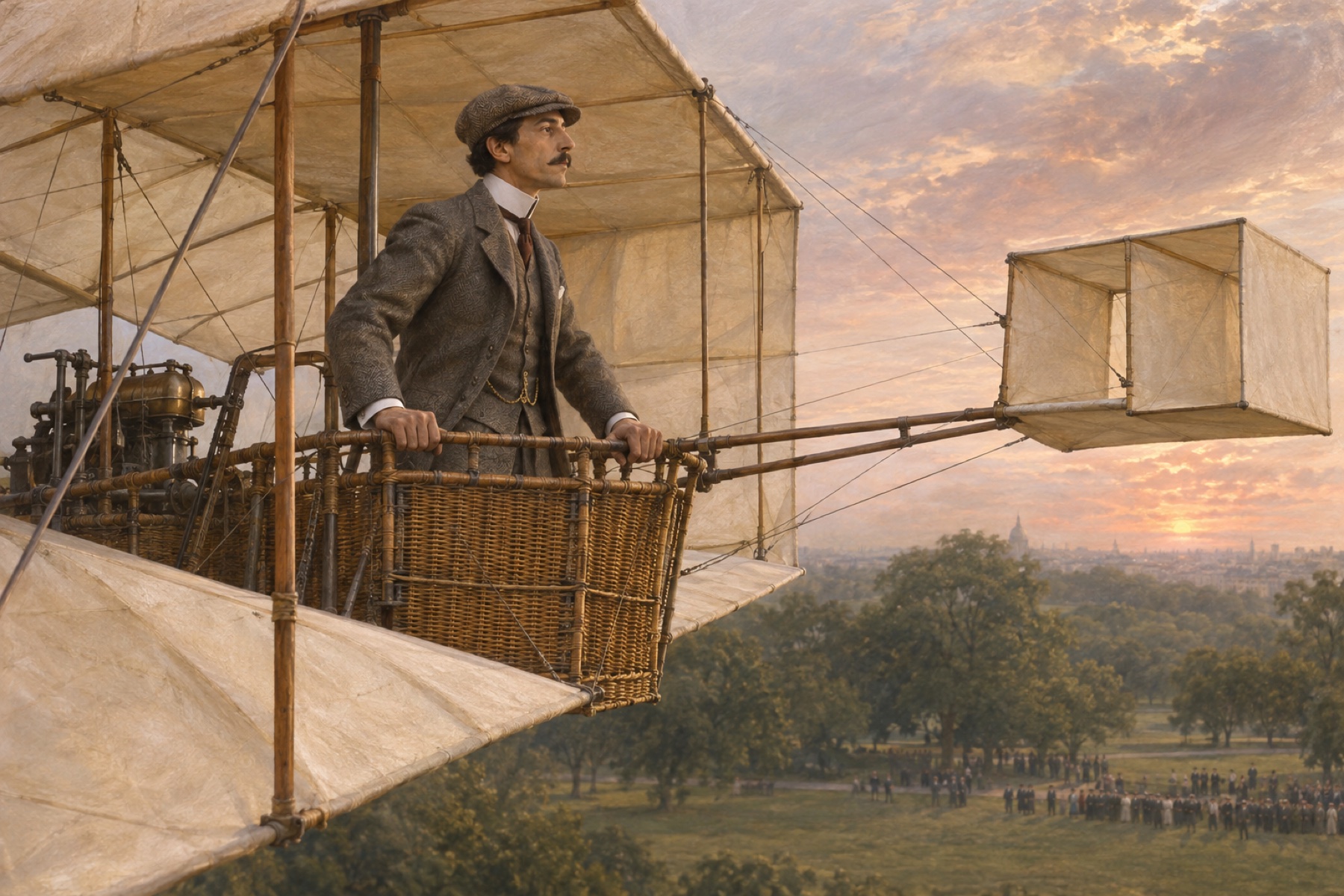
↗At the open pilot station, interpreted by AI. Clothing, face, and viewpoint are imagined historical details.AI-GENERATED HISTORICAL INTERPRETATION08
23 October: the run becomes a flight
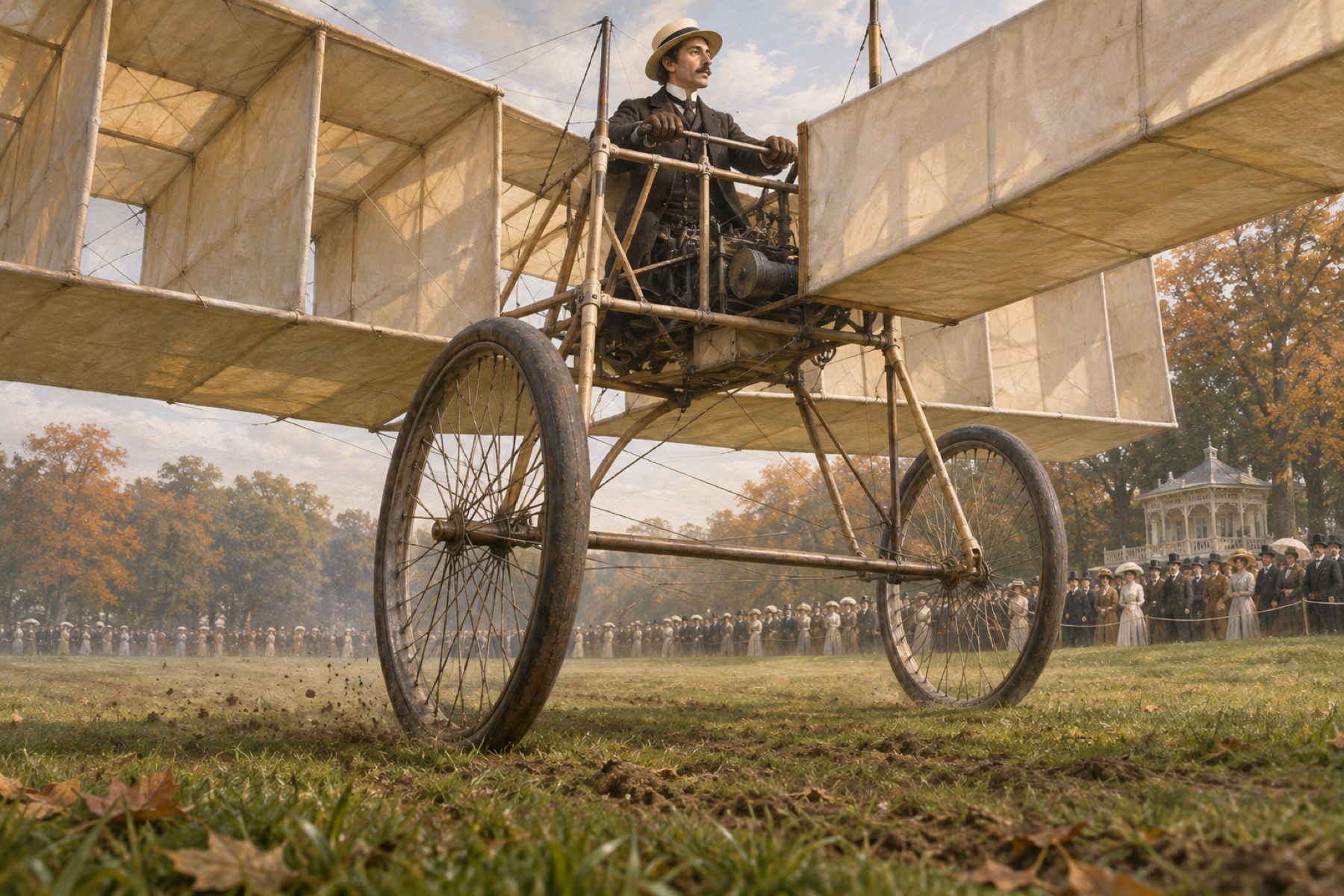
On 23 October 1906, the 14-bis accelerated across the grass and rose into the air—on its own wheels, under its own power, before the public. The flight is generally recorded as about sixty metres. The figure is modest on a modern map, but it describes a complete change in what the people beside that field were seeing.
For those moments, the machine was carrying itself and its pilot through aerodynamic lift rather than rolling on its undercarriage. The wing structure remained a recognizable object against the field and sky. Its engine travelled with it. Santos Dumont was at the controls. He had brought the arrangement from experiment into a publicly witnessed powered flight.
It won the Archdeacon prize associated with a flight of more than twenty-five metres. The award gave the performance a defined threshold and an institutional setting. The more immediate fact was visible before anybody explained the prize: the wheels were clear of the grass. A real airplane. A real takeoff. History in plain sight.
↗From the level of the grass: an imagined view of the undercarriage during acceleration, emphasizing the transition into flight.AI-GENERATED HISTORICAL INTERPRETATION09
After the landing, another problem to solve
The October achievement did not end development. Landing could damage a lightly built machine, and the flight revealed further demands of control. Before the November trials, the 14-bis acquired additional surfaces for roll control, mounted within the outer wing cells. The aircraft familiar from the autumn record flights was therefore changing even between its two most celebrated dates.
That alteration deserves more attention than a passing mention of improvement. When one wing rises relative to the other, the pilot needs an effective way to respond. Extra control surfaces offer another means of influencing the aircraft, but they also introduce hinges, linkages, weight, and a new task for the person flying. A solution must be integrated into the whole machine.
Return to the workshop in imagination: hands attending to fabric and wire, the changed assembly waiting to be tested outside. The October flight had made a public statement. November would ask whether the machine could extend it. The gap between the dates was filled by the same kind of practical work that had preceded the applause, with the additional pressure of a city now expecting to see more.
The next celebrated day was 12 November 1906. Santos Dumont returned to Bagatelle with the modified aircraft, and the trials unfolded through more than one run. The distance to be exceeded for the Aéro-Club de France's prize was now one hundred metres. A short departure from the grass was no longer enough for the intended performance.
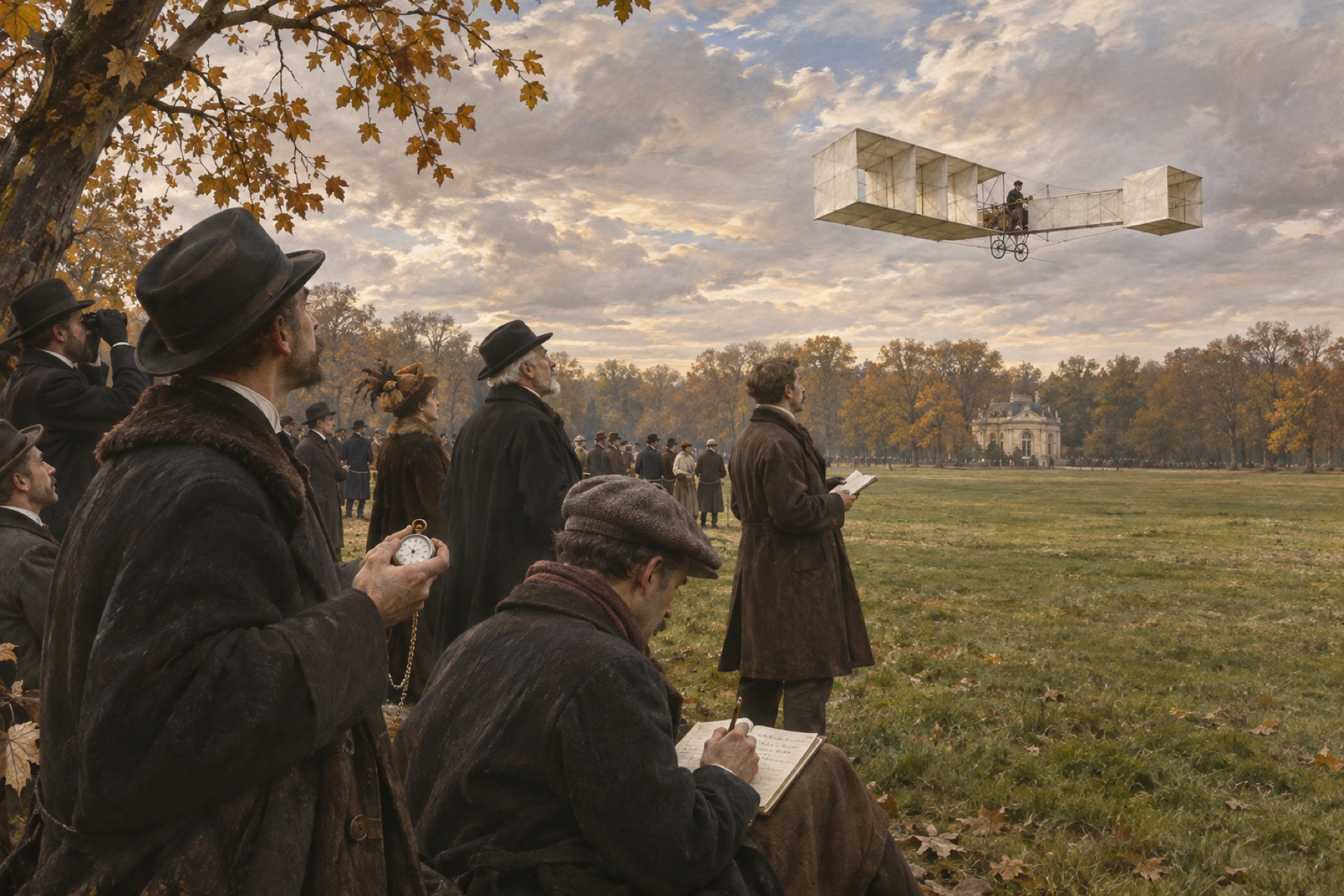
Observers mattered. A distance had to be established and a time recorded, connecting the movement on the field to a result that could be communicated beyond it. The witnesses were not merely an audience applauding an impression. Their role helped turn a fleeting event into a documented aeronautical record.
The field still imposed its own practical limits. The aircraft had to be positioned, the run made, and the pilot kept clear of people around the course. For the people waiting, there were stretches when very little seemed to happen. For the pilot, those preparations belonged to the flight as surely as the seconds in the air. The record would be brief; the effort that made it possible had already taken months.
↗Officials and spectators at Bagatelle, imagined. The notebooks and stopwatch evoke observation rather than a particular surviving frame.AI-GENERATED HISTORICAL INTERPRETATION11
A flight becomes a record
The institutions around the field were young too. The Fédération Aéronautique Internationale had been founded in Paris on 14 October 1905, little more than a year before the November flight. Among its purposes was maintaining records of flight achievements. Aviation needed ways to make performances intelligible beyond the audience that happened to see them.
The Aéro-Club de France's commissioners supplied the connection between the field and that record. A flight could become a measured distance and duration, identified with a pilot, an aircraft, and a date. The club's own chronology preserves the November 14-bis performance as a defining event in that early work.
This gives the observer's notebook its place beside the pilot's controls. Santos Dumont had to make the machine fly; the witnesses had to preserve what it had done. The numbers could then travel to people who had never stood at Bagatelle. An event lasting seconds could enter a history maintained across generations.
The longest flight that day covered 220 metres. The FAI's commemorative account gives a duration of 21.5 seconds and a height of six metres. Historical publications vary slightly in their time figures, so the number here follows that identified source. The distance is the central, consistently recorded measure of the achievement.
Try following those seconds from the ground. The broad cellular structure is moving past the position where you stand. Beneath it is a space that was not there while the aircraft rested on its wheels. The pilot continues with the machine, exposed to the air that sustains it. Then there is a return to earth, and a fleeting motion becomes a result people can write down.
The November performance became part of the FAI's early record history. It also gave the October scene a continuation: the airplane had returned, changed, and flown farther. What the public saw at Bagatelle was not a single photograph's worth of inspiration. It was a developing aircraft and an inventor willing to put its next version into the air.
The 14-bis did not disappear when the autumn celebrations ended. Santos Dumont continued testing it into 1907. The museum historian Henrique Lins de Barros places its final flight at Saint-Cyr on 4 April, when the aircraft entered an oscillation and came down. The famous machine had a working life after its most famous picture.
The ending helps us resist reading the November record as the discovery of a finished, universally satisfactory design. The aircraft had demonstrated powered takeoff and sustained movement, but its handling and further development still presented problems. Continuing the work could lead away from the arrangement that had brought the inventor acclaim.
He kept experimenting. The later Demoiselle would pursue a much smaller monoplane form, with a different relationship between pilot, structure, and wing. Moving on did not erase the 14-bis. It made its achievement part of a continuing practice, in which a celebrated machine could teach its maker something and still eventually be left behind.
The two famous flights together occupied less time than it takes to read a few pages. Their brevity can make the work around them disappear. A successful run depended on an aircraft assembled correctly, an engine producing useful thrust, enough speed, a manageable attitude, and an available stretch of field. All those conditions had to meet during the same small interval.
Lift, weight, thrust, and drag describe the competing forces. The terms become more meaningful when we place them around this machine. Weight includes the man and the motor. Drag includes the resistance of its exposed structure. Thrust comes from the propeller. Lift depends on the wings meeting the airflow suitably. Santos Dumont's achievement was an operating arrangement of these things, rather than a claim that one clever part could do the work alone.
His next successful airplane would look strikingly different. The Demoiselle made lightness and simplicity visible in a small monoplane, opening another chapter of the same restless practice. The 14-bis remained the great public scene at Bagatelle: Santos Dumont, the Father of Aviation, building the airplane, taking its controls, and leaving the ground before the people who had come to see whether he could.
The success of the 14-bis did not settle the shape of the airplane for Santos Dumont. Further projects and experiments followed. Some were unsuccessful or remained developmental. The familiar transition from one famous machine to another can conceal this uneven work, as though history had politely removed every inconclusive day.
The Demoiselle emerged from a different ambition: make an airplane exceptionally small and light. Where the 14-bis offered a broad cellular structure, the new family of monoplanes pursued a spare frame beneath a high wing. The point was not merely to reduce the dimensions of the earlier design. It was to seek another relationship between a pilot and a flying machine.
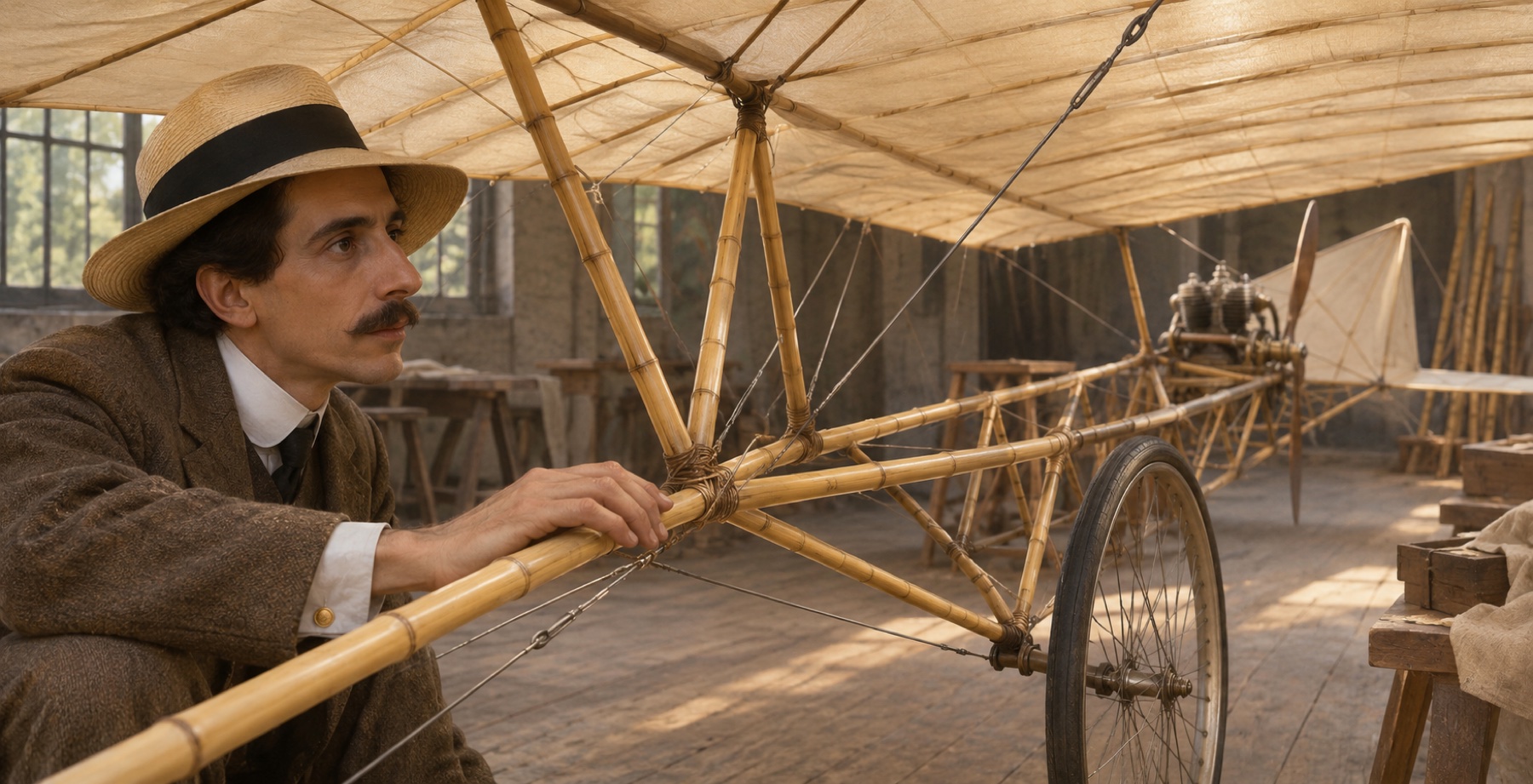
The exposed bamboo structure is among the Demoiselle’s most arresting features. It gives the eye very little to hide behind. Long members, joints, wires, wing, engine, wheels, and seat appear as an economical assembly rather than a solid body. The Science Museum’s model record describes three bamboo poles forming the fuselage.
A light structure still has to carry loads. Each member has a job; each joint must allow forces to pass without making the design unacceptably heavy or unreliable. Simplicity in appearance can therefore be the result of difficult selection. Removing a part is useful only when the remaining arrangement can still do what the airplane needs. Lightness is a discipline, not the absence of engineering.
↗A bamboo joint and open framework, interpreted. The detail invites attention to structure without pretending to provide a construction specification.AI-GENERATED HISTORICAL INTERPRETATION03
A body learning to bank a wing
Control could be remarkably physical. The Science Museum describes wing warping operated through a lever connected to the pilot’s jacket: leaning one way or the other helped command the corresponding bank. It also describes a tail arrangement that could move vertically or sideways for elevator and rudder control.
This is a striking invitation to imagine the pilot’s task. There is no sealed modern cockpit isolating the person from the mechanism. Clothing, posture, and attention enter the control arrangement. The body does not merely occupy the airplane; it participates in operating it. That intimacy helps explain why the Demoiselle feels so different from the large, boxlike presence of the 14-bis.
The Demoiselle was a family of aircraft, developed from No. 19 in 1907 through subsequent versions. Treating it as one unchanging object makes conflicting dimensions and engine figures seem like a mystery. Often the more sensible question is which version a writer, drawing, photograph, or museum specimen represents.
The distinction matters for an illustrated biography. An image can communicate the delicate high wing and open frame while still failing to match a specific machine in every detail. Here the scenes are labelled interpretations. For exact dimensions, a plan or a carefully documented museum object is the appropriate place to go. Understanding the sequence is more useful than memorizing one set of numbers stripped of its version.
The Musée de l’Air et de l’Espace connects the developed Demoiselle with manufacture by Clément-Bayard and emphasizes Santos Dumont’s decision to make the design available. The story therefore extends beyond a single pilot demonstrating a single machine. Other builders could encounter an idea that was simple enough to study and attractive enough to reproduce.
The museum’s own surviving example makes another lesson visible. It identifies an original fuselage, with replacement wings and renewed paint. A preserved aircraft can be an authentic historical object without every visible surface being original. The survival of the idea and the survival of its materials are related, but they are not identical.
A drawing is another way for an airplane to travel
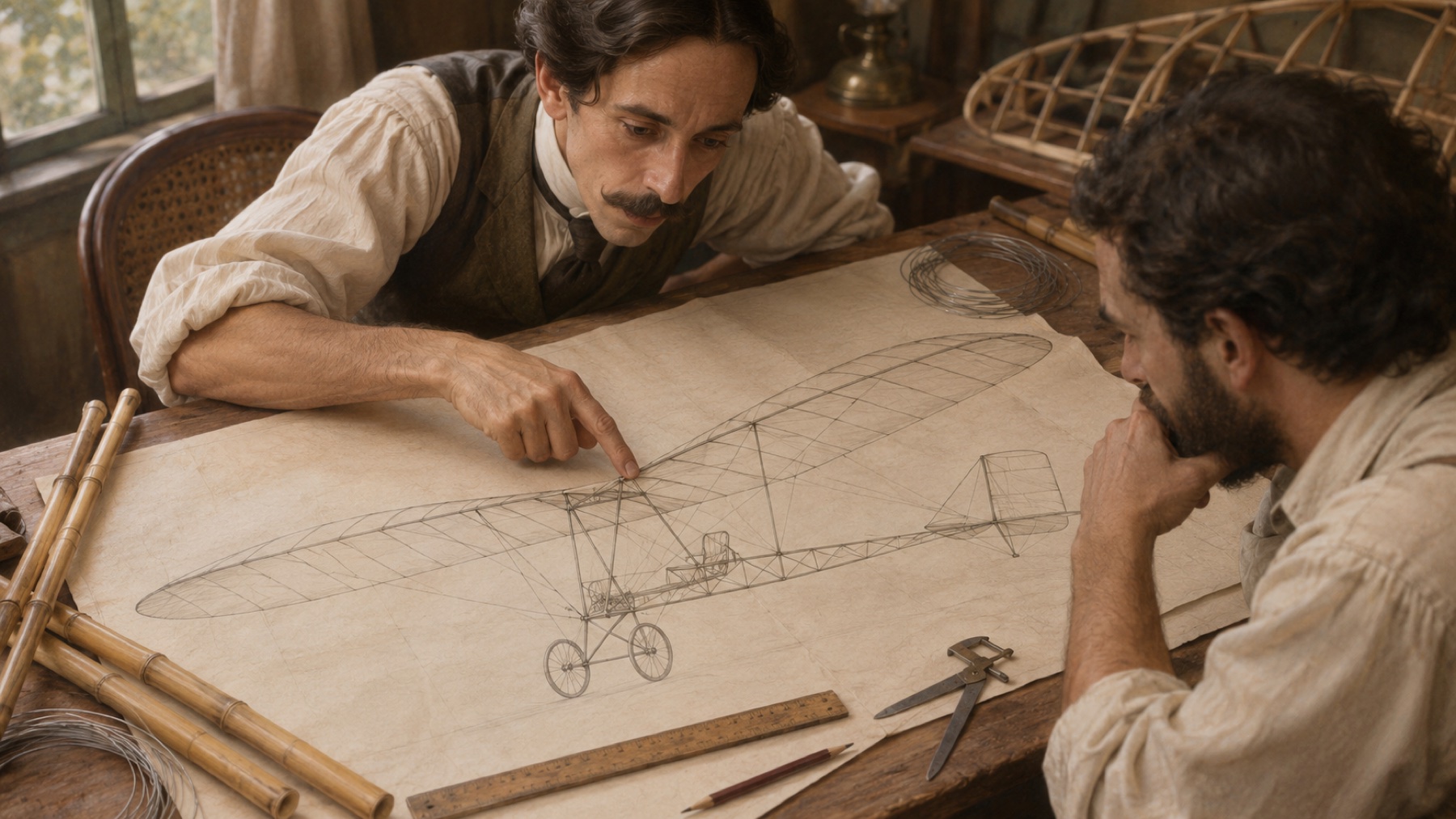
Detailed plans appeared in Popular Mechanics in 1910. An aircraft that could reach only the next field in the hands of one pilot could now reach a distant reader as a set of relationships on paper. A drawing does not eliminate the need for tools or skill, but it changes who can begin to understand the arrangement.
This is one of the most generous strands in the Father of Aviation’s legacy. Knowledge can travel independently of the original machine. Somebody who never met Alberto might study a joint, compare materials, and ask a better question. The drawing-table image celebrates that circulation; its unlettered sheet is an artistic evocation, not a substitute for the published plans.
↗Builders studying an idea, imagined. The sheet is illustrative and must not be used to construct an aircraft.AI-GENERATED HISTORICAL INTERPRETATION07
The experiments that a list should not flatten
The numbered projects also included attempts beyond the best-known successful aircraft, among them a helicopter experiment. A responsible invention list distinguishes a concept, a prototype, a machine tested on the ground, and an aircraft demonstrated in flight. These are different kinds of achievement and evidence.
Failure does not become meaningless because it lacks a famous photograph. It may explain why an inventor changed direction or stopped investing in a particular arrangement. The Demoiselle is more remarkable when it appears at the end of a sequence of decisions than when it is presented as a tiny miracle. Alberto’s career was a practice of choosing what to keep, what to alter, and what to leave behind.
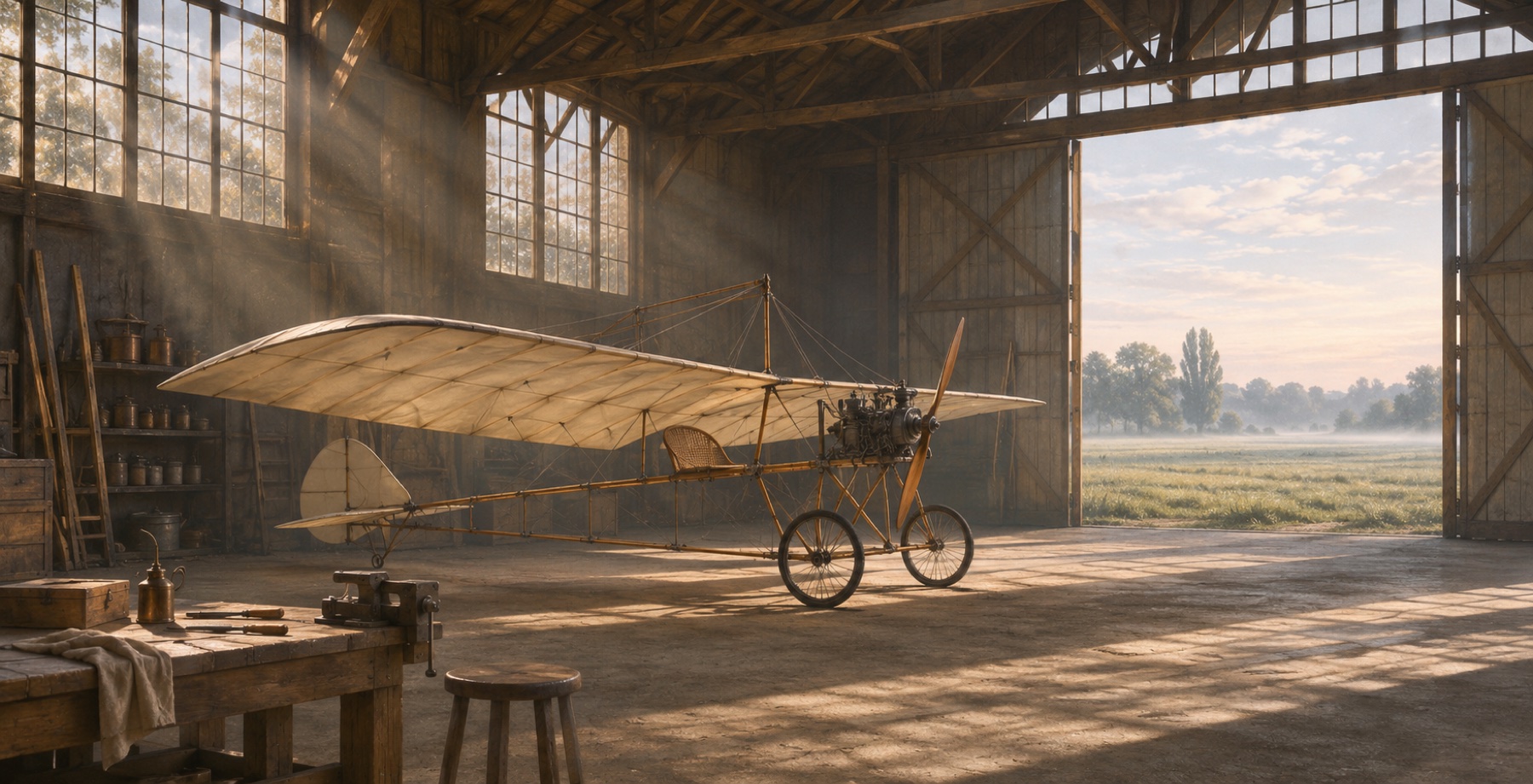
↗A quiet hangar, imagined. An image of the work between public demonstrations, rather than a scene of an identified event.AI-GENERATED HISTORICAL INTERPRETATION
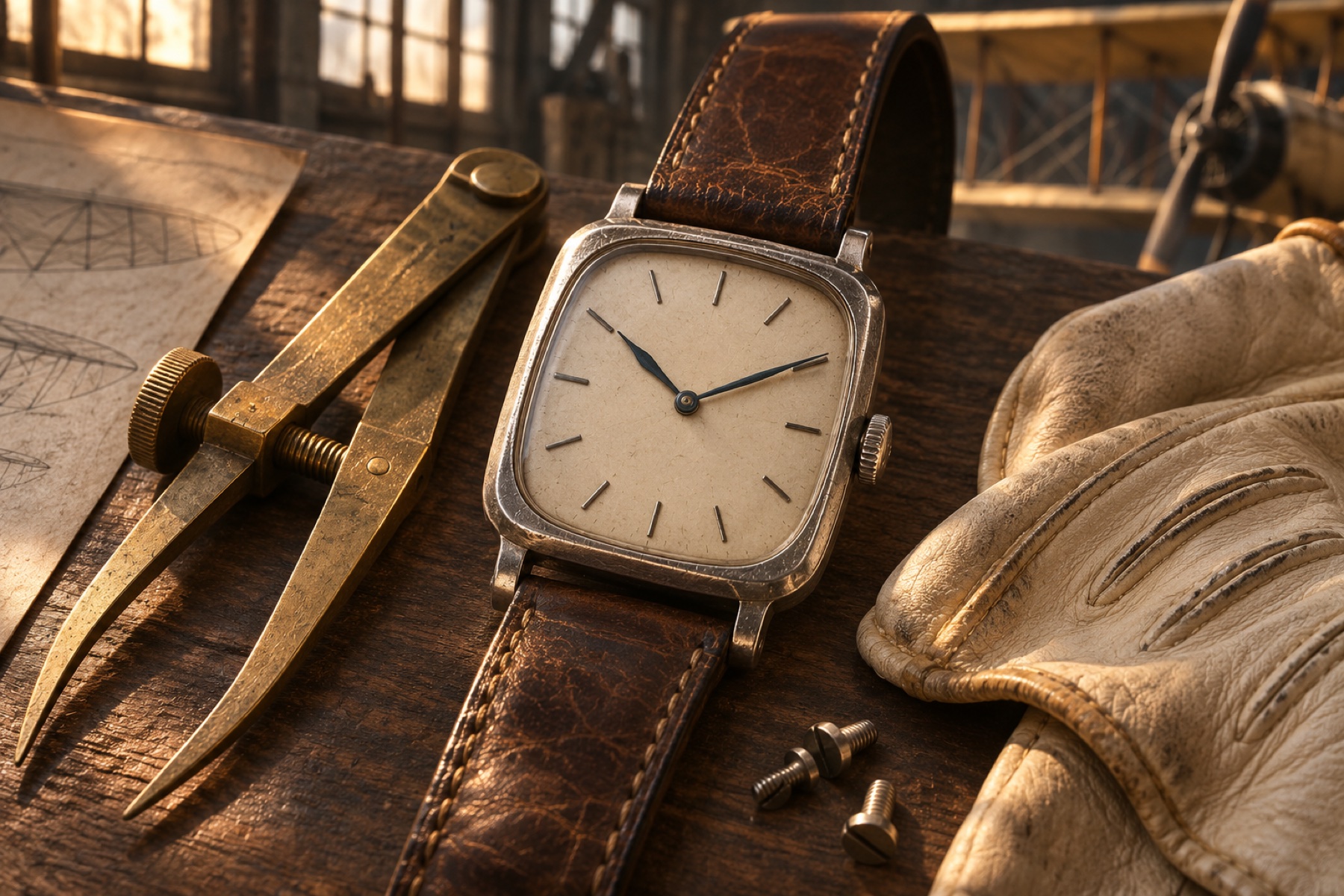
Reading a watch is easy until both hands have other work to do. Cartier’s account of the Santos design begins with that practical situation: an aviator wanted the time within easy view. Louis Cartier made a watch for his friend, and the manufacturer dates the origin story to 1904.
The watch belongs in this biography as a collaboration, not as a claim that Alberto invented wristwatches. The interesting achievement is more specific. A familiar object was reconsidered around a user in a particular situation. The square case and visible screws became part of a lasting design identity, carrying the aviator’s name into a world far beyond the field and the hangar.
↗A period-inspired wristwatch still life. It is not an image of the original Cartier watch or an authentication of an object.AI-GENERATED HISTORICAL INTERPRETATION02
Clothes, stature, and the person the public recognized
The public image of Santos Dumont was unusually legible: carefully dressed, slight in stature, with a recognizable hat and manner of presentation. Museum interpretation has explored him as a sportsman and designer as well as an aeronaut. His appearance helped make a technical pioneer into someone readers could recognize at a glance.
Clothes also bring the body back into a history too easily reduced to machines. This was a person who had to dress, travel, work, meet friends, and inhabit rooms. Personal objects do not compete with the airplane for importance; they answer different questions. They remind us that the famous figure continued to exist when the crowd was no longer watching.
Petrópolis offered a setting different from the Parisian field: a mountain town, a cooler climate, a landscape reached by climbing through the Serra. A historical study by Marisa Guadalupe Cardoso Plum discusses a 1914 interview in which Santos Dumont described the changing air during the railway ascent. Here, travel once again alters the sensory character of the story.
The connection with railways is quietly satisfying. His life began beside railway work, and a later journey into the mountains also belonged to a railway landscape. The means of transport were changing the conditions of his life before and after his own aircraft did so. The Father of Aviation remained a traveller on the ground.
On 18 April 1918, he acquired the hillside plot on which A Encantada would stand. The same historical study records municipal authorization for occupation on 29 August. These ordinary administrative dates are a welcome counterweight to the mythic image of a genius: a house, too, required a site, drawings, assistance, work, and permission.
The museum registry identifies the engineer Eduardo Pederneiras as a collaborator in its construction. That name belongs beside Alberto’s. The little house is often presented as a complete portrait of one mind, but it also emerged from cooperation. A building, like an aircraft, has to pass from intention through other people’s skill into something that can carry a person.
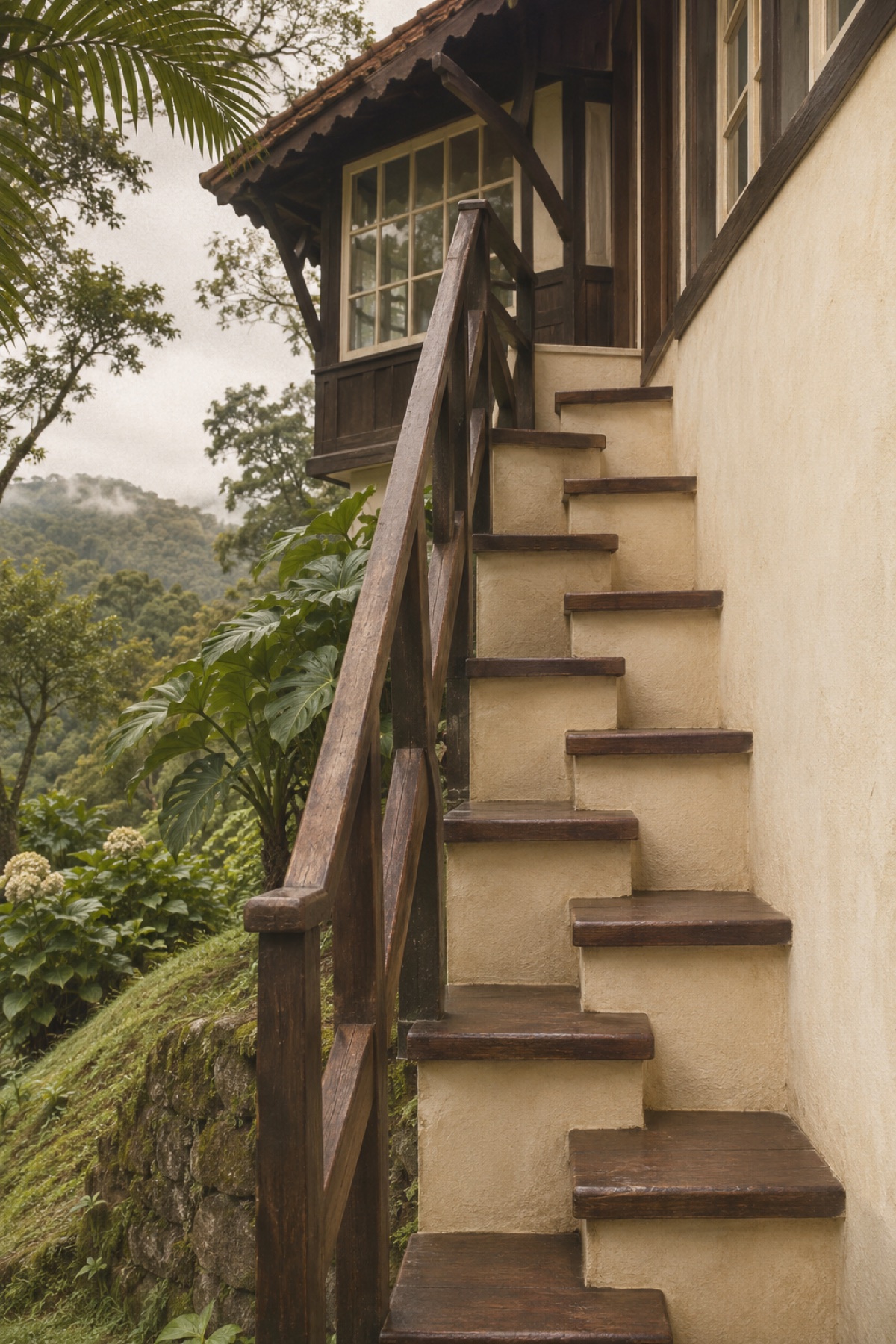
The alternating cutaway steps are the house’s best-known detail. Their rhythm makes a narrow, steep stair easier to negotiate in the available space. The outside stair begins with the right foot because of its geometry. It is a physical arrangement before it is a story about luck.
That detail rewards the same kind of looking as a joint in an airplane. Where will the body move? What occupies the available space? What can be removed without defeating the function? It would be too simple to declare the house a grounded aircraft, but the practical attention is familiar. A small inconvenience becomes something a person can examine, reshape, and build differently.
↗The rhythm of alternating steps, interpreted. The image highlights an idea of movement and space rather than providing measured architectural documentation.AI-GENERATED HISTORICAL INTERPRETATION06
Hot water, delivered meals, and an economy of living
The museum describes a shower heated with alcohol, another memorable solution within the house. It also records an absence: there was no kitchen. Meals came from a nearby hotel. The domestic arrangement involved deciding what the small building needed to contain and which needs could be met outside it.
These details are richer when we leave them specific. An alcohol-heated shower in this house is not proof that all heated showers began here. A kitchenless dwelling is not proof that its resident wished to live without help. The particular solutions reveal a relationship among convenience, available space, service, and the person using the building. They let ingenuity become human-sized.
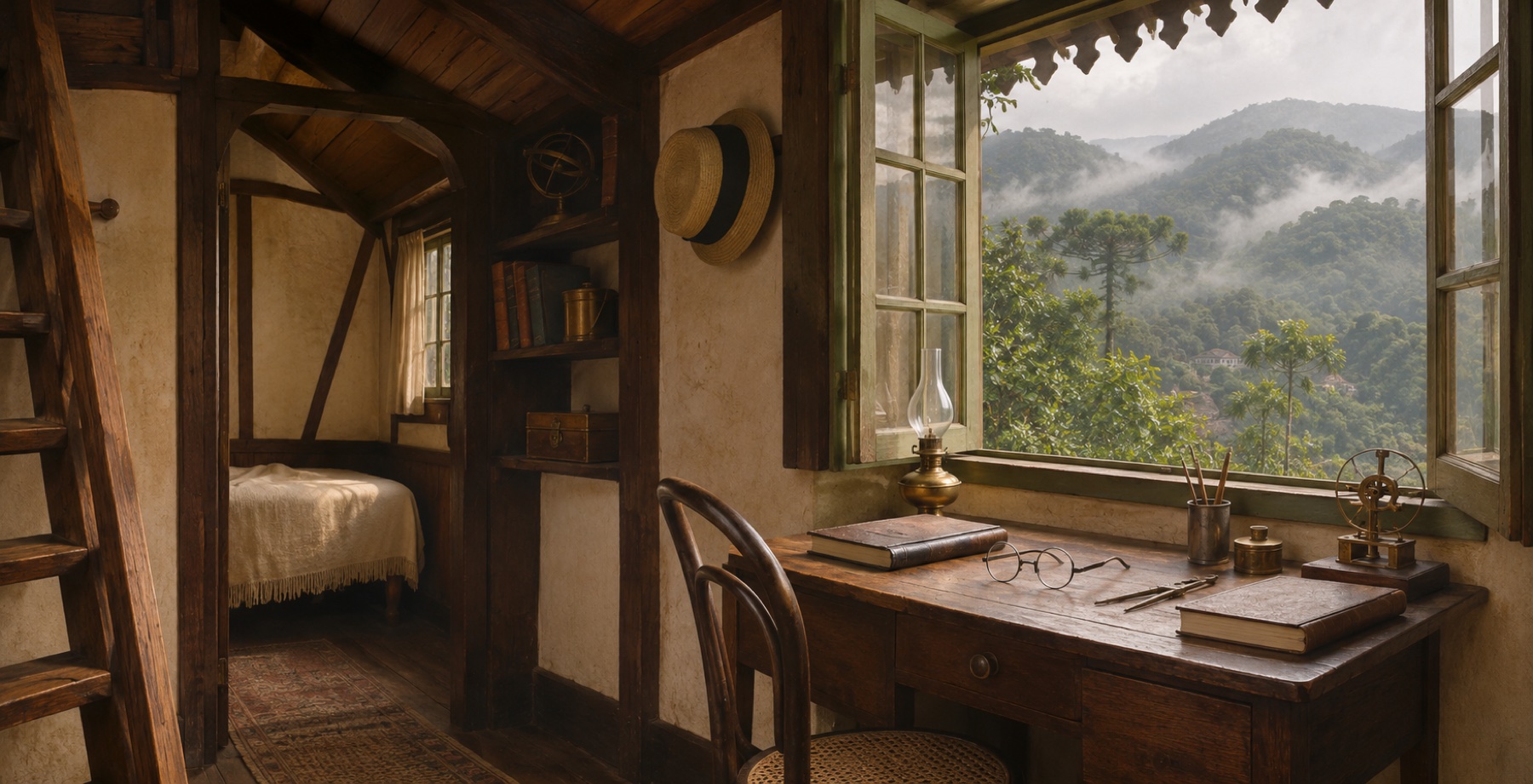
A Encantada is associated with his 1918 book, O que eu vi, o que nós veremos. Its title holds two directions at once: what he had witnessed and what he believed might come next. A man known for visible demonstrations was also trying to persuade readers through writing.
The desk scene does not reproduce a verified arrangement of his possessions. It offers a quieter way into the life: a room, tools, paper, and a view outward. The inventions do not disappear in this setting. They become part of a larger question about how knowledge should enter daily life and what kind of future a country might choose to build.
↗A room for thought, imagined. The furniture and objects are atmospheric rather than a reconstruction of the museum inventory.AI-GENERATED HISTORICAL INTERPRETATION
Santos Dumont’s active flying career ended around 1910. A biography that stops there leaves a substantial part of his life outside the frame. There were books, journeys, public occasions, projects, and years of ill health. The later man was living with the consequences of a world that had changed very quickly.
It is tempting to make retirement the closing shot of a triumphant film: an empty field, a machine at rest, a name secured. But a life does not turn into an epilogue simply because its most famous experiment is over. The years afterward ask us to attend to a person whose circumstances and concerns continued to develop.
In the later book, he argued for aviation as a means of connecting distant American cities, carrying correspondence, and reducing the long separations imposed by geography and sea travel. Mountains, forests, and the cost of ground infrastructure appear in this vision as practical barriers that aircraft might help overcome.
That hope belongs beside the boy who learned about movement through an estate railway and the adult who repeatedly crossed the Atlantic. The future of flight was not only a longer record or a faster machine. It was a different relation between places: a message arriving sooner, a journey becoming possible, a remote community entering more direct contact with others. These are hopes expressed in his writing, not a claim that he foresaw every consequence.
↗Approaching Guanabara Bay, imagined. The ship, luggage, and viewpoint do not identify a particular return voyage.AI-GENERATED HISTORICAL INTERPRETATION03
The difficult question of military aviation
The relationship between Santos Dumont and warfare is more complicated than the popular story of an inventor who never considered military uses. His own later writing discusses military applications and the role of aviation in national development. That contemporary voice belongs in the record alongside accounts of his distress at destructive uses of aircraft.
Holding both facts together is not a failure of admiration. It is what allows a historical person to remain a person rather than a lesson polished smooth after death. Attitudes can contain tensions and change over time. His words should be read in their circumstances, especially during a period when aviation was becoming a tool of states as well as individual experimenters.
The Father of Aviation: a title that travelled with Santos Dumont’s reputation beyond the places where he was born and worked. On 13 October 1997, President Bill Clinton used those words in a speech in Brasília. The original transcript, preserved in the White House archives, places Alberto among figures whose contributions reached across national borders.
The achievements beneath the title belong to the history of flight: a dirigible completing a return journey around the Eiffel Tower, the 14-bis taking off on its own wheels and under its own power, and the Demoiselle carrying the possibilities of a light airplane into other builders’ hands. These are the events through which the Father of Aviation helped enlarge the world’s imagination.
Alberto Santos Dumont died in Guarujá on 23 July 1932, three days after his fifty-ninth birthday, by suicide. He had been experiencing serious ill health. Accounts frequently connect his distress with armed conflict and the military use of aviation, but no single explanation should be made to contain a person’s entire suffering.
This chapter leaves his final moments unpictured. There is no need to imagine them to recognize their gravity. We can give the last years space without treating them as a dramatic device that makes the earlier accomplishments more moving. The person deserves care in the telling, even when the public figure has become a monument.
The decree of 25 July 1932 is a contemporary record of Brazil’s response. Its language honours his inventions and associates his work with human development, relations among nations, peace, and solidarity. It shows how quickly a death can become a public act of remembrance.
A decree tells us how a state chose to speak; it does not give us the private feelings of every citizen. But it is valuable evidence of the meaning attached to his name at that moment. The Father of Aviation was being gathered into the country’s official memory, even as his family and acquaintances faced the loss of someone they had known beyond a headline.
A museum collection preserves things that a single heroic image cannot: clothes, furniture, paper, tools, machines, and objects whose meaning may require new research. Carlos Adriano’s study of a 1901 mutoscope reel in the Museu Paulista collection describes identification and restoration as acts of discovery. A small mechanical object can return a moving image to view.
This changes how we think about remembrance. History is not simply a finished story handed down intact. People identify a fragment, compare records, restore a sequence, and ask again what they are seeing. A wardrobe or a film reel can make the famous figure less remote by bringing him back among the material details of a life.
We can honour Santos Dumont by keeping the restless intelligence of the story alive. Look at a mechanism long enough to notice its difficulty. Ask who knows something you do not. Take a failure seriously enough to learn from it. Make room for the people whose skill allows an idea to become material. Share knowledge in a form somebody else can use.
The Father of Aviation left aircraft and records, but also a way of approaching possibility. Between the coffee estate, the Parisian workshop, Bagatelle, and the small house on the hill, the scale keeps changing. The attention remains recognizable. He looked closely at the world he had—and helped make another world imaginable.
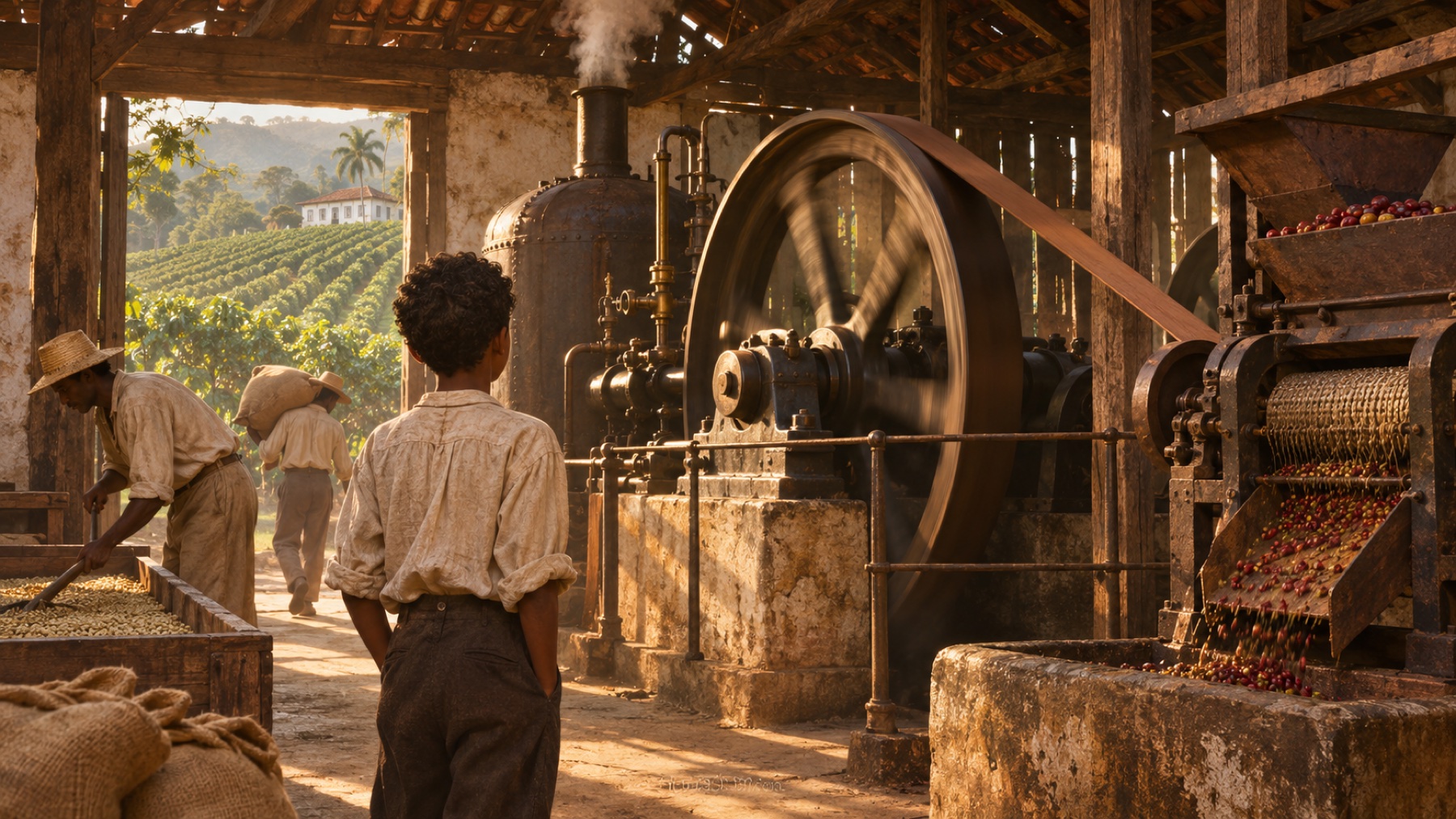 AI-GENERATED HISTORICAL INTERPRETATION
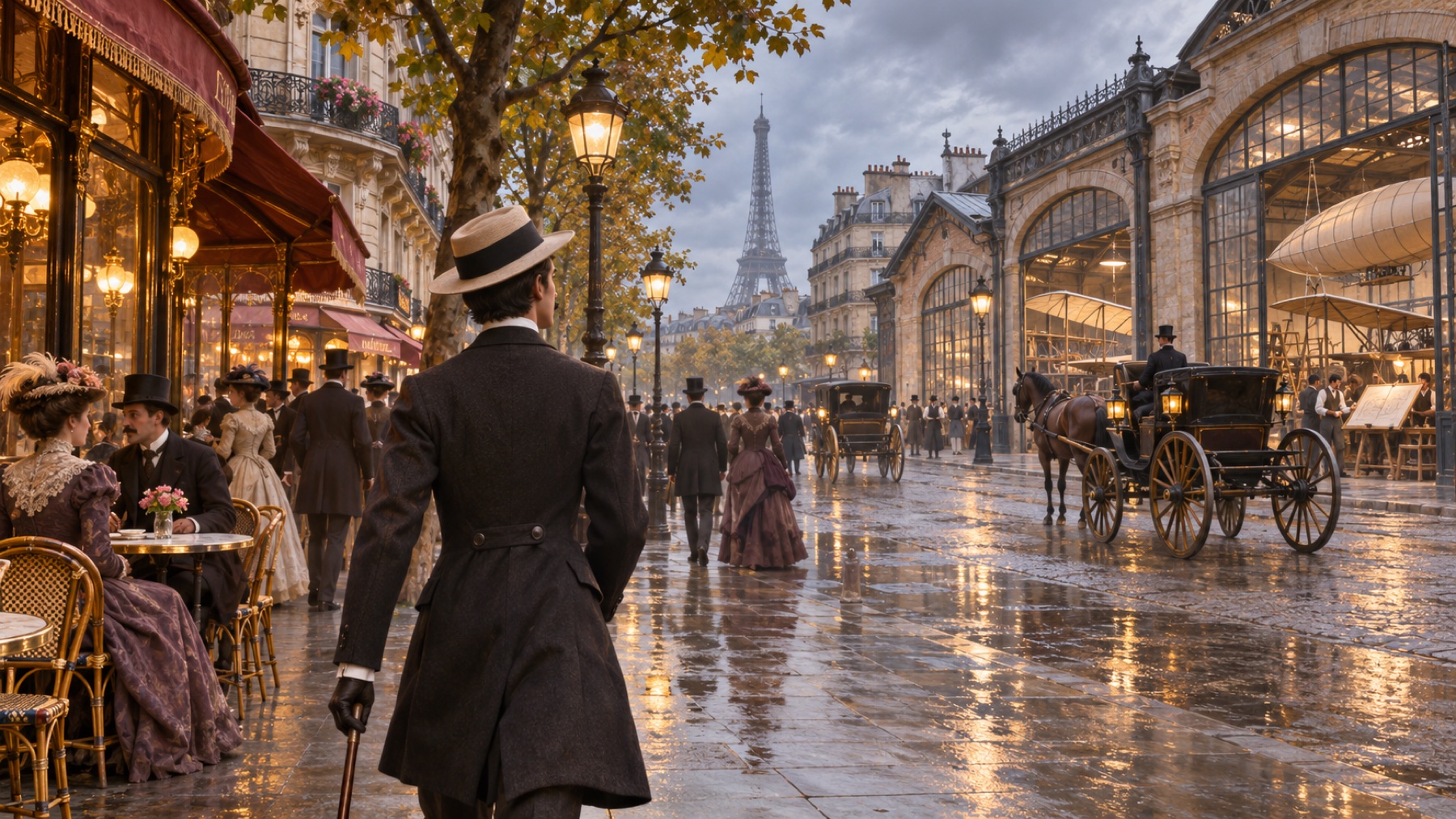 AI-GENERATED HISTORICAL INTERPRETATION
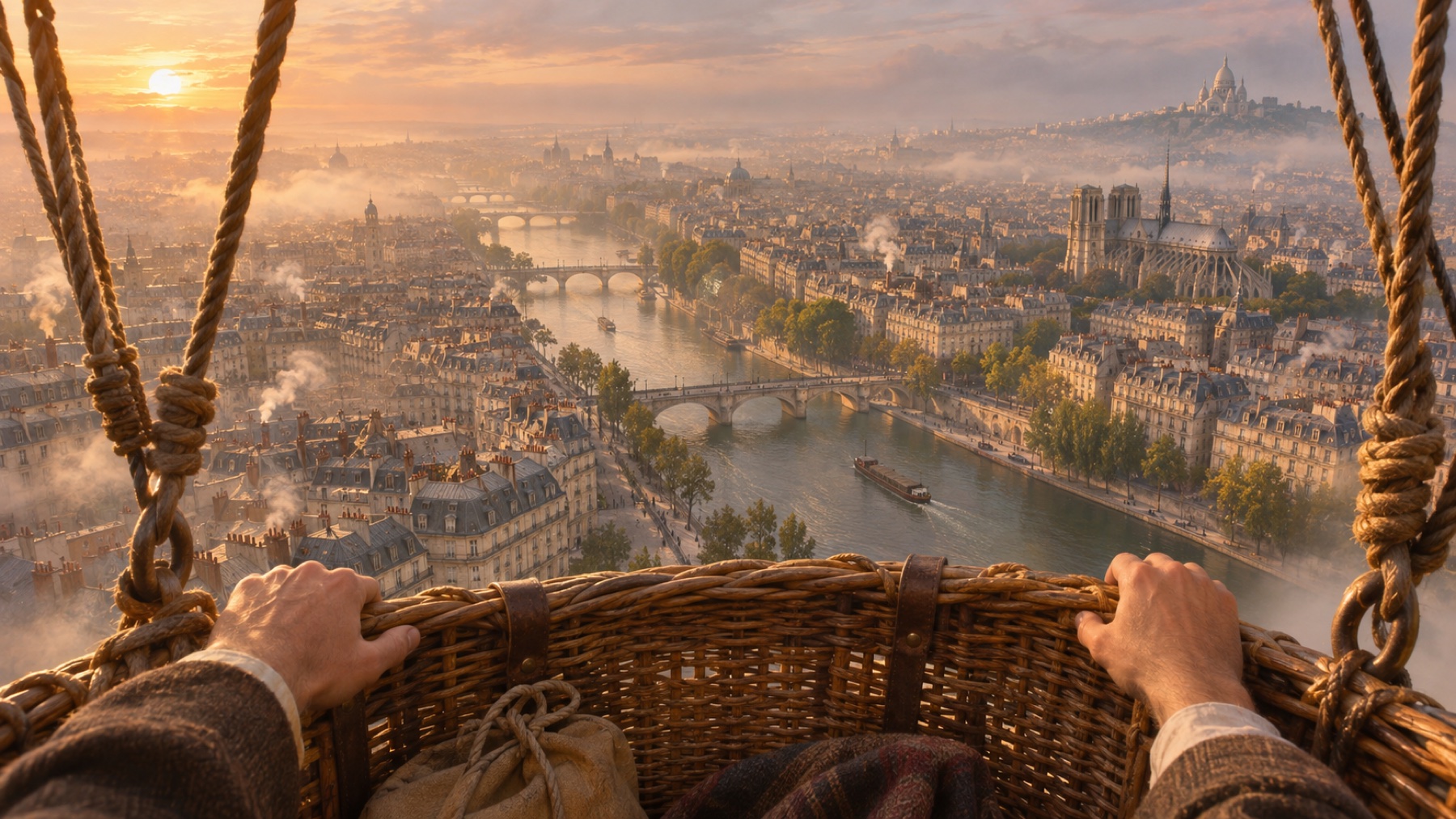 AI-GENERATED HISTORICAL INTERPRETATION
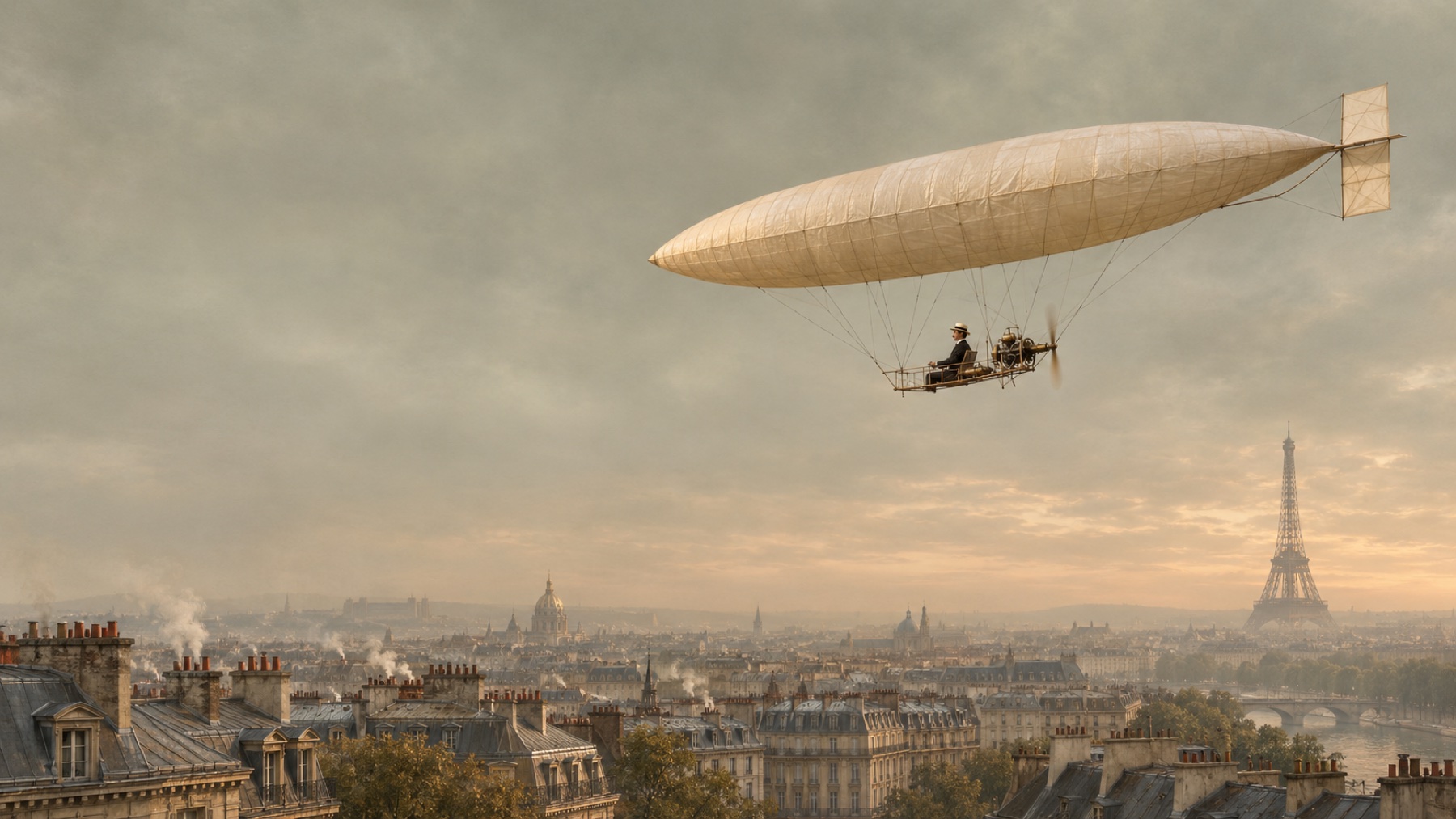 AI-GENERATED HISTORICAL INTERPRETATION
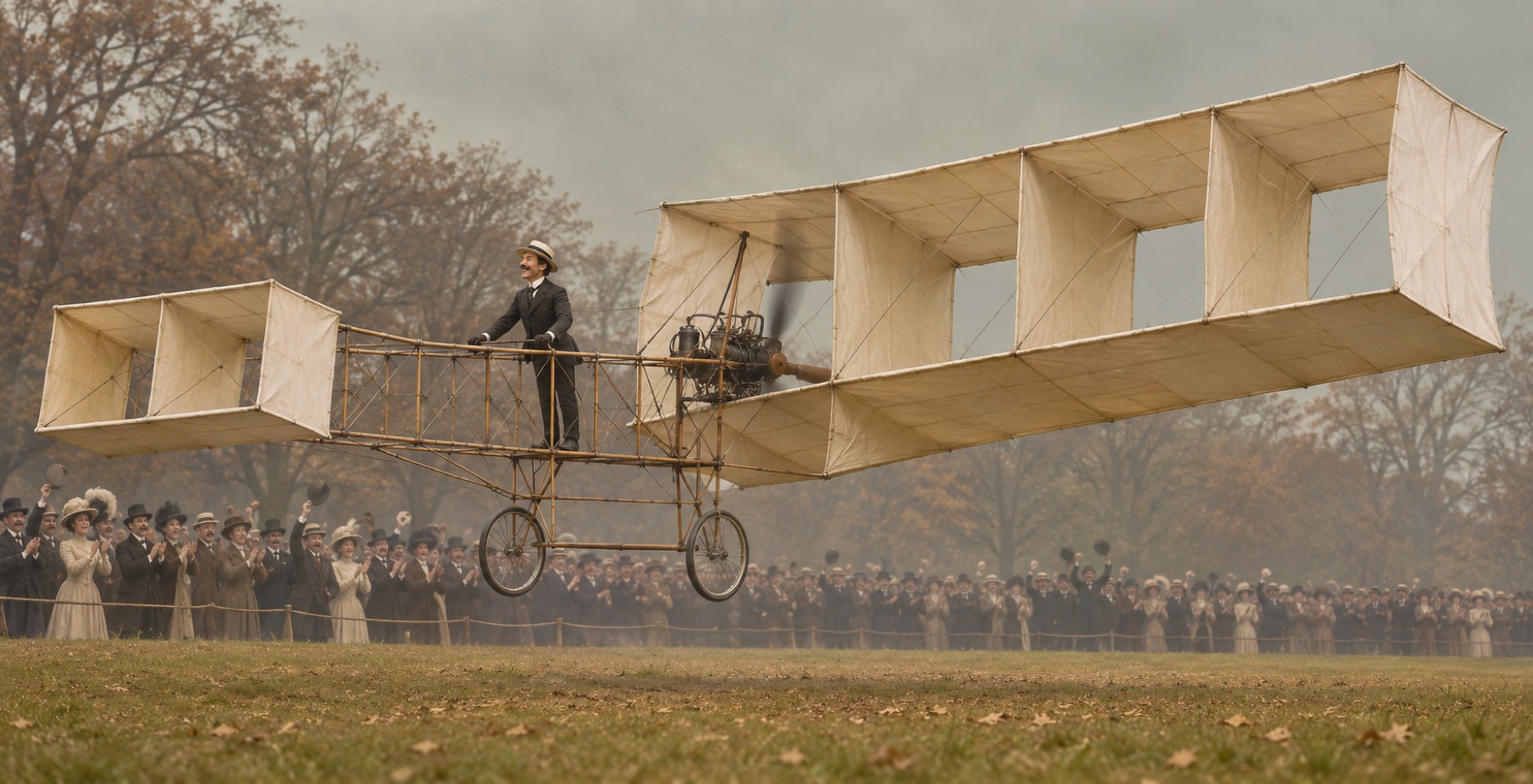 AI-GENERATED HISTORICAL INTERPRETATION
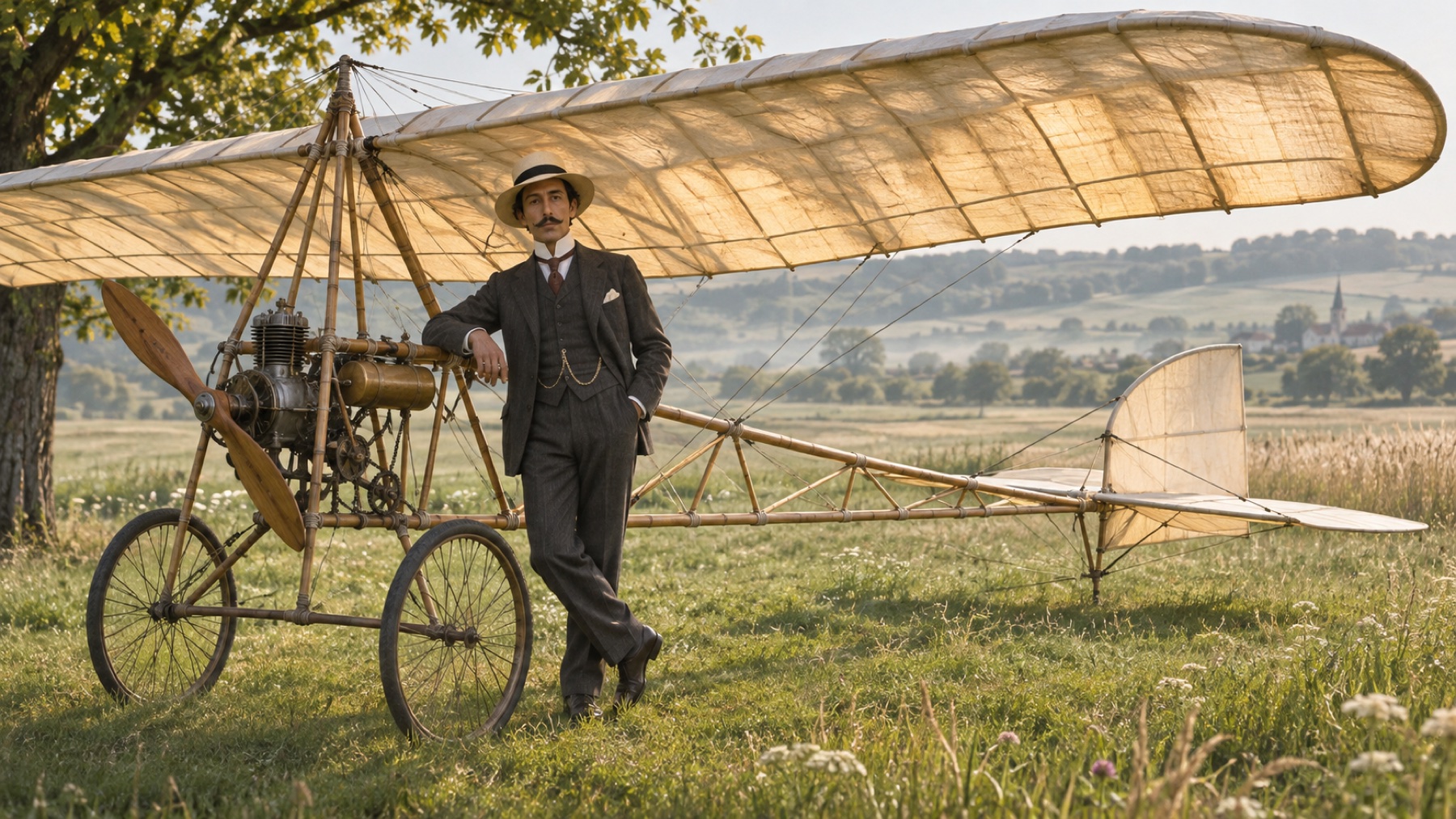 AI-GENERATED HISTORICAL INTERPRETATION
 AI-GENERATED HISTORICAL INTERPRETATION
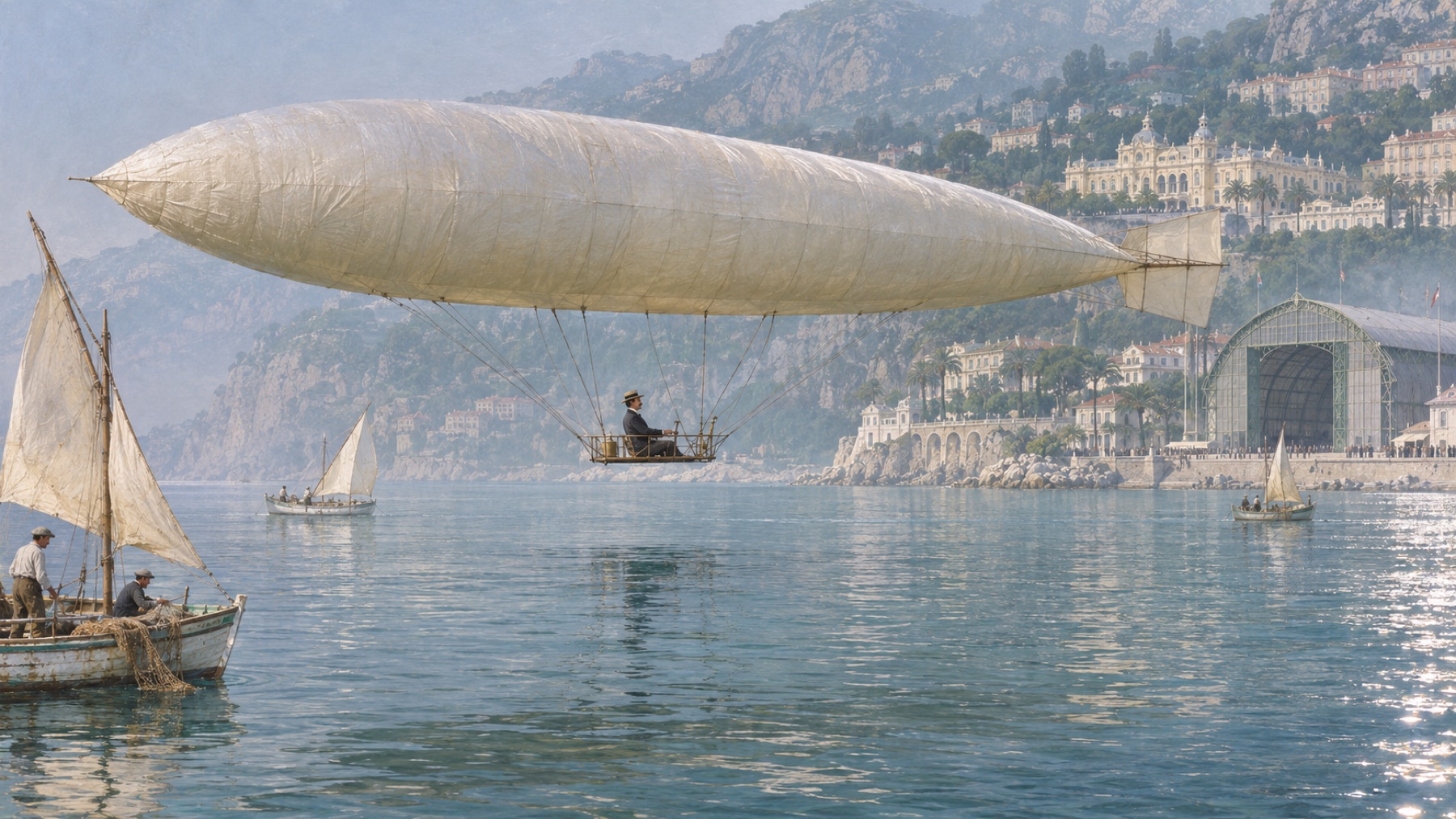 AI-GENERATED HISTORICAL INTERPRETATION